
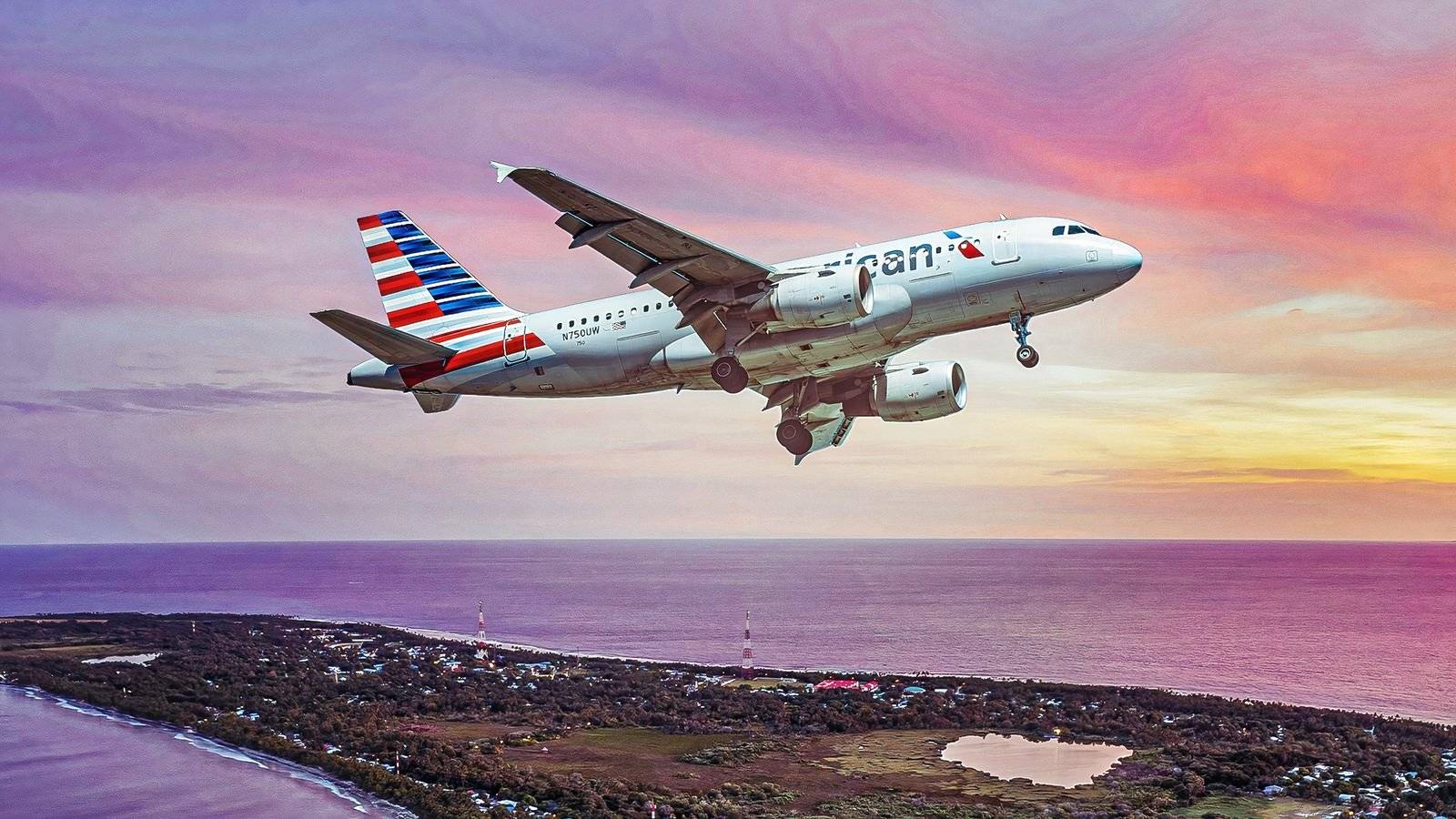
Published Aug 24, 2026, 1:00 PM EDT Experienced ICAO English Language Proficiency Instructor for pilots and ATCOs and conference interpreter who is passionate about facilitating effective communication within aviation-related businesses. Possess a deep understanding of the aviation industry, including aviation regulations, terminology, and industry-specific communication protocols. Has been working at numerous airshows across Europe since 2014. Being an ultralight pilot in her free time, she also promotes safety and efficiency in aviation operations. Based in Italy and Malta A routine aircraft financing transaction has quietly revealed something much more consequential about American Airlines: what passengers are likely to fly during the carrier's first full winter without Flagship First. The $1.325 billion aircraft-backed debt issuance filed in late July contains a collateral schedule covering new and existing aircraft, but its most revealing details are the five Airbus A321XLRs arriving through January 2027 and the Boeing 777-300ERs being pulled into an extensive cabin retrofit program. Those two developments might look unrelated on a balance sheet, but they are closely connected operationally. American is adding more long-range narrowbodies just as its 777-300ER fleet is being transformed from a relatively conventional premium configuration into an unusually business-heavy aircraft. The question is what this combination says about the airline's post-First Class strategy, and how it will change the transatlantic experience for passengers during Winter 2026/2027. The Debt Filing Is Really A Fleet Roadmap Credit: Shutterstock The $1.325 billion financing is secured against 37 aircraft, including 22 new or recently delivered aircraft and 15 aircraft already in American's fleet, according to View From The Wing. The collateral schedule includes nine Airbus A321neos, five A321XLRs, 13 older A321-200s and eight Embraer E175s, while the broader financing also involves existing aircraft and refinancing arrangements. The schedule is unusually useful because it does not simply identify aircraft being pledged as collateral; it provides delivery timing for aircraft that will soon become part of American's operating fleet. For American, this is happening against a backdrop of continued balance-sheet management. The airline ended 2025 with $36.5 billion in total debt after reducing its debt by $2.1 billion during the year, as shown on the official AA website, and its target was to bring total debt below $35 billion in 2026. By the end of the first quarter of 2026, debt had fallen to $34.7 billion, the lowest level since mid-2015, while the company reported more than $27 billion in unencumbered assets and first-lien borrowing capacity. The important point, then, is not simply that American is borrowing money. It is what the airline is financing at this particular moment: additional long-range narrowbodies and a major transformation of its existing flagship widebody fleet. That combination raises the next question: why does American need more A321XLRs precisely as its 777-300ERs are being rebuilt? Five More A321XLRs Change The Winter Equation Credit: Shutterstock The answer begins with the five A321XLRs listed in the financing collateral. According to Street Insider, American is scheduled to receive N307NY in September 2026, N315XR in November, N310NY and N312NY in December, and N311NY in January 2027. The deliveries would effectively double American's active A321XLR fleet from five aircraft to 10, giving the airline a much larger pool of long-range narrowbodies just as its widebody fleet enters an intensive retrofit cycle. The timing is particularly important because American's XLR is not a stripped-down aircraft designed only to provide extra range. Its planned 155-seat configuration includes 20 Flagship Suites, 12 Premium Economy seats and 123 Main Cabin seats. American previously confirmed it reduced its A321XLR order book from 50 to 40 aircraft, with 35 remaining on order after five deliveries, while retaining flexibility to adjust its A321neo/XLR mix if it wants to expand its long-haul-capable narrowbody fleet, as per The Engine Cowl's A321XLR fleet report. American is already showing how it intends to use the additional capacity. The A321XLR is scheduled for New York JFK-Barcelona, Philadelphia-Lisbon, and Philadelphia-Amsterdam, among other transatlantic services, allowing American to preserve or expand certain markets without committing a widebody. That's key to understanding why the delivery schedule is important. The XLR is arriving because the airline needs a flexible long-haul tool while its larger premium aircraft undergo substantial changes. The 777-300ER Is Becoming American's Premium Workhorse Credit: Shutterstock The other side of the strategy is the 20-strong Boeing 777-300ER fleet. American's long-standing plan is to remove the aircraft's Flagship First cabin and install 70 Flagship Suite business-class seats alongside 44 Premium Economy seats. American itself has confirmed that the refurbished aircraft will have more premium seating than the current configuration, and its 2025 centennial materials reiterated the 70-seat business-class and 44-seat premium economy layout. Using the available data and retrofit figures, the 777-300ER's premium seat count rises from 84 to 114. The eight Flagship First seats disappear, giving space for other seats. For example, business class expands from 52 to 70 and Premium Economy from 28 to 44. The new aircraft will carry 330 passengers, comprising 70 business-class seats, 44 premium economy seats and 216 economy seats. American Airlines 777-300ER Current Refurbished Flagship First 8 — Flagship Suite Business 52 70 Premium Economy 28 44 Main Cabin 216 216 Total seats 304 330 Premium seats 84 114 This cabin refurbishment represents a fundamental change in what American expects its largest long-haul aircraft to sell. Instead of preserving a tiny First Class cabin for the highest-paying passengers, the 777-300ER becomes a much larger premium platform, with 114 seats positioned above the Main Cabin. The only complication is timing. American cannot retrofit 20 aircraft without taking them out of normal service, and the first reconfigured 777-300ER was recently delivered from the retrofit facility in Hong Kong and is expected to return to revenue service later in 2026, with the fleet scheduled to receive the new configuration by 2027. That makes the expanding XLR fleet more than a long-term growth story: it is an operational bridge. American Is Using The XLR To Bridge The Retrofit Gap Credit: Shutterstock American's winter schedule makes the connection explicit. As its 777-300ERs undergo the Flagship Suite transformation, the airline is shifting some long-haul flying onto the A321XLR, using the smaller aircraft to maintain service while reducing reliance on widebodies during the retrofit process. AirlineGeeks reported that JFK-Barcelona would become a year-round route with the XLR operating during winter, while Philadelphia would see the type on Lisbon, Amsterdam, and Edinburgh services. The route details show exactly what the aircraft is designed to accomplish. From January 5, 2027, the A321XLR is scheduled to replace a Boeing 787-8 on Philadelphia-Lisbon, while from February 25 it is scheduled to operate Philadelphia-Amsterdam. New York JFK-Barcelona is also being added to the XLR network, while Philadelphia-Edinburgh transitions to the aircraft from October 25, according to AeroRoutes. This is classic narrowbody long-haul fleet economics: the airline can offer a lie-flat premium product and transatlantic range without filling a 250-plus-seat widebody. This flexibility is particularly valuable on seasonal European routes where a widebody can be too large during the winter. The A321XLR can therefore preserve connectivity through weaker periods while simultaneously giving American another aircraft to deploy when larger jets are unavailable. But there is another consequence. The XLR is not simply covering a temporary shortage of widebody seats; but it is also demonstrating that American can use a premium narrowbody as a permanent part of its transatlantic network architecture. From Flagship First To Flagship Everywhere That is the deeper significance of the debt filing. American is moving away from a fleet in which premium status was concentrated in a small First Class cabin and toward one in which premium capacity is distributed across more aircraft and more markets. The A321XLR puts 20 Flagship Suites on a 155-seat aircraft, while the refurbished 777-300ER puts 70 Flagship Suites into a 330-seat widebody. Both aircraft deliver a premium product, but at very different scales. The practical difference could be substantial for passengers. A traveler on a major trunk route operated by a refurbished 777-300ER will find a much larger business-class cabin than before, while a passenger on a thinner transatlantic market may get a smaller aircraft but still have access to a private-door Flagship Suite. American is effectively separating aircraft size from premium quality, allowing the network planners to match capacity more closely to demand. The financial strategy also fits the airline's broader fleet planning. American has said it is pursuing a younger, simpler, more efficient fleet, while CEO Robert Isom confirmed in June 2026 that the airline had an RFP in the market for its next widebody order, as reported by CH Aviation. American has 19 widebodies on order and options for 28 more, with management expecting some 777 retirements in the 2030s. The 2026/2027 winter season will be more than a temporary scheduling exercise. It is the first real-world test of whether American can operate a premium international network with smaller aircraft on thinner routes while concentrating its biggest widebodies on markets that can support exceptionally large business-class cabins. American's First Post-First Winter Will Define The New Fleet Credit: Shutterstock The disappearance of Flagship First from the 777-300ER is ultimately less important than what American is replacing it with. The airline is not abandoning premium travel; it is dramatically expanding the number of premium seats it can sell, while using the A321XLR to put lie-flat suites on routes that previously required a much larger aircraft. That makes the new financing document a useful snapshot of an airline trying to scale premium demand. The immediate test will come between September 2026 and early 2027, when the five A321XLR deliveries arrive, and the fleet reaches 10 active aircraft. At the same time, 20 777-300ERs are moving through a program that will ultimately replace Flagship First with 70 Flagship Suites and 44 Premium Economy seats per aircraft. The result is a fleet in which the narrowbody provides network flexibility while the widebody becomes an exceptionally premium-heavy revenue machine. The final question is whether American will continue using the XLR primarily as a seasonal and retrofit substitute or make it a foundation of its permanent transatlantic strategy. With 35 additional A321XLRs still on order after the first five deliveries, and with American simultaneously evaluating another widebody order, the evidence suggests the airline is building two complementary long-haul tools rather than choosing between them.
What American Airlines' New $1.3 Billion Debt Filing Reveals About Its Post-First Class Fleet
Full Article
Original Source
Read the full article at Simpleflying →KhanList aggregates and links to publicly available news content. We do not host full articles from third-party sources. Always verify important information with original sources.