
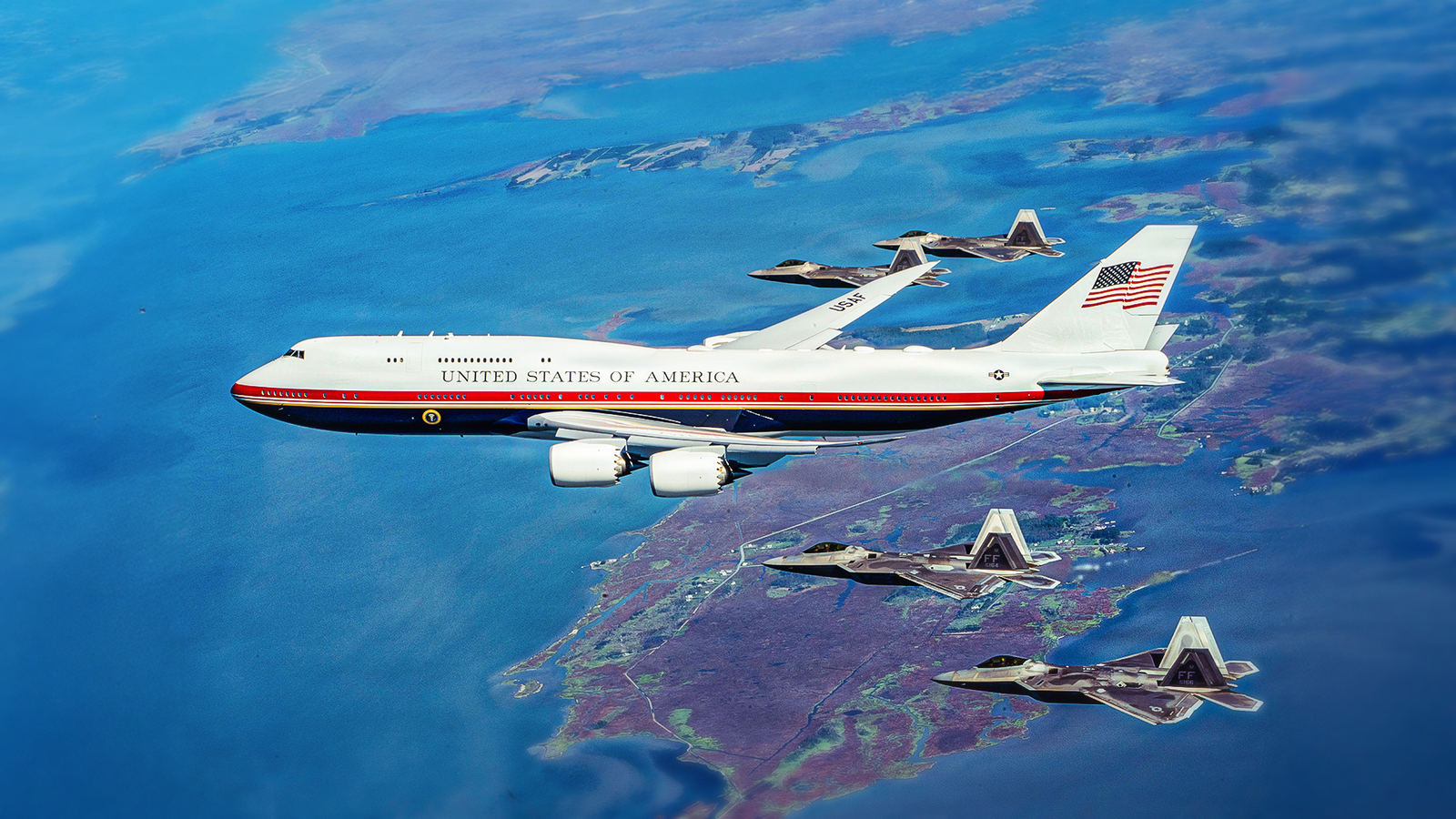
Published Nov 19, 2026, 6:01 PM EST Daniel comes to Simple Flying with a business focused approach to the aviation world. Daniel enjoys analyzing strategy and how companies move against each other to gain a step ahead in the skies. Besides strategy, Daniel also has a passion for aircraft design and the history of aviation. Based in New York Standard actions for a commercial airline crew before a flight include reviewing the flight with each other, followed by a pre-flight walkaround. Later, the crew sets up the flight deck, inputs their flight plan into the aircraft's computer, and verifies the aircraft's weight and balance figures before pushback. It's a thorough procedure to ensure the aircraft is fully ready to operate safely, and these procedures apply to essentially every commercial flight. The pilots of Air Force One also do these actions, but their pre-flight duties are much more thorough because of their job: transporting the President of the United States. Air Force One is a callsign used to denote any US Air Force (USAF) aircraft flying the President, but it is most commonly associated with two Boeing VC-25As and the VC-25B Bridge, which are based on the Boeing 747. Crucially, the flight crew is concerned not just with safety, but also with security. The Added Steps For Air Force One Credit: Felix Tchvertkin I Shutterstock The two VC-25As are typically flown by two pilots, a flight engineer, and a navigator, while the VC-25B Bridge does not require a flight engineer (because it's based on the newer 747-8). Before each flight, they coordinate with ground crews to verify that the apron and runway are clear of potential debris. The flight plan itself may look significantly different from what airliners operate, and the crew also needs to ensure that the aircraft's onboard security and defense systems are operational. In addition to these actions, the flight crew of Air Force One needs to help maintain security. This means not just coordinating with security teams on the apron, but also with air traffic control to ensure that the airport and surrounding airspace is clear of any potential conflicts. The crew also verifies that the aircraft will receive priority handling from air traffic control, and they also must review aerial refueling procedures for the VC-25A, although this capability has never been used with the president onboard. The pilots typically must arrive three to four hours before the scheduled flight, coordinating with the US Secret Service to maintain security on the aircraft and at the airport. The aircraft is inspected, and its systems are tested to check for any potential technical faults. In addition, the crew has to review emergency procedures while also performing the more typical actions that you'd expect during the pre-flight flow. While this is usually a multi-hour process, flight crews are trained to perform departures with as little as an hour's notice. Transporting The US President By Air Credit: Ronen Fefer I Shutterstock Every long-distance trip undertaken by the US president begins and ends at the White House South Lawn. Here, the president boards a US Marine Corps helicopter operating under the callsign 'Marine One', the callsign used for any USMC aircraft carrying the US president. The helicopter, which may be joined by several others during the trip, flies to Andrews Air Force Base, home to the Presidential Airlift Group. The flight typically takes about six to ten minutes, and when the president lands, Air Force One is already waiting. The VC-25s not only carry the president, but they also transport the president's Secret Service detail, senior staff, medical personnel, and advisors. In addition, the aircraft will typically carry the White House press pool, a rotating group of reporters and journalists covering the president. The president is always the last person to board the aircraft, and once he/she is onboard, the doors close before the engines are started. From there, the aircraft taxis to the runway and takes off. Upon arrival, the airport receiving Air Force One typically suspends operations. From there, the president may either take a motorcade or another US Marine Corps helicopter to their final destination. The vehicles required for the motorcade and the USMC helicopters are typically flown in ahead of time via a Lockheed C-5 Galaxy to ensure that they're ready for the president's arrival. When it's time to return to Washington, this process repeats itself. The Requirements To Fly The VC-25 Credit: Adomas Daunoravicius I Shutterstock The pilots commanding the VC-25s must be experienced airmen serving with the US Air Force. Generally, these crew members have prior experience operating complex multi-engine transport aircraft and must have logged a significant number of flight hours (generally at least 2,500 hours). From there, pilots usually transfer to the 89th Airlift Wing at Andrews Air Force Base and build experience transporting other executives on aircraft like the Boeing C-32 or C-40 Clipper. Pilots must maintain an exemplary flying record while serving in the USAF and keep a spotless permanent record. In addition, they must earn high-level qualifications to stand out further. Senior leadership evaluates the pilot roster at the 89th Airlift Wing, then handpicks the top aviators to enter the selection process for the Presidential Airlift Group. From there, the selection process includes interviews, psychological screenings, and simulator tests. The final piece for those selected to pilot the VC-25 is to obtain 'Yankee White' clearance. This is a special, top-level security clearance reserved for personnel supporting the US president and vice president, and getting it requires an extremely thorough background check. Investigators may interview family members and peers, as well as former neighbors or teachers to verify stability, loyalty, and dependability, in a process that can take as long as a year. Candidates must also have a spotless criminal and financial history. The Other Means Of Air Transport For The US President Credit: Mircea Moira I Shutterstock The VC-25As that commonly serve as Air Force One are designed to serve as invulnerable command centers in the sky. They feature advanced defense and communications systems, while also being equipped with aerial refueling systems so that they may remain airborne until food and water run out. However, the 747-based VC-25As are also massive aircraft. Not every airport can easily accommodate the VC-25As, and they draw a huge amount of attention, which isn't always ideal. While the VC-25As are the most common aircraft that serve as Air Force One, the US president also occasionally travels on the Boeing C-32A, based on the 757-200. These planes are generally used when the president is traveling to airfields that cannot accommodate the VC-25A, and they can also be used as a backup aircraft when the president travels, as well as if a VC-25A is unavailable. Furthermore, the C-32s are useful when the president is traveling on sensitive missions, such as to active war zones. In February 2023, former president Joe Biden secretly traveled to Ukraine, marking the first time in modern history that a US president had visited an active war zone not under the control of the US. To get there, he took a C-32A rather than the VC-25A, stopping at Ramstein Air Base in Germany for refueling before proceeding to Poland, where he boarded a train to Ukraine. The C-32 was preferable because of the sensitivity of the mission, and the flight didn't even use the standard Air Force One callsign in this case; rather, the callsign used was 'SAM060'. The New Air Force One 747s Credit: Bogac Erkan I Shutterstock The two VC-25As were delivered in the early 1990s and are based on the 747-200B, an aircraft that first entered service in the early 1970s. They're old and increasingly unreliable, and maintaining these aircraft is becoming difficult and expensive. As such, the USAF selected the 747-8 to serve as the platform for the replacement VC-25B in 2015, with first delivery scheduled for 2024. However, this has been pushed back multiple times, with first delivery now targeted for 2028. In 2025, the US government accepted a 747-8 configured as a business jet from the Qatari government as a gift. This aircraft, now titled the VC25B Bridge, is intended to serve as an interim supplement for the existing VC-25A fleet until the two VC-25Bs are ready. The focus with the VC-25B Bridge was to get the aircraft ready as soon as possible, and it entered service in July 2026, less than a year after it was accepted. The catch is that it lacks many of the safety and defense features that are typically needed for the missions. Specification Boeing VC-25A Boeing VC-25B Bridge Boeing VC-25B Order year 1985 2025 2015 Delivery year 1990 2026 2028 or later Base aircraft Boeing 747-200B Boeing 747-8 Boeing 747-8 Engine model General Electric CF6-80 General Electric GEnx General Electric Genx Crew Three (747-200B), four (VC-25A) Two (747-8), TBD (VC-25B) Two (747-8), TBD (VC-25B) Line numbers 679, 685 1449 1519, 1523 The VC-25B Bridge is only intended to be in service until the VC-25Bs arrive, and the aircraft is set to be retired before the end of President Donald Trump's second term. The VC-25Bs that will succeed it are conversions of whitetail aircraft, but they are being retrofitted with a full assortment of security, communications, and defensive technologies. Not only will they replace the VC-25B Bridge, but they will also replace the VC-25As, and they will be among the world's most advanced and secure aircraft in service.
What Air Force One Pilots Do Before Flights That Most Other Pilots Never Do
Full Article
Original Source
Read the full article at Simpleflying →KhanList aggregates and links to publicly available news content. We do not host full articles from third-party sources. Always verify important information with original sources.