
Published Oct 26, 2026, 11:00 AM EDT Luke Diaz is a freelance military writer with experience with active duty experience in the US Navy as well as defense and industrial engineering. He is a former Naval Flight Officer who performed tactical air control on the carrier-based E-2 Hawkeye. Southwest Airlines has actively evaluated adding the Boeing 787 Dreamliner to its fleet as part of an ongoing assessment into long-haul international expansion. Yet no order has been placed, and the airline has not publicly announced a final decision. Even so, according to Reuters, individuals familiar with the carrier's fleet planning say Southwest is leaning toward the Boeing 787 Dreamliner as its first widebody. The airline is considering adding dozens of next-gen widebody jets to its fleet that has been famously composed of only Boeing 737 narrowbodies for decades. Southwest's chief financial officer said in September that long-haul international service was among several options under review as the airline moves forward with its historic business model overhaul. CEO Bob Jordan also stated eight to 12 long-haul destinations would be sufficient to meet much of the customer demand currently being planned for. Although that sounds modest on paper, a widebody fleet would not slot into the airline the way another 737 variant does. Adding one of the three Dreamliner variants to Southwest's flight line would be akin to establishing a separate airline operating within the fleet. On top of that, Boeing has said the 787 will be sold out by the end of the decade, making complex fleet diversification a years-long endeavor that could ultimately amount to nothing more than a logistical quagmire. Why One Airplane Type Became Southwest's Brand Identity Credit: Phillip B. Espinasse | Shutterstock Southwest began flying on June 18, 1971, with three Boeing 737s, and while Vintage Aviation News notes that the airline briefly flew 727s decades ago, the 737 has remained the backbone ever since. Conceived by founders Herb Kelleher and Rollin King, this strict single-type fleet strategy was a pragmatic solution born out of survival. One aircraft type meant a single training program, unified parts logistics, and crew bases where any pilot could step onto any flight. In the early 1970s, Southwest was locked in a brutal legal and financial battle for its very survival against entrenched legacy carriers. Southwest needed a single parts inventory, and mechanics who could fix any plane in the fleet, to cut downtime, training, labor, and every other expense imaginable just to stay afloat. Flight crews held a single type rating. This eliminated the costly industry practice of maintaining separate reserve crew pools for different jet families. Schedulers could seamlessly move any available pilot or flight attendant onto any aircraft in the network at a moment's notice to keep customers moving and avoid refunds or canceled flights that would cut into profit. Because every aircraft was identical, gate agents, baggage handlers, and ramp crews performed the same choreography on every arrival. Ground crews knew exactly where to position fuel trucks, luggage carts, and provisioning teams without adjusting for varying fuselage lengths or door locations. The famous ten-minute turn let Southwest routinely turn aircraft around at the gate as fast as possible, maximizing the time the jets spent in the air generating revenue. The Hawaii Route As A Case Study In A New Widebody Fleet Credit: Allison H. Smith | Shutterstock A real-world sample of the severe schedule restrictions and logistical difficulties Southwest would encounter if it introduced a widebody aircraft like the 787 is provided by its operations to Hawaii. Extended-range Twin-engine Operational Performance Standards certification is the most significant operational similarity between the Hawaiian network and a prospective Dreamliner fleet. Although travelers saw consistent planes throughout the network, Southwest had to make a significant operational change when it entered the Hawaiian market. Southwest had to go through a difficult, years-long Federal Aviation Administration approval process because twin-engine aircraft traveling to Hawaii must cover oceanic areas without diversion airports. Even though Southwest operates over 800 Boeing 737s, only a specific sub-fleet of roughly 138 aircraft has the certification required for long overwater flying to the Pacific islands. If a standalone sub-fleet of 737s already stretches Southwest's scheduling and dispatch logic, introducing an entirely separate aircraft family like the Boeing 787 would magnify these friction points exponentially. Southwest’s profitability hinges on keeping planes in the air, a goal achieved through highly optimized ground handling. A widebody aircraft completely annihilates this efficiency. A Southwest 737 carries up to 175 passengers down a single aisle. A Boeing 787 carries roughly 240 passengers across a twin-aisle configuration. Even with twin aisles, boarding and deplaning a widebody takes roughly 30 to 45 minutes under perfect conditions. Today, Southwest turns its 737 much more slowly than it did in the 1970s, averaging over 30 minutes instead of ten, and a twin-aisle would only make that even longer between sorties. Why A Dreamliner Cannot Be Turned In Ten Minutes Credit: Wangkun Jia | Shutterstock To accommodate FAA Group III aircraft with wingspans under 118 feet, Southwest has spent 55 years building its terminal architecture, gate spacing, and ground equipment. With its enormous 197-foot wingspan, the 787 is a Group V aircraft that often requires surrendering nearby gates to clear the wingtip safety zones. If one Dreamliner is parked, nearby 737 gates may become unusable, significantly reducing the airport's overall passenger flow. Unlike 737s, a 787 Dreamliner uses standardized Unit Load Device (ULD) containers to transport luggage. The Boeing single-aisle aircraft only uses bulk, loose belly loading. Baggage handlers manually stack luggage pieces directly into the cargo hold, which is fast and requires minimal infrastructure. Handling ULDs requires heavy mechanized container loaders, a specialized fleet of tugs, and an entirely different ground-support ecosystem that Southwest's domestic gates lack. The forward passenger door height of a 787 sits much higher off the ground than a 737. Standard Southwest jet bridges cannot safely match that incline without modifications. Furthermore, a 787 requires high-flow underwing fueling infrastructure to pump its massive fuel load. Another major component of Southwest's legendary turn times is that flight attendants and ground crews can quickly march down a single aisle, pull trash from the seats, and clear the plane. Southwest Airlines — Live Flights Deep-cleaning a widebody cabin, restocking long-haul international catering supplies, and resetting complex in-seat charging and entertainment systems takes hours, not minutes. The 787 cannot physically turn fast enough to fit into the schedule. Splitting the fleet into two completely incompatible halves, with the vast majority being narrowbodies and a handful of heavily burdened widebodies, profoundly compromises the operational simplicity that has kept Southwest profitable for decades. Pilots Would Need A New Rating And A New Career Path Credit: Leena Robinson | Shutterstock Currently, Southwest employs about 11,000 pilots who fly throughout the entire network after just one training session. A Dreamliner group would sit entirely apart, requiring separate simulator schedules, specialized instructors, and new corporate decisions about senior widebody seats. One of Southwest's most valuable operational assets would be immediately destroyed with the launch of the Boeing 787 Dreamliner. Southwest's thousands of pilots have held the same Boeing 737 type rating for more than 50 years. Any captain or first officer can enter any cockpit on the network at any time. Southwest’s pilot training infrastructure is highly streamlined, built exclusively around the 737 cockpit. Moving a pilot from a 737 to a 787 requires a full, multi-week type-rating course. Southwest would have to invest tens of millions of dollars to buy dedicated 787 full-flight simulators, build a new training curriculum, and hire widebody instructors. This permanently breaks the streamlined, low-overhead training cost that has kept Southwest's pilot pipeline efficient. Senior Southwest captains currently earn about $364 per hour under their specialized formula, while senior widebody captains at legacy network carriers exceed $400. Because widebody flying naturally commands higher pay scales and more desirable international routes, the airline’s most senior and experienced 737 captains would immediately bid to transition to the 787. This would trigger a massive, expensive wave of seat vacancies. Transitioning to a widebody fleet would slice this unified pilot team into two completely separate, non-interchangeable groups. At Southwest, pilot scheduling and route selection are governed entirely by a single, integrated seniority list. The introduction of the 787 also creates a seniority vacuum and muddles the existing career progression path. Maintenance Would Split Into Two Industrial Supply Chains Credit: John Gress Media Inc | Shutterstock A single family of aircraft served as the foundation for Southwest's maintenance operation. Every spare part fits every airframe, and any technician can fix any aircraft. Heavy checks are centralized at Dallas Love Field, while technicians operate across 23 domestic locations. A widebody introduction would still require extensive type training, specialized tools, and new compliance processes before inspectors could lawfully approve work, even though mechanics have regular FAA airframe and engine certificates. The supply chain that Southwest currently uses is a masterwork of simplification. Standardizing a vast network of supply chains, heavy maintenance hangars, and line stations centered solely on the Boeing 737 family minimizes overhead and maximizes aircraft availability. Forcing a highly sophisticated, clean-sheet widebody like the 787 into this streamlined ecosystem shatters that efficiency at every layer. A 787 Dreamliner shares virtually zero parts commonality with a 737. The mechanical architecture of the 787 represents a radical departure from traditional commercial airliners, presenting a steep learning curve for a 737-trained maintenance workforce. Additionally, its engine maintenance program is designed exclusively for the CFM56 and CFM LEAP-1B turbofans that power the 737 fleet. The 787 is powered by GEnx or Rolls-Royce Trent 1000 engines. Southwest cannot afford to staff and equip every single airport in its network for 787 maintenance. If a Dreamliner is forced to divert to a standard 737 domestic station due to a mechanical issue, the airline would be forced to fly with specialized widebody mechanics and parts on a domestic 'rescue' flight. A dual-fleet setup would dismantle the streamlined, low-cost maintenance ecosystem the carrier spent over fifty years perfecting.
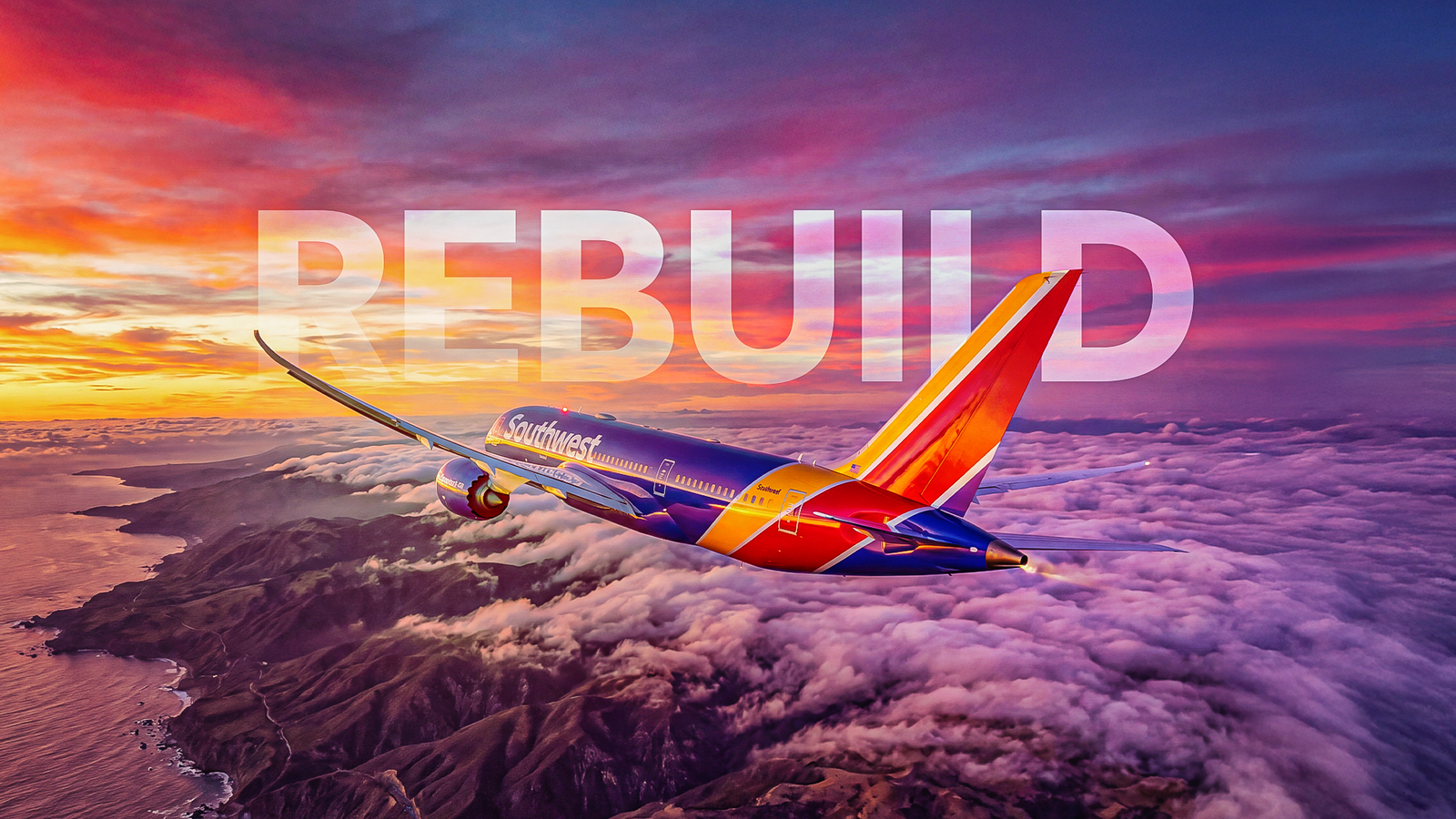
What A Single Boeing 787 Would Force Southwest Airlines To Rebuild After 55 Years Of Flying Only Boeing 737s
Full Article
Original Source
Read the full article at Simpleflying →KhanList aggregates and links to publicly available news content. We do not host full articles from third-party sources. Always verify important information with original sources.