
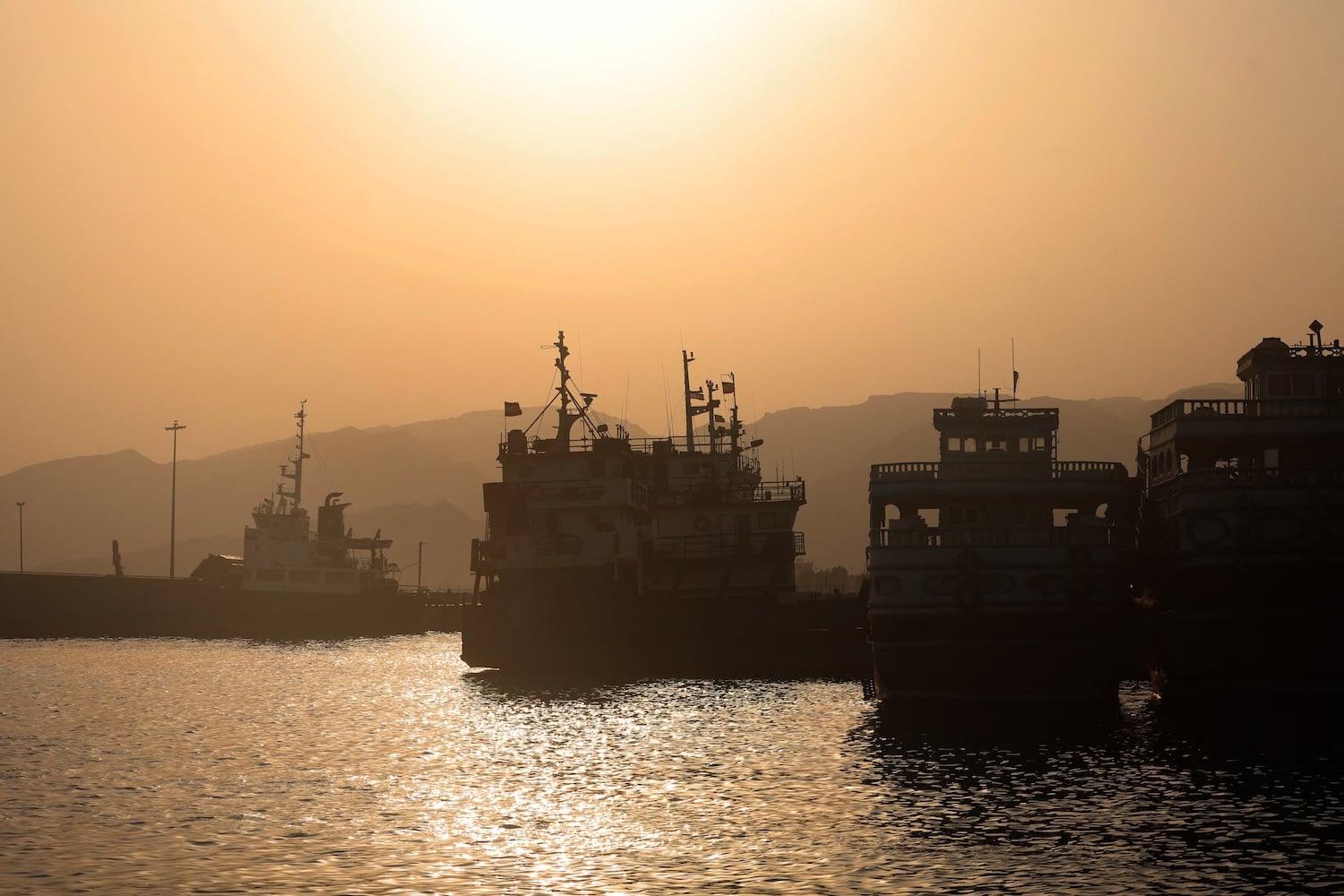
With the prospect of renewed war in Iran seemingly off the table for now, and given the Trump administration’s redoubled commitment to economic pressure to overwhelm Tehran, the question again becomes: What will be the fate of the Strait of Hormuz? U.S. President Donald Trump, despite earlier threats to reignite hostilities in a last bid to cow Iran’s resistance, appears to have parked the military option. U.S. Secretary of State and National Security Advisor Marco Rubio also indicated that the double-whammy of Operation Economic Outcast (a naval blockade) and Iron Gate (a land blockade of Iranian trade) will bend the regime to the administration’s will. Not even angry phone calls with Israeli leadership appear able to summon the dogs of war again. With the prospect of renewed war in Iran seemingly off the table for now, and given the Trump administration’s redoubled commitment to economic pressure to overwhelm Tehran, the question again becomes: What will be the fate of the Strait of Hormuz? U.S. President Donald Trump, despite earlier threats to reignite hostilities in a last bid to cow Iran’s resistance, appears to have parked the military option. U.S. Secretary of State and National Security Advisor Marco Rubio also indicated that the double-whammy of Operation Economic Outcast (a naval blockade) and Iron Gate (a land blockade of Iranian trade) will bend the regime to the administration’s will. Not even angry phone calls with Israeli leadership appear able to summon the dogs of war again. That means that the overarching question—beyond the fate of Iran’s previously “obliterated” nuclear program, something that does not seem amenable to short-term diplomacy—is who will control the most strategic waterway on Earth. Before the war, which began in February, the Strait of Hormuz saw the transit of 20 percent of all seaborne oil exports in the world. It was never closed before, though there was a “tanker war” in the 1980s during the Iran-Iraq conflict that disrupted regional energy flows. But the strait was closed for much of this year, and it has only been prized open at great cost in recent months by the efforts of the U.S. Navy and the fortitude and deep pockets of seafarers and shipping companies. Oil flows out of Hormuz, and indeed the broader Middle East, are as high now, on average, as they were before the war began. Coupled with dovish talk from Washington, the global price of oil has plummeted in recent weeks from $114 a barrel to the low $90s. But that does not portend a return to normal. Shipping rates have fallen from their sky-high levels earlier this autumn, but they remain multiples of their prewar prices. Iran continues to target and strike tankers and other vessels that transit the strait, with two incidents in just the last 24 hours. Oil flows from the Persian Gulf—just not freely. Any negotiated end to the now nine-month conflict will have to confront the future navigational regime of the Strait of Hormuz. That was a question on which the July memorandum of understanding between Washington and Tehran punted, but it cannot be forever forestalled. On the one hand, what suddenly became Iran’s greatest strategic asset—a chokehold over the world’s carotid artery—will not be surrendered summarily. On the other hand, it is a wasting asset and will diminish further in the years to come. Saudi Arabia has expanded its overland pipelines to bypass the strait, as has the United Arab Emirates, meaning the constricted and vulnerable seaborne route is less critical. “The strait is an asset of declining value for Iran,” said James Kraska, a professor of maritime law at the U.S. Naval War College. Kraska has some thoughts on how to chart a course to a sustainable future for the Strait of Hormuz, drawing on international law, lessons from previous big-power showdowns, and current straits-management regimes in other parts of the world, including the Strait of Malacca. He laid them out in some detail earlier this year. The thrust of the argument for his “Hormuz Declaration” is a recognition that Iran, after the war, will want to retain some measure of control over a vital chokepoint of the world economy, but it cannot be the sole arbiter. Iran and Oman, which share the territorial waters that shrink into the narrows of Hormuz, will need to be at the forefront of any postwar agreement. But it must also be backed by major powers that rely on the waterway, including China, the United States, and Europe. What that would mean in practical terms is a return to the prewar situation in which ships pass through the center of the strait, free of threats or tariffs, rather than skirting toward the Iranian or Omani coasts as at present, under the threat of drones, mines, and missiles. Iran’s plan for a tollbooth in the strait, which would charge passing tankers millions of dollars and potentially bring in billions of dollars in annual revenue, is a bad idea, Kraska argued. A richer vein could be tapped by Tehran gaining access to frozen assets and reentering the global economy, something sorely needed for an economy facing a dearth of imports and inflation of around 140 percent a year. “I believe that what I’ve offered is the start of a framework, a Hormuz Declaration, and a cooperative mechanism. And that’s really the only way—but it will require Iran to feel it gets enough to give it room to negotiate,” Kraska said. “The material benefits of a deal are evident for both sides, and there’s a face-saving way for Iran to do that.” Under the current situation, oil from most Gulf countries largely gets out, one way or the other, while oil exports from Iran have all but collapsed. A negotiated, international regime for the management of Hormuz would bring down costs for all oil exporters and return Iran’s oil to global markets. The immediate obstacle to such a deal is that Iran appears determined to insist on compliance with the conditions that Trump signed off on over the summer, including an end to the naval blockade, the end of U.S. military presence in the region, and an end to fighting in other theaters such as Lebanon. The United States, for its part, has never been keen on granting Iran any veto power over Hormuz in the postwar landscape, even though a return to the status quo ante is now impossible. That standoff explains why oil remains above $90 a barrel despite an end to major combat operations in the region. U.S. officials believe that sustained economic pressure on Iran will buckle Iran’s leadership, which has spent nearly half a century battling sanctions and international isolation. Kraska is not so sure. The new normal may be a war-not-war that keeps markets on edge and prices relatively high but never resolves into either peace or escalation. “The most likely indication of what is to come in the near future is what is in the present, which is mowing the grass, basically,” Kraska said. “I just think we will continue to muddle through over the next year or two and never get a final resolution. Because we’ve seen with Iran that even when you get a resolution, there’s a compliance problem.”
What a Hormuz Endgame Could Actually Look Like
Full Article
Original Source
Read the full article at Foreignpolicy →KhanList aggregates and links to publicly available news content. We do not host full articles from third-party sources. Always verify important information with original sources.