
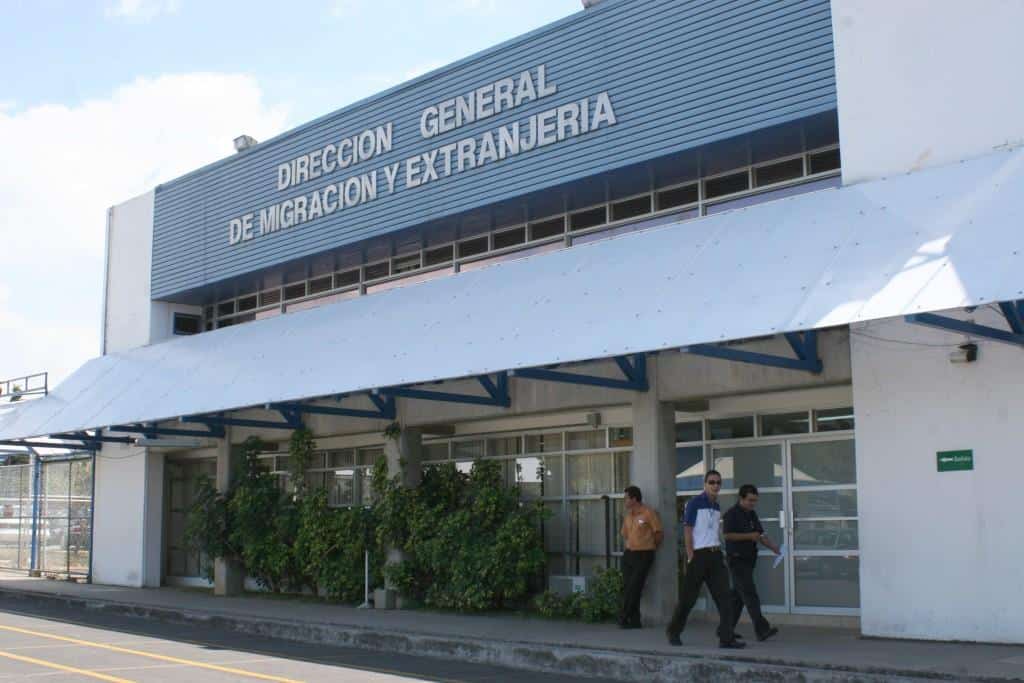
A judicial notice served on live television this week put an obscure piece of legal machinery in front of all of Costa Rica. Most of what was said about it afterward was wrong. Here is how it played out: A judicial officer walked up to Pilar Cisneros Gallo outside Casa Presidencial on Thursday afternoon, handed her a document, and ended a two-day story about a measure almost nobody in Costa Rica had heard of a week ago. Earlier that day the Fiscalía General confirmed it had issued a migratory alert against Cisneros, a former legislator who now works without pay as a communications adviser to the Executive. Prosecutors said they needed to summon her for a declaración indagatoria — the statement a person under investigation is entitled to give — in a case examining the alleged illegal receipt of private contributions during the 2022 presidential campaign. They said they had not been able to reach her. Within hours of the notice being served, the alert was cancelled. That sequence tells you most of what the document is for. It is not an arrest warrant and it is not an exit ban This is the part that got scrambled fastest. A migratory alert does not stop you leaving the country, and it does not authorise anyone to detain you. The Ministerio Público said plainly that the measure was neither an arrest order nor an exit impediment, and that it did not require the Dirección General de Migración y Extranjería to report each of Cisneros’s border crossings back to prosecutors. The alert existed to help locate her for a summons, nothing more. An exit ban is a different instrument with a different weight. Under the Ley General de Migración y Extranjería, an authority ordering an exit impediment has to supply the person’s name, nationality, identity document type and number, date of birth and the reason for the restriction. Migración cannot record the impediment if any of that is missing, and cannot lift it without a written order from the authority that imposed it. None of that applies to an alert. An alert is a flag in a system. An exit ban is a wall. What happens if you hit one at the counter The Sala Constitucional examined how these alerts operate in a 2024 ruling, working from the procedure Migración described to the court. When someone carrying an alert is detected at a border post, officers can verify their identity, establish which authority issued the alert, and contact that authority for instructions. That is the whole mechanism. What happens next depends entirely on what the issuing authority says, and in a case like this one the answer would be that the person needs to be handed a summons. You would notice it as a delay at the counter while an officer makes a call. You would not be handcuffed, and you would not be turned around. Why this one drew a formal complaint The Ministerio Público described the request as normal and proportionate, the kind of step taken when a person cannot be located or served. Prosecutors laid out what they said they had tried during August: two attempts at her home and five calls to numbers registered in her name. At one of the home visits, they said, they were told she no longer lived there. On one of the calls, a man who identified himself as her husband said she was out of the country and supplied a second number, and a person answering that number said she was not available. Cisneros rejected the account. She said she had lived at the same address for 17 years, had kept the same phone number for 25, and worked at Casa Presidencial every day. She called the alert a political attack and a score-settling move by Attorney General Carlo Díaz, and challenged prosecutors to come and serve her, noting the distance between Casa Presidencial and the Fiscalía is about 2.3 kilometres (1.4 miles). Asked by reporters whether she had evidence connecting the measure to the coming selection of a new attorney general and Supreme Court president, she said she had none, but had no doubt either. Justice Minister Gabriel Aguilar then escalated it. In official document MJP-DM-822-2026, addressed to Supreme Court President Orlando Aguirre, he called the measure abusive and disproportionate and asked that the Judicial Inspection, the full Court and the anti-corruption prosecutor’s office examine the conduct of adjunct prosecutor Edith Morera and of the Attorney General in his supervisory capacity. Aguilar argued it was serious to reach for a migratory alert to accomplish something as routine as a notification. Where it stands Cisneros was served during a press conference on Thursday afternoon and summoned to appear at 8 a.m. Friday with defense counsel. The Fiscalía emailed Migración the same day to void the alert as she has not been charged. A declaración indagatoria is the stage at which the Código Procesal Penal requires that a person suspected of involvement in a crime be given the chance to speak, and it carries no obligation to answer questions or testify against oneself. Cisneros lost parliamentary immunity when the 2022–2026 constitutional term ended, which is why the case is no longer handled under the special rules that apply to members of the supreme powers. The Fiscalía said the file is not directed by the Attorney General personally, precisely because nobody currently named in it holds immunity, and that the others under investigation had already given their statements. The measure at the center of all this lasted less than a day and never restricted anyone’s movement. Whether reaching for it was proportionate is now a question for the Court, and the answer will matter well beyond this one file.
What a Costa Rican migratory alert actually does
Full Article
Original Source
Read the full article at Ticotimes →KhanList aggregates and links to publicly available news content. We do not host full articles from third-party sources. Always verify important information with original sources.