
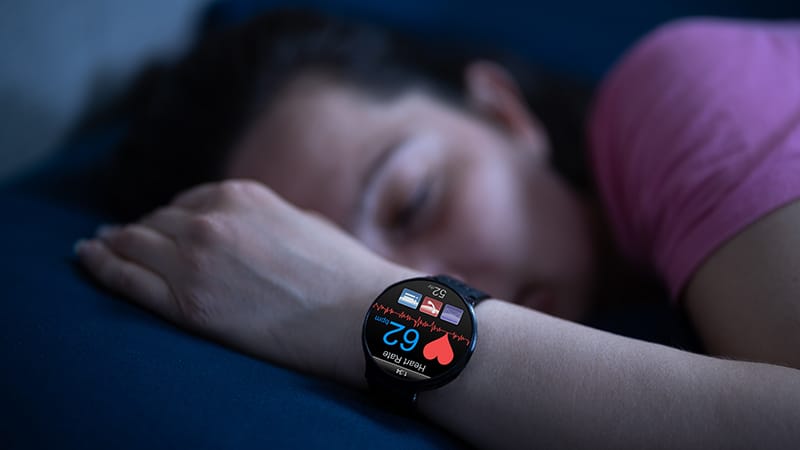
More time spent in REM was associated with a decreased risk for 83 different conditions across 12 major disease categories, including Parkinson’s disease (PD), multiple sclerosis (MS), and dementia, a large prospective cohort study showed.Researchers analyzed wrist tracker data from more than 95,000 UK Biobank participants to study how real-world sleep patterns might affect the risk for nearly 1100 diseases.More deep sleep was associated with lower odds of seven conditions, such as type 2 diabetes and major depressive disorder (MDD), they found. Longer sleep duration also showed a benefit, with the lowest disease risk observed among participants who slept 6-8 hours per night.Shorter and more disrupted sleep negatively affected disease risk. For example, sleeping less than 5 hours was associated with increased risk across 37 conditions, including dementia, heart failure, and type 2 diabetes.“The findings provide additional evidence supporting the role of a 6-8 hours’ sleep duration as a health safeguard for middle-aged and older adults, likely attributable to more favorable distributions of sleep stages,” lead investigator Jingsong Luo, MD, of the School of Public Health, Peking University in Beijing, China, and colleagues wrote.The study was published online on September 17 in PLOS Medicine.Assessing Sleep PatternsSleep duration has been associated with health outcomes, but total sleep time may not capture the relationship between sleep and disease, investigators noted. Sleep stages, fragmentation, and irregularity may also influence disease risk.The current study included 95,559 UK Biobank participants (mean age, 56.2 years; 56.3% women) who wore wrist accelerometers continuously for 7 consecutive days and nights. A machine learning model estimated REM, deep, and light sleep; total sleep duration; wakefulness after sleep onset; and night-to-night sleep irregularity.Participants were followed up for a median of 8.9 years, with diagnoses identified from health records.The analysis examined associations between sleep measures and 1049 different diseases and health conditions, accounting for age, sex, socioeconomic status, lifestyle, and environmental factors.More REM, Lower Disease RiskEach 47.6-minute increase in REM sleep was associated with a significantly lower risk for 83 diseases. The greatest benefit was seen in patients with PD (hazard ratio [HR], 0.20), MS (HR, 0.48), dementia (HR, 0.54), Alzheimer’s disease (HR, 0.69), and heart failure (HR, 0.74; P < .001 for all).Greater deep sleep was associated with a significantly lower risk for seven conditions, including type 2 diabetes (HR, 0.89) and MDD (HR, 0.86; P < .001 for both).Findings for light sleep were less consistent. A greater amount of light sleep was associated with an increased risk for 28 diseases, such as MDD (HR, 1.31), but a decreased likelihood of heart failure (HR, 0.86) and cellulitis (HR, 0.83).More sleep irregularity was associated with greater odds of abdominal pain (HR, 1.13), anxiety disorders (HR, 1.23), and MDD (HR, 1.26). Risks for psychoactive substance dependence (HR, 1.33), alcohol abuse (HR, 1.22), and four other disorders were more common with greater wakefulness after sleep onset.Getting 6-8 hours of sleep daily showed the strongest association between sleep duration and lower risk, showing a benefit in 69 conditions, while sleeping less than 6 hours raised the odds of 24 diseases.Researchers noted that the study cannot establish causality. Sleep disturbances may contribute to disease, result from underlying disease, or reflect shared risk factors. Moreover, sleep stages were estimated from wrist movement rather than being directly measured with polysomnography, which is considered the gold standard.How Well Can Sleep Be Measured?Objectively measured sleep may offer important insights into health, but questions remain about how accurately sleep stages can be identified outside a sleep lab.“The fact that sleep was measured over 7 consecutive days is a strength as this is generally quite representative of our habitual sleep patterns,” Greg Elder, PhD, assistant professor in psychology and associate director of the Northumbria Centre for Sleep Research at Northumbria University in Newcastle upon Tyne, England, said in a statement from the UK nonprofit Science Media Centre.However, wrist accelerometers cannot directly measure the brain activity or eye movements needed to definitively identify sleep stages, which Elder said is an important limitation. Although the machine learning approach can estimate REM and deep sleep, this “isn’t the same as actually knowing when people are in light sleep, REM sleep, or deep sleep,” he said.The study also cannot determine whether sleep changes contribute to disease or occur as a result of health problems. “Future work needs to look at where sleep alterations fit into the underlying mechanisms of each of these health conditions,” Elder said.Disclosure information for study authors is available in the original study publication. Elder reported having no relevant financial disclosures.
What 95,000 Wrist Trackers Revealed About Sleep
Full Article
Original Source
Read the full article at Medscape →KhanList aggregates and links to publicly available news content. We do not host full articles from third-party sources. Always verify important information with original sources.