
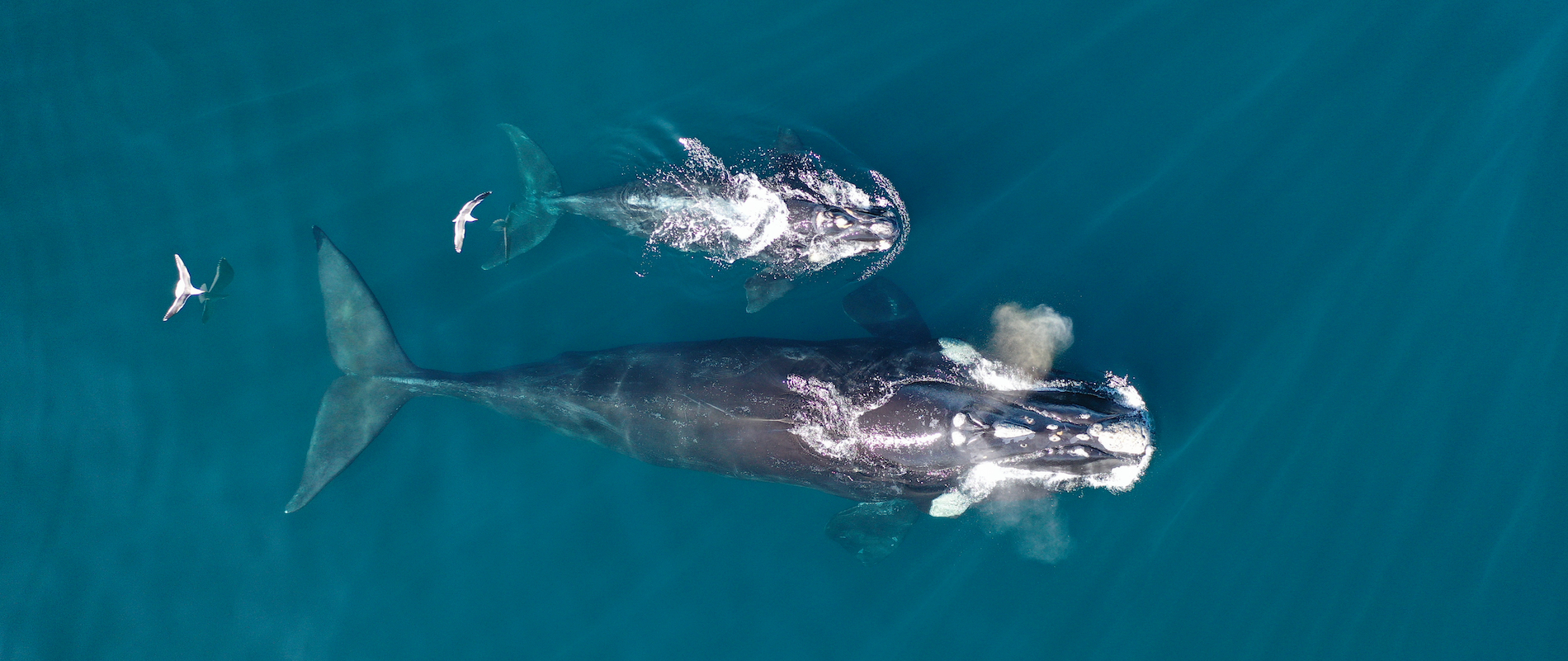
Humpback and sei whales have returned to feeding grounds in Argentina’s Patagonia and the Beagle Channel after decades of declining populations.Satellite tracking, drones and local initiatives are helping researchers identify specific whales, track their movements and study their recovery.Climate change, krill fishing, vessel traffic and offshore oil projects now threaten the marine giants’ return. Whales are coming back to Argentina’s coast. Decades after commercial hunting decimated their populations, different species of cetaceans are once again repopulating parts of the Argentine Sea. Scientists are now monitoring this recovery through new sightings and technologies that track their migratory routes and feeding grounds. While the growing whale population offers an encouraging sign for marine conservation, climate change, krill fishing and expanding oil and gas development pose new challenges to their survival. Humpback whales (Megaptera novaeangliae) have returned to the Beagle Channel in Argentina’s far south to feed in waters where their sightings had been declining for decades. A local initiative has identified 208 individuals since 2013 and documented a steady rise in sightings since at least 2018. Among the recorded whales are a female called Shima, who returned to the channel for eight consecutive years, and a young male called Buddha, spotted again after several years without any sightings. Researchers say this return may reflect a broader recovery of cetacean populations following decades-old bans on commercial whaling. In 2025, a collaborative analysis identified 22 humpback whales in the channel, 17 of them recorded for the first time. The project relied on photographs submitted by boat crews, tour guides, photographers and tourists. The unique markings on their tail flukes allows researchers to distinguish between individuals. The animals enter these waters searching for food, feeding primarily on squat lobster (Munida gregaria) and Falkland sprat (Sprattus fueguensis). However, their growing numbers also increase the risk of collisions with vessels in an area with rising shipping traffic and cruise tourism to Antarctica. Researchers emphasize the need to strengthen navigation rules and the permitted distances for sightings. Shima the whale has been returning to the Beagle Channel for the past eight years to look for food. Photo courtesy of Sebastián Dirube. Shima the whale jumps out of the water in the Beagle Channel, at the southern tip of Argentine Patagonia. Photo by Sebastián Dirube. In 2025, a collaborative study identified 22 humpback whales in the Beagle Channel, 17 of them recorded for the first time. Photo by Sebastián Dirube. Photo-identification catalog of whales sighted in the Beagle Channel area. Photo by CADIC-WCS Argentina. The Beagle Channel is a strait connecting the Pacific and Atlantic oceans at the southern tip of the Americas. Photo courtesy of the Research Center: Dynamics of High Latitude Marine Ecosystems (IDEAL)/Diego Nahuelhuén. The Beagle Channel is a strait connecting the Pacific and Atlantic oceans at the southern tip of the Americas. Photo courtesy of the Research Center: Dynamics of High Latitude Marine Ecosystems (IDEAL)/Diego Nahuelhuén. After nearly a century of absence driven by commercial whaling, the sei whale (Balaenoptera borealis) has returned to the coast of Argentine Patagonia. Listed as endangered and recognized as the planet’s third-largest animal, the species has found a key site for its survival in the San Jorge Gulf, which spans the provinces of Chubut and Santa Cruz, in southern Argentine Patagonia. Over the past 15 years, the population has seen a historical rebound. To understand their movements, researchers are using satellite tags to track two individuals in real time and identify their feeding grounds and migratory routes. Early findings confirm that the San Jorge Gulf serves as an important feeding area where the whales linger between October and June, preying mainly on squat lobsters, copepods and small pelagic fish. In June, they begin migrating north toward southern Brazil, where their breeding grounds are usually located. Satellite tracking will help map the areas the whales use most, providing data to support new marine protected areas in Argentina and conservation measures in Brazil. Researchers also say this data is essential for improving whale-watching management and shaping public policy. Sei whales arrive in the San Jorge Gulf to feed and then swim north, towards Brazil’s southern coast. Photo courtesy of Diego Cabanas/Proyecto Cetáceos San Jorge. Researchers monitor sei whales to track their migratory routes. Photo by Diego Cabanas/Proyecto Cetáceos San Jorge. Two monitored sei whales spotted in southern Brazilian waters. Photo by Diego Cabanas/Proyecto Cetáceos San Jorge. During the 19th and 20th centuries, sei whales were hunted for their blubber. Photo by Diego Cabanas/Proyecto Cetáceos San Jorge. Sei whales, an endangered species, have returned to the San Jorge Gulf in southern Argentina. Photo by Diego Cabanas/Proyecto Cetáceos San Jorge. Telurium the whale, photographed with her calf in September 2024. Photo courtesy of Paula Faiferman/Siguiendo Ballenas. The whales’ historical return faces a new race against time During the 2025-2026 season, whale sightings in the Argentine Sea reached a record high. There were 3,410 southern right whales (Eubalaena australis), 2,600 sei whales, 250 humpbacks, and four blue whale (Balaenoptera musculus) sightings. Observers also spotted fin whales (Balaenoptera physalus) and two minke species (Balaenoptera acutorostrata and Balaenoptera bonaerensis). Researchers say the sightings are an encouraging sign for species that were once pushed to the edge of extinction by decades of commercial whaling. The recovery stems largely from the global commercial whaling ban in effect since 1986, though today’s populations are still only a fraction of those before industrial hunting. New technology has also shed light on these cetaceans. Drones, satellite tags and other tools help scientists monitor their health, behavior and migration paths, while flagging emerging threats. Despite these gains, the whales face growing pressures. Rising sea temperatures fueled by climate change and expanding krill fisheries in Antarctica threaten the food supplies of several species. In addition, the expansion of oil and gas activities in the San Matías Gulf, located in Argentina’s Río Negro province, could increase the risk of colliding with vessels, underwater noise pollution and oil spills. Whales play an essential ecological role, helping to balance marine food chains and store carbon. While their return to Patagonia represents a major win for marine biodiversity, their future depends on the measures taken to counter the threats to their survival. A Southern right whale (Eubalaena australis). Photo courtesy of the Whale Conservation Institute (ICB). A drone called SnotBot collects samples of whale mucus. Photo courtesy of Ocean Alliance. Landscape of Punta Colorada, a site in the Gulf of San Matías where plans are underway to build a port for crude oil exports. Photo courtesy of elDiarioAR/Luciano Cutrera. Southern right whale (Eubalaena australis). Photo by Cetacean Conservation Center (CCC). Researchers follow Aurum the whale. Photo courtesy of Paula Faiferman/Siguiendo Ballenas. The Southern right whale arrives in southern Patagonia for its breeding season, between September and October. Photo courtesy of Greenpeace. The original version of this story was published here. Banner image: Sulfurium the whale, photographed with her calf in September 2024. Photo courtesy of Paula Faiferman/Siguiendo Ballenas. FEEDBACK: Use this form to send a message to the author of this post. If you want to post a public comment, you can do that at the bottom of the page. Credits Topics
Whales return to Patagonia, but face new threats in Argentina
Full Article
Original Source
Read the full article at News →KhanList aggregates and links to publicly available news content. We do not host full articles from third-party sources. Always verify important information with original sources.