
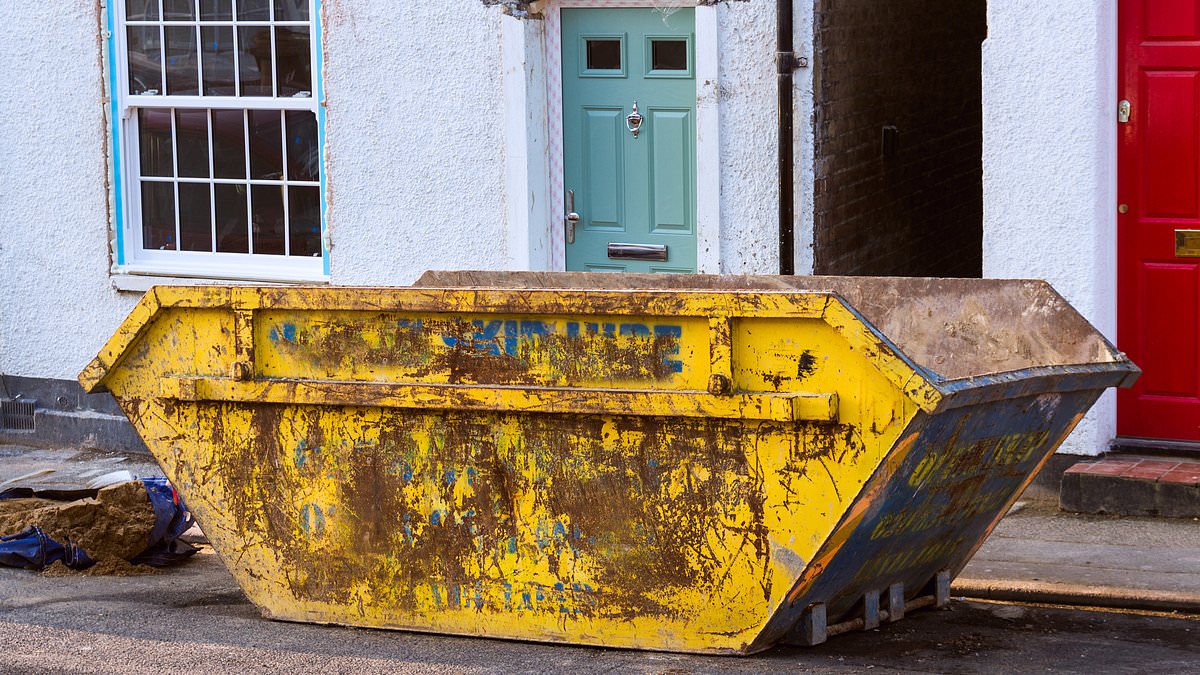
We tried to hire a basic sized skip as we're undertaking some work around the house and was quoted £480.I'm almost certain seven years ago when I last hired one the cost was more around the £100 mark? Why has there been such a jump in price? Sophie Warburton of This is Money replies: There is no doubt the cost of hiring a skip, of all sizes, appears to have become pricier in recent years.But then again, which household bill hasn't? When I spoke to industry insiders about the cost, cost rises seem to boil down to three factors. Every skip hire involves at least three vehicle trips. Add up delivery, collection and waste transport and this could amount to 80 miles of travel. Diesel prices have also surged following the conflict in the Middle East. In February, diesel prices were around 141p-a-litre and rose to 187p in April, a 33 per cent increase, according to the Skip Shop.Currently, many petrol stations have diesel priced around the 200p mark. Since skip lorries are typically 26-ton trucks which consume large amounts of fuel, this points to one of the main reasons why skip hire prices have risen in 2026. Unknown to some, where you live affects the cost of your skip hireThe second factor is landfill tax. This is an environmental charge that applies per ton to waste disposed at licensed landfill sites.Landfill tax increases each April, however, it jumped to £130.75 per ton in April 2026 according to gov.uk landfill tax rates. Thirdly, where you live affects skip hire prices. If you're closer to waste transfer stations, you'll have lower transport costs.Council permit costs vary from £30 to over £90 depending on the area, On top of this, different facilities charge different gate fees. And narrow urban streets along rural roads affect operational costs. We spoke to The Skip Shop who recently investigated why skip hire prices have risen, along with the Chartered Institution of Waste Management, and the Environmental Services Association to find out more.Fuel surcharges currently of £22 a skipMatt Batey, director at the Skip Shop, said: What we're seeing at the moment is a reminder of late 2021, where post-covid and post-brexit drove up fuel prices and rocked the waste management industry, particularly skip hire.Like today, we saw suppliers revising prices almost weekly, and whilst we try to shield some of these costs, inevitably the consumer feels the hit.We obviously see it everyday, whether it's filling up the car or supermarket prices, and skip hire is no different. Matt Batey is the director of the Skip Shop, the UK's first fully online skip hire serviceWe're seeing some of our suppliers add fuel surcharges of £22 per skip, which for the smallest sized skips is an additional 10-15 per cent.We definitely get the sense that customers are shopping around more to find the best price they can, or in many cases reconsidering whether they need to put their DIY/construction project on hold until prices come back down.It'll be interesting to see the stats in a years' time, to see whether increased costs/prices lead to an increase in fly-tipping because people just can't afford the legitimate route.'Material type directly dictates processing costs'Dan Cooke, director of policy, communications and external affairs at CIWM said: When examining higher price points over recent years, context is essential.Professional recycling and waste sector operating costs have risen in line with broader cost-of-living trends. A fivefold increase appears atypical for standard household skip hire. A doubled cost over a six-to-seven-year period reflects general market inflation, whereas significantly higher quotes may reflect specific operational variables.The pricing of skip hire depends on container size, location, and, importantly, waste composition. As urban deliveries incur higher operational overheads and local road permit fees than rural areas, location plays a key role. The material type also directly dictates processing costs.As regulated items like plasterboard cannot go to standard landfill or energy from waste plants (the main disposal routes for non-recyclable waste), they require specialist facilities. Similarly, skips containing upholstered furniture must comply with critical pollution prevention regulations on Persistent Organic Pollutants (POPs), which mandate specialised high-temperature incineration.Beyond material handling, operators face wider cost pressures. The combination of rising labour and energy bills, alongside high diesel expenses for heavy haulage fleets, has driven up day-to-day overheads. The cost of local authority permit fees has also increased, while cumulative adjustments to UK Landfill Tax add approximately £80 to the disposal cost of a standard skip load.Recycling and waste services provided by local authorities and private sector businesses generally deliver excellent value for money and associated costs are necessary investments in treating waste as a resource.The ongoing transition from lower cost landfill in the past, toward responsible resource recovery relies on high professional standards and skilled management to process waste and resources safely.Consumers should remain vigilant to suspiciously low prices An Environmental Services Association spokesman said: The Landfill Tax, which first came into force in 1996, is payable for every ton of waste material disposed of in landfill, in addition to the landfill operator’s gate fee for accepting and processing the waste.The purpose of this tax was to drive Britain’s transition to a circular economy by stimulating investment in recycling and other waste treatment technologies, such as energy recovery facilities – which it has been very successful in doing.Skip waste, from construction and renovation projects, is typically still sent to landfill and the nature of the waste means that it is also commonly used to perpetrate Landfill Tax fraud.The current Landfill tax rate is just under £130 per ton but, up until recently, the costs of disposal in landfill have remained artificially low due to widespread fraud, which has enabled unscrupulous operators to dispose of taxable waste at a much lower cost while pocketing the difference.This is done by disguising taxable waste as 'inert' material and claiming a significantly lower rate of tax on it (the lower rate remains at circa £8 per ton). This situation has been allowed to prevail for years, with few successful prosecutions, but Government and its regulators are now catching up with the primary culprits which, in turn, is leading to a normalisation of prices to the level they should be when the full and proper rate of tax is being paid widely across the sector.Over the past decade, the UK’s recycling and waste treatment sector has also not been immune to the inflationary increases associated with fuel, energy, labour and other overhead costs, which all contribute to increased cost of services.We would urge consumers wishing to arrange private waste clearance, through skip hire for example, to remain vigilant to suspiciously low prices and to ensure they transact with reputable waste operators who will comply with all applicable laws and regulations. The introduction of new regulatory reforms, including digital waste tracking and the permitting of waste carriers, will support this. How to get the most out of your skip hire 1. Choose the Right Skip SizeOne of the costliest mistakes is booking a skip that is too small and needing a second one. You have now paid for two deliveries, two collections, and two hire periods. If you are between two sizes, choose the larger one. 2. Book During Quieter PeriodsIf your project timeline is flexible, consider booking during autumn or winter when demand is typically lower. Providers often have better availability and pricing during these quieter periods. 3. Fill Your Skip EfficientlyBreak down bulky items: Disassemble furniture, flatten boxes, cut up large wood pieces Place heavy items at the bottom: Rubble, soil, concrete should go in firstFill gaps with smaller items: Use smaller debris to fill spaces between larger items Do not exceed the rim: Overfilled skips cannot legally be transported4. Consider Sharing with NeighboursIf you have neighbours planning similar projects, consider sharing a larger skip. An 8-yard skip shared between two households costs less per household than two separate 4-yard skips, and you only pay for one delivery and collection. 5. Get an Online Quote This is Money podcast
We've been quoted £480 to hire a basic skip - why have prices rocketed in recent years?
Full Article
Original Source
Read the full article at Dailymail →KhanList aggregates and links to publicly available news content. We do not host full articles from third-party sources. Always verify important information with original sources.