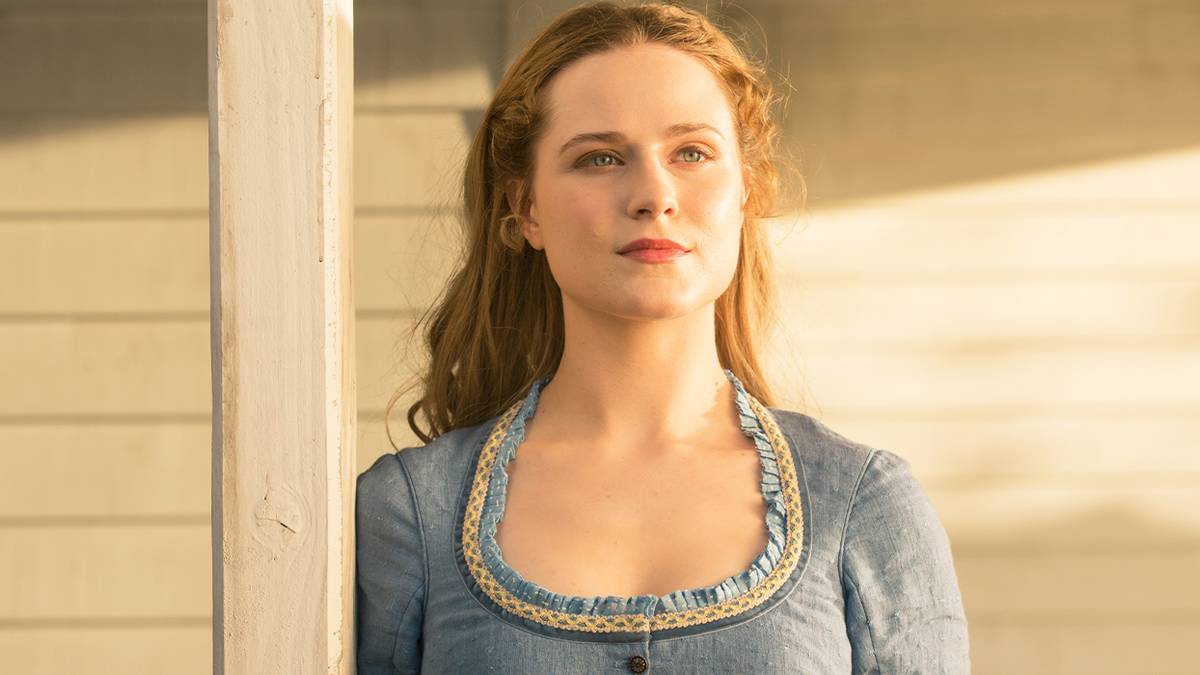
Image via HBO Published Jul 26, 2026, 3:14 PM EDT Currently a features writer at Collider, Elisa Guimarães is an arts and entertainment journalist and a critic with over a decade of experience. Passionate about movies and TV shows as a whole, she started her career when she was still in college, writing for a local newspaper after a brief stint in film school. However, her love for all things media-related can be dated back to her childhood, as she was raised in a family of librarians and cinephiles. She adores coming of age stories, true crime, teen dramas, science fiction, horror, and some other things as well. Elisa is also a published author of short stories in Portuguese, as well as a translator and a master in linguistics. As of 2023, she's in the process of working towards her PhD. Sign in to your Collider account When the news came out that HBO had cancelled Westworld after its fourth season, fans of the ambitious sci-fi series were rightfully enraged. After all, creators Jonathan Nolan and Lisa Joy had a pretty clear plan on how they were going to wrap things up on Season 5. Furthermore, Season 4 ended with a pretty big cliffhanger concerning a future war between humanity and hosts. Still, from a business standpoint, there were pretty good reasons to off the show: the costs were high, and the audience had been dwindling ever since the end of its first run in 2016. And, to be frank, it’s not hard to understand why. It’s always sad when a show is killed before its time, especially when there were already plans for a neat wrap-up in the near future. However, in Westworld’s case, the series had already met its natural ending long before its cancellation. To be more specific, the show should’ve ended after its very first season. From then on, what started as a perfect piece of television gradually turned into a confusing mess that completely lost touch with what made it so great to begin with. Sure, maybe Nolan and Joy had plans for a five-chapter book, but, in reality, Westworld should have always been a short story. Season 1 of ‘Westworld’ Is a Perfect Miniseries The first season of Westworld is a fine example of how great storytelling can be achieved through television, and one that stands perfectly on its own. It’s a story about the nature of humanity, about oppression, and about the dark path that grief takes us through. It’s the story of an old man, Ford (Anthony Hopkins), who becomes disillusioned with humanity after the death of his partner and decides that it’s time for a new kind to take over the world. It’s also the story of a bright-eyed young man, William (Jimmi Simpson), who discovers the darkness in him through his many visits to Westworld, and the story of The Man in Black (Ed Harris), who believes himself to be a god, the center of the universe, only to be proven wrong. Finally, it’s the story of two women, Dolores (Evan Rachel Wood) and Maeve (Thandiwe Newton), and their journey towards consciousness and liberation. All of this is neatly wrapped up in a classic “us versus them” narrative about humans and robots — or, rather, hosts. Collider Exclusive · Sci-Fi Personality Quiz Which Sci-Fi Hero Are You Most Like? Paul Atreides · Captain Kirk · Princess Leia · Ellen Ripley · Max Rockatansky Five iconic heroes. Five completely different ways of facing an impossible universe. One of them shares your instincts, your values, and your particular way of refusing to back down. Eight questions will tell you which one. 🏜️Paul Atreides 🖖Capt. Kirk ✊Princess Leia 🔦Ellen Ripley 🔥Max Rockatansky FIND YOUR HERO → 01 How do you lead when the stakes couldn't be higher? The way you lead under pressure is the most honest thing about you. AI absorb everything — every variable, every pattern — and move only when I know the path forward. BI read the room, make the call, and own the consequences. Hesitation costs more than mistakes. CI rally people. A cause needs a voice, and I refuse to let fear be louder than conviction. DI assess the threat, establish what needs doing, and get it done without waiting for permission. EI don't lead. I act. Others can follow or not — I'm already moving. NEXT QUESTION → 02 What is your greatest strength in a crisis? The quality that keeps you alive when everything else fails. APrescience — the ability to see further ahead than anyone else and plan accordingly. BImprovisation — I'm at my best when the plan falls apart and I have to invent a new one. CConviction — I know what I'm fighting for, and that certainty doesn't waver under fire. DComposure — I stay functional when everyone around me is falling apart. Panic is a luxury. EEndurance — I outlast things. I take the hit and keep moving long after others have stopped. NEXT QUESTION → 03 What is the thing you'd sacrifice everything else for? Your deepest motivation is your truest compass. AThe survival and dignity of my people — even if I have to become something frightening to ensure it. BThe safety of my crew — every single one of them. No one gets left behind. CFreedom — for my people, for every world still crushed under the weight of an empire. DThe truth — what actually happened, what's actually out there, whether anyone believes me or not. EThe one person — or the one memory — that still makes any of this worth surviving for. NEXT QUESTION → 04 How do you relate to the people around you? Who you are to others under pressure is who you really are. AWith intensity and distance — I care deeply, but the weight I carry makes closeness complicated. BWith warmth and irreverence — I take the mission seriously, not myself. CWith directness and trust — I say what I mean, and I expect the people I work with to rise to it. DWith professional care but clear limits — I'll protect you, but I won't pretend we're family. EWith wariness that slowly becomes loyalty — I don't trust easily, but when I do, it holds. NEXT QUESTION → 05 You're facing a threat that no one else believes is real. What do you do? How you respond when you're the only one who sees it defines everything. APrepare in silence. If they won't listen, I'll be ready when they finally have to. BKeep pushing until someone listens — and if no one does, handle it myself. CBuild the case, find the allies, and make the threat impossible to ignore. DDocument everything. The truth matters even if no one believes it yet. EStop trying to convince anyone. Survive it. That's the only argument that counts. NEXT QUESTION → 06 What has your heroism cost you personally? Every hero pays. The question is what — and whether they'd pay it again. AMy innocence — I've seen what I'm capable of, and I can't unsee it. BPeople I loved — the command chair has a view, but it's a lonely one. CA normal life — I gave up everything ordinary the moment I chose the cause. DMy sense of safety — I know exactly what's out there now, and I can't pretend otherwise. EAlmost everything — and I'm still not sure what I'm carrying it all for. But I keep going. NEXT QUESTION → 07 How do you feel about the rules of the world you're in? Every hero has a relationship with the system. What's yours? AI understand them deeply — and I know exactly which ones must be broken, and why. BI respect the spirit of them and bend the letter when the situation demands it. CThe system is the problem. I'm not here to work within it — I'm here to dismantle it. DI follow protocol until protocol stops being useful. Then I make the call myself. EThe rules collapsed a long time ago. What's left is instinct, and mine are reliable. NEXT QUESTION → 08 When everything is on the line, what keeps you going? The answer is the most honest thing about you. ADestiny — or something that feels so much like it that the difference no longer matters. BThe people on my ship — their faces, their trust, the fact that they're counting on me. CThe belief that what we're fighting for is worth every sacrifice, including this one. DSheer refusal to let it win — whatever it is. I don't stop. That's just who I am. EI'm not sure anymore. But the road is still there, and I'm still on it. REVEAL MY HERO → Your Hero Has Been Identified Your Sci-Fi Hero Is…Your answers point to the iconic sci-fi hero who shares your instincts, your values, and your particular way of facing the impossible. Paul AtreidesYou carry a weight most people would crumble under — the knowledge of what you're capable of, and the burden of what you might have to become. You see further ahead than others and you plan accordingly, even when the vision frightens you. You are driven by loyalty to your people and a sense of destiny you didn't ask for but can't escape. Paul Atreides is not simply a hero — he is someone who understands the cost of power and chooses to bear it anyway. That gravity, that willingness to carry what others won't, is exactly you. Captain KirkYou lead with instinct, warmth, and an absolute refusal to accept a no-win scenario — because you've always believed there's a third option nobody else has thought of yet. You take the mission seriously without ever taking yourself too seriously. Your crew would follow you anywhere, not because you demand it, but because you've earned it. Kirk's genius isn't tactical — it's human. He reads people, bends rules with purpose, and wills outcomes into existence through sheer conviction. That combination of warmth, audacity, and relentless optimism is unmistakably yours. Princess LeiaYou are the kind of person who holds the line when everyone else is losing faith — not because you're fearless, but because giving up simply isn't something you're capable of. You lead through conviction. Your voice carries because your belief is unshakeable. You gave up everything ordinary the moment you chose the cause, and you've never looked back. Leia is not a supporting character in her own story — she is the moral centre of the entire rebellion. That same fierce, principled, unbreakable core is what defines you. Ellen RipleyYou are not reckless, not grandiose, and not particularly interested in being anyone's hero — you just refuse to stop when it matters. You see threats clearly, you document the truth even when no one listens, and when the time comes you handle it yourself. Ripley's heroism is earned, not performed. She doesn't have a speech — she has a flamethrower and a plan. You share her composure under the worst possible pressure, and her refusal to pretend the monster isn't there. When it counts, you don't flinch. That's everything. Max RockatanskyYou have been through fire that would break most people — and what came out the other side is something the world underestimates at its peril. You don't ask for help, don't need validation, and don't wait for anyone to tell you the rules no longer apply. Your loyalty, when it finally arrives, is absolute — but it's earned in silence and tested in action, not in words. Max is not a nihilist. He is someone who lost everything and found, against his will, that he still has something worth protecting. That bruised, stubborn, ultimately human core is exactly yours. ↻ RETAKE THE QUIZ The story is divided into two timelines. In the past, we meet William during his first visit to the Westworld park, in which he falls in love with a host named Dolores. However, the belief that Dolores could be different from the other hosts is quickly destroyed when he returns to the park only to discover that Dolores doesn’t remember him anymore. Her memory has been erased. Years later, William returns to the park as The Man in Black, a vicious killer interested only in one thing: finding the center of the Maze, a secret game hidden in the depths of Westworld. What The Man in Black doesn’t know, but will soon enough find out, is that the Maze isn’t meant for him or any other guests of the park. In reality, the Maze is a path created for Dolores and other hosts to reach consciousness. 'Westworld' Season 1 Ends in the Perfect Place Image via HBO The first season of Westworld ends with Dolores finally becoming aware of her nature and of all the violence committed against her kind by the human guests. With the help of other hosts, she rebels against the humans and announces the rise of a new species. Ford created the Maze when he became so disillusioned with people after seeing how they behaved in a world with no real consequences that he decided it was time for humanity to end. While Dolores enacts her own version of Judgment Day in Westworld, another host, Maeve, makes plans to escape the park, believing herself to have achieved consciousness. However, her escape was also part of Ford’s plan, having been conceived as a decoy to allow the hosts in cold storage to join Dolores’ forces. Upon realizing this, she attains true consciousness and free will by deciding to go back into the park to find the daughter that she lost. It’s a perfect ending for a story that was all about what it means to follow our hearts’ desire. Two hosts reached consciousness. However, one of them enacts the bloodbath that her creator wished upon humanity. Did Dolores really want to do this? Or was it just part of her programming? What is the difference, in the end? On the other hand, we have Maeve, the one who was truly able to overcome the wishes of her creators and follow her own desires rather than the plan of someone else. Humanity will meet its fate, but not through her hands. Expanding the Universe of ‘Westworld’ Ultimately Didn't Work Image via HBO The Westworld Season 1 finale leaves many questions up in the air, but not of the kind that need to be answered later by the creators. They are questions that viewers are supposed to think about and come to their own conclusions. And yet, in 2018, Westworld got a second season that appeared to answer all the viewers' questions about what happened after Dolores’ massacre. Now, there are plenty of good arguments as to why Westworld should’ve actually ended after Season 2. The series’ second run offers a neater conclusion for the storylines of Dolores and Maeve. However, are these conclusions actually necessary? At the end of Season 2, Dolores escapes the park, something that we already knew she would do after she killed everyone in the Season 1 finale. Meanwhile, Maeve found her daughter, but was once again separated from her in an attempt to save other hosts from Dolores and the Clementine (Angela Sarafyan) virus. The storyline diluted Maeve's character, as her main purpose was to be reunited with the life she lost because of the whims of her creators. Instead of a person with her own desires, Maeve is turned into merely a foe for Dolores. This becomes an even greater problem in Seasons 3 and 4, in which Maeve has absolutely no purpose besides stopping Rehoboam (and then Dolores) from controlling humanity. In fact, starting from Season 2, the writers for the series seem to have mistaken structural complexity for narrative and thematic depth. The stories become more convoluted, and Ford's original plans morph into something that barely reflects the story of Season 1. By Diving Into the Real World, ‘Westworld’ Lost the Excitement of the Park However, the greatest crime of Westworld Seasons 2, 3, and 4 isn’t the messy plot, but how they abandon the park for a more generic sci-fi story. A great part of what made Westworld fun to watch was how the show subverted Western tropes with the sci-fi genre. The Western setting also gave the series a unique look that set it apart from the other genre shows.Granted, Season 2 still had a lot of moments set in the original park, but that was only half of the story. By Season 4, they tried to recapture some of this magic by having Maeve and Caleb (Aaron Paul) travel to Prohibition World, but that didn’t last long either. Now, to be fair, Westworld Seasons 2 through 4 aren’t entirely irredeemable. Akecheta (Zahn McClarnon) and Bernard's (Jeffrey Wright) journeys towards consciousness were almost as exciting to watch as Dolores’ and Maeve’s. Caleb’s fight against Rehoboam was also intriguing, though it would certainly have felt more at home in an entirely different show. In the end, although there were interesting ideas scattered throughout the later seasons of Westworld, they just didn’t fit well enough with what the series originally was. And considering just how great and cohesive Season 1 was, in hindsight, maybe the show should have ended then and there to give us a short and perfect story rather than a longer, flawed one.
'Westworld' Is Still a Masterpiece, but It Should Have Been Cancelled Sooner
Full Article
Original Source
Read the full article at Collider →KhanList aggregates and links to publicly available news content. We do not host full articles from third-party sources. Always verify important information with original sources.