
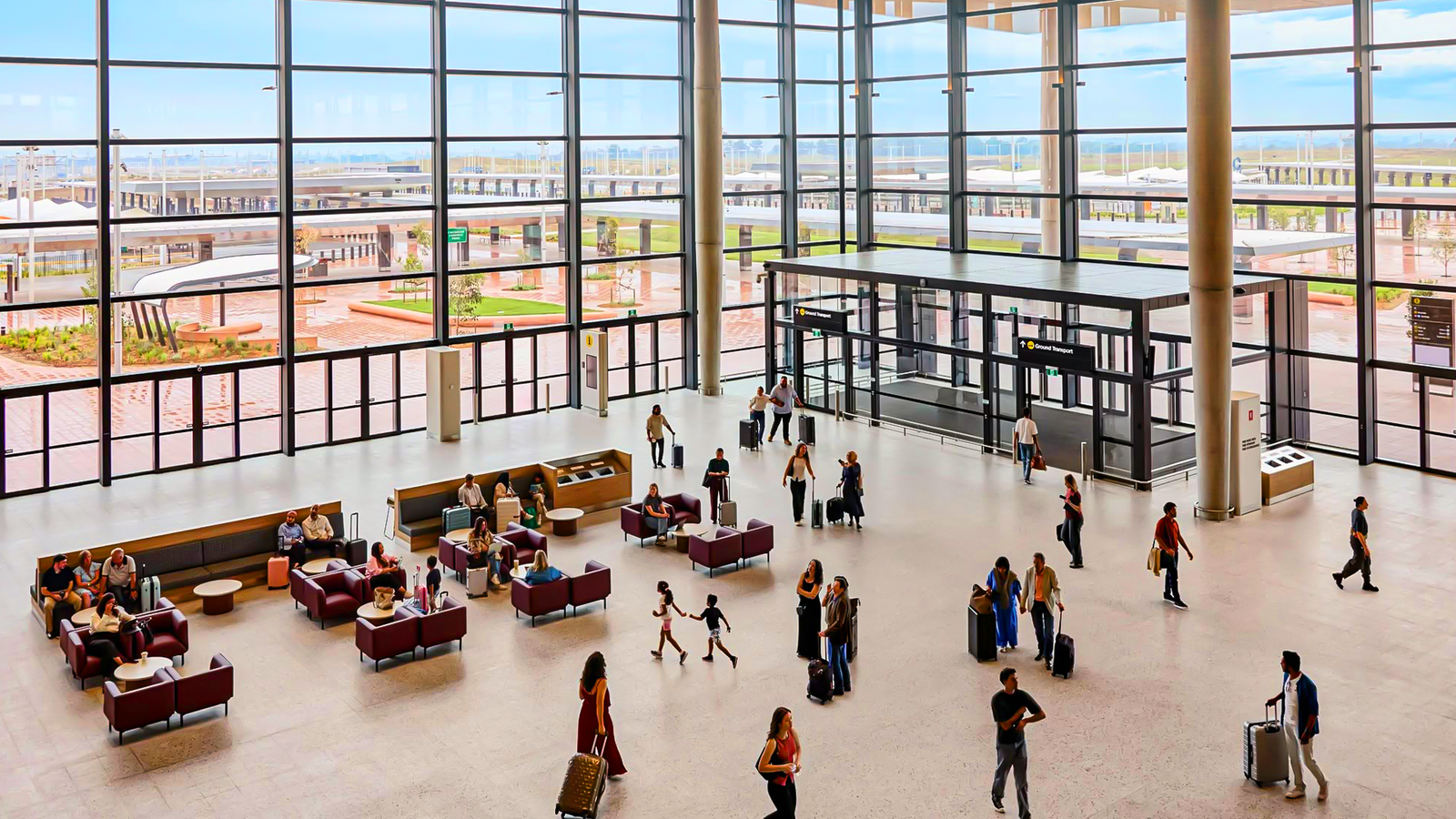
Published Oct 26, 2026, 10:00 AM EDT Jasper Yu-Dawidowicz is a New York City-based aviation journalist with over seven years of journalism experience across different publications. Currently a student at Purdue University, Jasper is pursuing dual degrees in Professional Flight and Aviation management, completing his flight training as part of Purdue's part 141 R-ATP eligible program. Sydney has officially become a two-airport city, thanks to the opening of Western Sydney International (Nancy-Bird Walton) Airport(WSI) on Sunday. Despite the milestone, the city has not slowed plans for a multibillion-dollar expansion at its established aviation hub. In August, the Australian Federal Government approved Sydney Kingsford Smith Airport’s(SYD) Master Plan 2045, clearing the way for a A$3 billion (US$2.1 billion) terminal redevelopment to accommodate rising passenger demand and strengthen the airport’s capacity for future growth. The scale of the investment reflects Sydney’s broader aviation ambitions. SYD is forecast to handle 72.6 million passengers annually by 2045, while WSI is expected to accommodate more than 80 million passengers a year by 2063. Rather than competing for the same travelers, the two airports are expected to play complementary roles in the region’s aviation network, serving different passenger markets and airline needs. As WSIwelcomes its first passengers, SYD is looking to ensure its own infrastructure can keep pace with demand for decades to come. Sydney Airport’s $3 Billion Terminal Overhaul Gets Government Approval Credit: Beyond Boundary Visual | Shutterstock In August, the Australian Federal Government approved Sydney Airport’s Master Plan 2045, clearing a major regulatory hurdle for the long-term redevelopment of the airport’s terminal infrastructure. The first phase, expected to cost about $3 billion AUD ($2.1B USD), will focus on the airport’s domestic terminals, terminals two and three on the east side, where redevelopment will integrate the two terminals into a more unified space. Construction is expected to begin in 2028 and take approximately three years, meaning the first major changes since the 2000 Sydney Summer Olympics will arrive around 2031. Approval for this major improvement project at Sydney's only major airport reflects the challenges the airport faces as passenger volumes continue to grow and demand soars. According to a press release announcing the terminal overhaul, SYD forecasts serving 72.6 million passengers annually by 2045, about 75% more than current levels. For comparison, this would make SYD busier than New York-JFK and Los Angeles combined today. Coordinating construction within the operational environment of Australia’s busiest international hub will remain a challenge and will require careful planning to minimize disruption to operations. Although the first phase is the immediate priority, plans to expand and improve SYD into the 2030s aim to ensure it retains its position as a major aviation hub. Commenting on the improvement project, “As Australia’s international gateway, this plan ensures we can continue supporting tourism, trade, investment and jobs while delivering the capacity needed for future generations," SYD CEO Scott Charlton said. Swing Gates Will Give Sydney Airport More Flexibility Credit: Flickr One of the defining features of SYD's redevelopment efforts will be the introduction of swing gates within the combined Terminal 2 and Terminal 3 site. The swing gates, which can be configured to handle either domestic or international flights, will let the airport adjust terminal capacity to airline schedules, boost international capacity, and provide much-needed support to the existing international terminal on the west side of the airfield. The initial plans outline 12 new gates capable of accommodating international aircraft in the redeveloped terminal, alongside two additional international gates at Terminal 1’s Pier B in the existing international terminal. Converting a dozen gates into swing gates gives SYD more flexibility than simply adding more international gates. Typically, many airports, like Sydney previously, allocate specific terminals to either domestic or international operations. However, because demand can shift drastically throughout the day and between seasons, swing gates give SYD another way to improve the use of its terminal space without strictly dedicating each gate to one operation. Further, swing gates hedge against uncertainty in Sydney’s aviation market. If international travel demand to Sydney booms even more than expected, Sydney can easily absorb the additional capacity thanks to easily convertible international gates. These gates can also continue to serve domestic operations, allowing the airport to respond to major shifts in travel demand, especially as the city’s second airport opens in days. WSI Created A Dual-Airport System On October 25 Credit: Western Sydney International (Nancy Bird Walton) Airport Despite the planned expansion at SYD, it is no longer the only international airport serving the greater Sydney area. Located near Luddenham and Badgerys Creek, about 28 miles (45 km) west of Sydney’s central business district, WSI welcomed its first passengers on Sunday. The airport was developed to improve access to air travel for Sydney’s growing population, with an initial passenger capacity of up to 10 million travelers each year and ample room for future expansion. Unlike SYD, only a 20-minute drive from downtown Sydney, WSl is designed to operate around the clock without the overnight curfew that SYD faces. This will give airlines greater scheduling flexibility and could be particularly valuable for overnight cargo operations or early-morning and late-night departures and arrivals that fall outside Sydney’s 11 PM to 6 AM curfew. In fact, freight operations have already commenced at Western Sydney as of July 2026, already establishing the airport as a key component of the region’s logistics infrastructure. While both airports will serve the same metropolitan market, they won’t necessarily serve identical passenger needs. SYD already has established airline networks and is a major hub for the likes of Qantas and Jetstar. As an international hub, it offers extensive connections and convenient access for many travelers closer to central Sydney. WSI, meanwhile, will provide a new gateway for communities farther west and additional opportunities for airlines to develop routes. Likely, WSI will serve more as a terminal destination than a transfer hub for many passengers, with airlines redistributing services depending on demand and passenger preferences. 7 Airlines: Who Has Committed To Sydney’s Newest Airport? Credit: Western Sydney International Airport WSI opened with a growing roster of both domestic and international carriers. Australia-based Jetstar operated the inaugural passenger flight to the Gold Coast. The low-cost carrier will also serve Melbourne Airport (MEL) and Brisbane Airport (BNE), giving WSI an initial domestic network. Meanwhile, Qantas is not scheduled to begin services until much later, launching Qantaslink Embraer E190 service also to Melbourne and Brisbane. On the international side, several airlines have already announced their intent to provide regional and long-haul connectivity to Western Sydney. Air New Zealand is scheduled to begin flights to Auckland on Monday, followed by Singapore Airlines’ daily service to Singapore on November 23. Starting on December 15, Qatar Airways will begin flights from Western Sydney to Doha, while VietJet Air has announced services to Ho Chi Minh City beginning in January 2027. Fiji Airways is also planning three weekly flights to Nadi from March 19, 2027, giving travelers access to the South Pacific. Airline Destination(s) Qantas Melbourne, Brisbane Jetstar Melbourne, Brisbane Air New Zealand Auckland Singapore Airlines Singapore Qatar Airways Doha VietJet Air Ho Chi Minh City Fiji Airways Nadi These seven airlines mark an important starting point for WSI, which, although it begins with a considerably smaller network than the established Sydney Airport to its east, will grow quickly in the next few months as more airlines launch services to the airport. More airline commitments are expected as the airport gets up and running, but its long-term role will depend on airlines seeing sustained demand for Sydney’s second airport. How Western Sydney Complements Kingsford Smith WSI and SYD are both entering the market with different geographical advantages. SYD is closer to central Sydney and will remain the city's main hub, with an extensive network of domestic, regional, and international destinations. WSI, on the other hand, is positioned to serve communities across Sydney's western suburbs, with the Australian government envisioning the airport as the center of an “aerotropolis," an area built around aviation and business services. The key differentiator for WSI, and why many established international carriers like Qatar Airways and Singapore Airlines are rushing to Western Sydney International, is the airport’s 24/7 operations. As mentioned, SYD's overnight curfew restricts all arrivals and departures between 11:00 PM and 6:00 AM, limiting the routes airlines can serve. WSI will give airlines the freedom to schedule flights day and night, with airlines like Fiji Airways already planning to take advantage of 24/7 operations by scheduling an 11:55 PM departure to Nadi, arriving in the Fijian capital at 5:05 AM the next morning. Additionally, rather than dividing Sydney into an exclusively domestic airport and an exclusively international one, the two facilities will be able to accommodate both types of traffic. SYD will retain the advantages of its established airline network and proximity to central Sydney, while WSI will offer a newer facility, room to expand and fewer overnight operating restrictions. The airports can therefore serve different geographic and commercial needs while contributing to the same metropolitan aviation market in a complementary fashion. Why SYD Still Needs More International Capacity Credit: Shutterstock With WSI’s opening and the airport's projected growth, one might wonder why SYD is spending over $3 billion to renovate and expand its terminal facilities. SYD expects international travelers to rise from about 40% of total passenger traffic today to more than 50% by 2045. If that projection materializes, international services would represent the majority of passenger movements, and the airport's infrastructure would shift from one historically divided between domestic and international operations. Ultimately, opening WSI marks the start of a new chapter for aviation in Australia’s largest city. Once operations are fully established and more routes start to take off by next spring, Sydney will officially join the club of cities with a well-integrated two-airport system. Taken together with the $3 billion investment in SYD, the vision for keeping up with Sydney's growing air travel demand remains clear.
Western Sydney International Airport Is Now Open, But Sydney Is Still Planning A $3 Billion Terminal Overhaul
Full Article
Original Source
Read the full article at Simpleflying →KhanList aggregates and links to publicly available news content. We do not host full articles from third-party sources. Always verify important information with original sources.