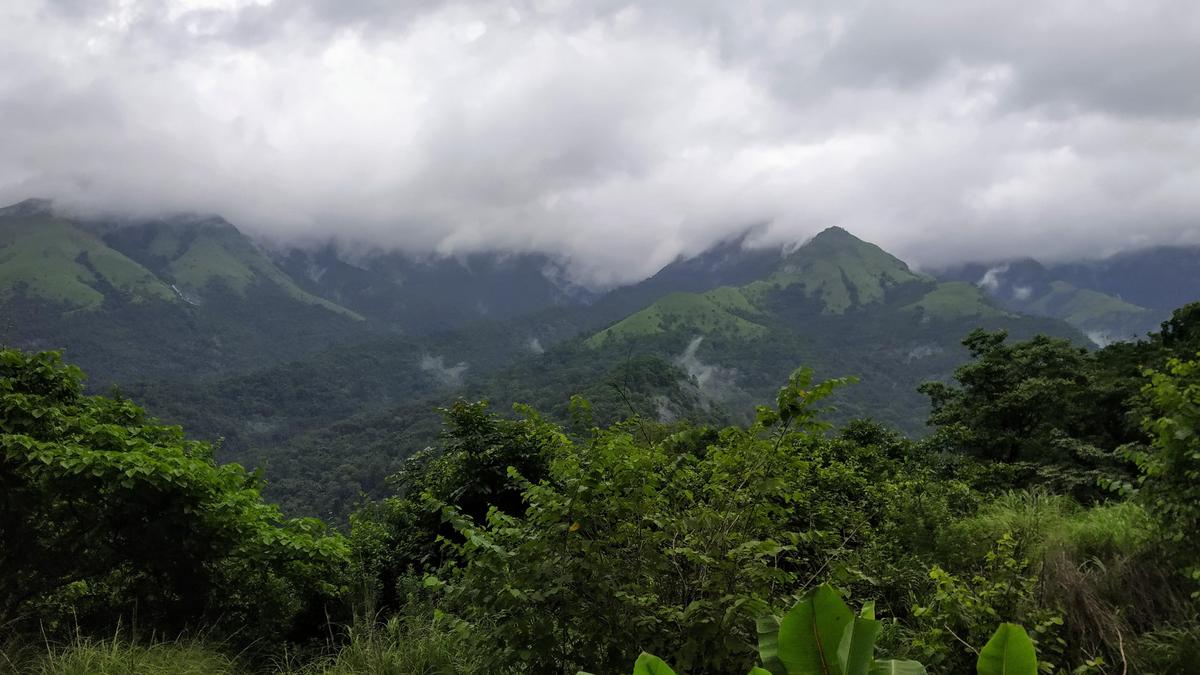
The Western Ghats, spanning six coastal States of India, are internationally recognised for their rich biodiversity. They contain 39 biodiversity hotspot areas, including national parks, reserved forests, and wildlife sanctuaries declared World Heritage Sites (WHS) by UNESCO in 2012. To protect this natural heritage, the Western Ghats Ecology Expert Panel (WGEEP) was constituted in 2010 under the chairmanship of ecologist, academic, and writer Madhav Gadgil. Its report recommended declaring 142 talukas covering 44 districts in the entire Western Ghats into Ecologically Sensitive Area (ESA), while sub-dividing it into three Ecologically Sensitive Zones (ESZ). Such a declaration would regulate human activities to protect fragile ecosystems and, once notified under the Environment Protection Act, 1986, would provide legal protection.The ESA journeyFollowing strong local and political opposition in the States concerned to the WGEEP recommendations, the central government constituted a high-level working group headed by Krishnaswamy Kasturirangan in 2012 to review them. The group limited restrictions on economic activities and livelihoods to ecologically sensitive natural landscapes, reducing the area covered to only 37% of the Western GhatsBased on this recalibrated report, the Ministry of Environment, Forest and Climate Change (MoEF&CC) issued the first draft notification in 2014. Since the matter remained unresolved, the Ministry constituted an expert panel headed by former Director General of Forests Sanjay Kumar in 2022 to examine the concerns raised by the stakeholder States. Following the expert panel’s deliberations, Gujarat and Goa appear to have agreed to the finalisation of the ESA notification, while Maharashtra has sought a fresh review.Discussions between the Centre and other States, including Karnataka, Kerala, and Tamil Nadu, are ongoing. A “phased rollout” or “State-wise finalisation” is possible after the inclusion of this clause in the 2024 draft notification.Between 2015 and 2026, five draft notifications were issued as the Centre and States did not reach a consensus. Following the expiry of the last notification, in July 2026, the Ministry has extended the expert panel’s tenure by another year.The case of KarnatakaKarnataka has 10 districts in the Western Ghats, with 23.4% of the State’s population residing there. Around 20,668 square kilometres have been identified for ESA declaration. Regardless of the government’s political affiliation, the State has consistently opposed the proposal, citing its potential impact on agriculture, plantations, mining, and infrastructure development.A study by this writer covered villages located in the proximity of 10 WHS across four districts — Chikkamagaluru, Kodagu, Shivamogga, and Udupi — and three other important sites in Uttara Kannada and Udupi, including the Kali Tiger Reserve, Mundigekere Bird Sanctuary (five acres and a breeding ground for cattle egrets in Sirsi), and Mookambika Wildlife Sanctuary. The study highlighted local perspectives on livelihoods and conservation efforts.In villages adjoining the Kali Tiger Reserve and Kudremukh National Park, some residents reported accepting or considering rehabilitation packages. Those opposing relocation felt that they might eventually have to follow due to declining village populations and the resulting threat to village life. Even villages with granted forest rights have faced challenges due to restrictions on minor forest produce collection and agricultural practices. Concerns were also raised over the rejection of forest rights claims by non-tribals with long-standing residence, including in a village (at least 150 years) near the Balahalli Reserved Forest. Meanwhile, local officials and some communities supported regulating environmentally harmful activities such as stone quarrying and unplanned tourism projects, including proposals for forest ropeways.With specific reference to the notifications, it must be noted that local communities faced similar restrictions whenever these areas were declared protected zones, even before the WGEEP was constituted. Many residents believe that buffer zones extend 10 kilometres from core areas and fear possible eviction from their lands. Stakeholders across the study districts unanimously expressed concerns that reliance on satellite imagery for identifying ESA areas was unfair, as they were convinced that it could not distinguish plantation crops such as arecanut, shade-grown coffee, rubber, and coconut from forest cover. They also raised concerns that no committees had physically visited their villages.In this context, Karnataka’s case requires an empathetic approach that addresses genuine stakeholder concerns before a final decision is taken.Protecting indigenous communitiesIn the broader context, the Union government’s decision to proceed with the ESA notification for the Western Ghats reflects political will to protect ecology and biodiversity. Conservation efforts cannot be indefinitely delayed as it will result in States losing their control in such areas; ecological systems transcend administrative boundaries.More importantly, ESA should include indigenous communities living deep within forests, as they naturally follow conservation principles and maintain a sacred, sustainable relationship with the environment despite challenging conditions. Their presence serves as a bridge between forests and mainstream society, while their absence risks the loss of biocultural diversity.Madhusudan Bandi is a faculty member at the Gujarat Institute of Development Research, Ahmedabad, Gujarat
Western Ghats conservation with science and dialogue
Full Article
Original Source
Read the full article at Thehindu →KhanList aggregates and links to publicly available news content. We do not host full articles from third-party sources. Always verify important information with original sources.