
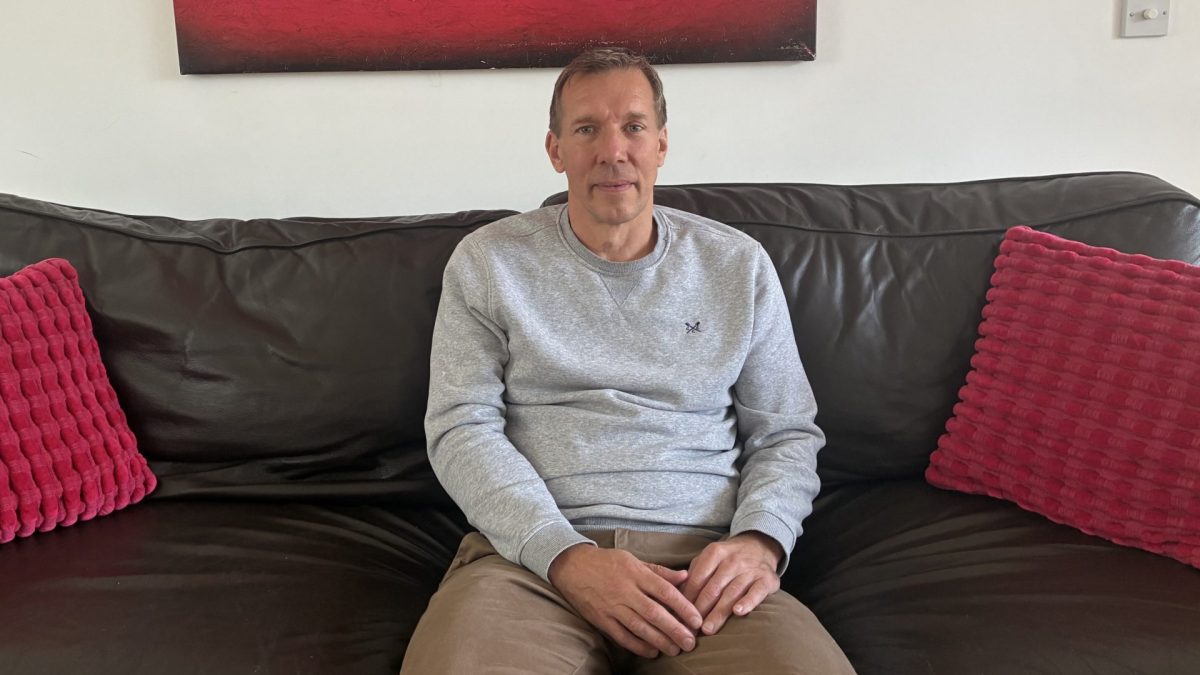
Ian Murton and his wife earn £100,000 before tax. Their income put them in the top 10 per cent of households – but they don’t feel rich. Ian, 53, and his wife live in Hitchin, Hertfordshire, with their two children. The couple’s money comes via their limited company – Ian Murton Hypnotherapy – comprising £40,000 in salaries and £60,000 in dividends. Shorts At the last two Budgets, he says the government has made tax increases that have hit his family income – and wants some positive change this time around. “I’m sure Labour would consider us well-off, but the reality is that the cost of living has increased enormously in recent years,” says Ian. “Our mortgage repayments have almost doubled within the past few years. There’s also higher food, fuel and energy bills. Our money doesn’t stretch as far as it used to,” he adds. Ian calculated that his family spent £1,500 more every month to maintain the same standard of living they had four years ago. “We’re paying £18,000 extra to stand still”, Ian said. At the last Budget, the government increased taxes on dividends from 8.75 per cent to 10.75 per cent for basic-rate payers and 33.75 per cent to 35.75 per cent for higher-rate payers, costing Ian around £1,180 a year. Dividends are a payment that a company makes to its shareholders out of its profits and directors often take some of their income through this method, sometimes because it involves lower tax rates than regular income. Ian said frozen income tax thresholds were problematic too. The amount people can earn before paying tax has been frozen at £12,570 since 2021 – when the Conservatives were in charge – as has the higher threshold at which people pay 40 per cent tax. This leads to something known as fiscal drag where rising wages pull more people into higher tax brackets, and this is set to continue until 2031 under current policy. Ian said: “As our earnings have increased over time, more of our income can fall into higher tax bands, even though the actual spending power of that money has fallen because of inflation. “The Chancellor must raise income tax thresholds. VAT and corporation tax should also be cut.” NI hike should be scrapped Samantha Evans, 59, lives in Henley-on-Thames with her partner, Benet Slay, 64, an investor and non-executive director, who has two adult children. Samantha runs a luxury countryside concierge business, Humphreys on Henley. Its turnover for this year is expected to be about £550,000, and she said is set to double next year. Samantha said: “We live in a large, detached home, and enjoy our holidays and a comfortable lifestyle. Everything is more expensive, so we are eating out less.” Samantha said Labour should introduce policies “which enable businesses to grow”. Samantha Evans said she had to employ fewer people as a result of employer national insurance contributions being upped in a previous Budget She added: “There is no logic in forcing businesses to close through excessive taxation. The welfare system makes it more profitable for an individual to be on benefits than to work. “We’re also concerned about inheritance tax. We work hard and are happy to pay taxes, but shouldn’t be penalised for contributing to the economy.” Samantha said she believed the Government did not view her as a working person. She said: “According to the Government, I am a non-worker. I work a 12-hour day and often on weekends. I expect a Government that is supposedly focused on growth to acknowledge the contribution I make to the economy.” Samantha said she had to employ fewer people as a result of employer national insurance (NI) contributions being upped in a previous Budget. At the 2024 Budget, Labour increased the NI rate paid by employers from 13.8 per cent to 15 per cent. She said: “I want to see a 10 per cent reduction in VAT for hospitality, a reversal of the NI contributions increase and realistic limits for the tourism taxes so local councils don’t have a free rein.” Not all my income above £100,000 is disposable Graham Robinson, 45, lives in Timperley, Greater Manchester, and runs KeySIM, a firm supplying SIM cards to businesses. Last year, Graham’s gross annual income was £126,500. After deductions, it was £79,000. Graham said: “I expect the Government would regard me as well-off. The £100,000 personal allowance taper is a sign that the tax system treats that as a point where an allowance can start to be withdrawn. But that doesn’t mean the income above £100,000 is all disposable. ‘Frozen personal tax thresholds and dividend taxes affect how much I can take home from my business,’ Graham Robinson said “I do feel the pressure of higher costs and taxes. I’ve cut back on holidays and put off major home improvements. At times, it does feel as if people who work hard to grow a business are treated as an easy source of extra tax.” Graham said he was negatively affected by frozen income tax thresholds and higher dividend taxes. He’s also affected by the £100,000 tax trap, a tax quirk where earners face an effective marginal income tax rate of 60 per cent on income between £100,000 and £125,140, because they lose their personal allowance in between these two earnings figures. The £100,000 threshold has not been changed in 16 years, despite high inflation over that time reducing the value of that figure. Both the Conservatives and Labour have had long periods of time in charge since it has been in place. Graham said: “I want tax thresholds to rise with the cost of living so the rules keep roughly the same value over time. “Frozen personal tax thresholds and dividend taxes affect how much I can take home from my business. If I need to draw more income to maintain the same take-home pay as costs rise, there is less money left in the business to reinvest. “Recent employer NI changes are also a direct cost to the company. I want to create opportunities for people rather than grappling with an ever-heavier tax burden.” I want more clarity on inheritance tax Dr Adrian Massey, 50, a food innovation consultant, lives in Banbury, Oxfordshire, with his wife and their two children. Adrian said: “We’re financially comfortable and I’m grateful for that. But it’s come through years of hard work, careful financial decisions and taking risks.” Adrian, who owns ATM Food Innovations, said: “For me, the combination of frozen thresholds and higher dividend taxes makes it harder to plan how much income I can take from my business and put towards our family’s long-term financial security.” In the upcoming Budget, Adrian said he was concerned about property taxes, capital gains tax and inheritance tax. Dr Adrian Massey said it sometimes felt the Government viewed people like him as a bit of a ‘cash cow’ Adrian said: “I’m exploring my first property investment, so the costs of buying, renting and eventually selling are important. “With higher tax rates on personally owned rental income already planned for 2027 [rates of tax on rental income are going up by 2 percentage points next year], further changes could affect whether an investment makes financial sense.” He added: “I’m building our retirement savings, but I also want to help give my children a strong financial start in life, while hopefully passing on some of what we’ve built in the future. “Changes to inheritance tax, particularly the treatment of unused pensions from 2027, make that planning more complicated, and further changes could be introduced.” Adrian said it sometimes felt the Government viewed people like him as a bit of a “cash cow”, though he believes everyone should pay their fair share of tax. He added: “I want greater stability and clarity around pensions, ISAs, property taxes, inheritance tax and income tax thresholds that reflect inflation. I’d like to see a system that encourages people to save and plan for their future rather than continually moving the goalposts.”
‘We’re paying £18,000 to stand still’: The six-figure earners who no longer feel rich
Full Article
Original Source
Read the full article at Inews →KhanList aggregates and links to publicly available news content. We do not host full articles from third-party sources. Always verify important information with original sources.