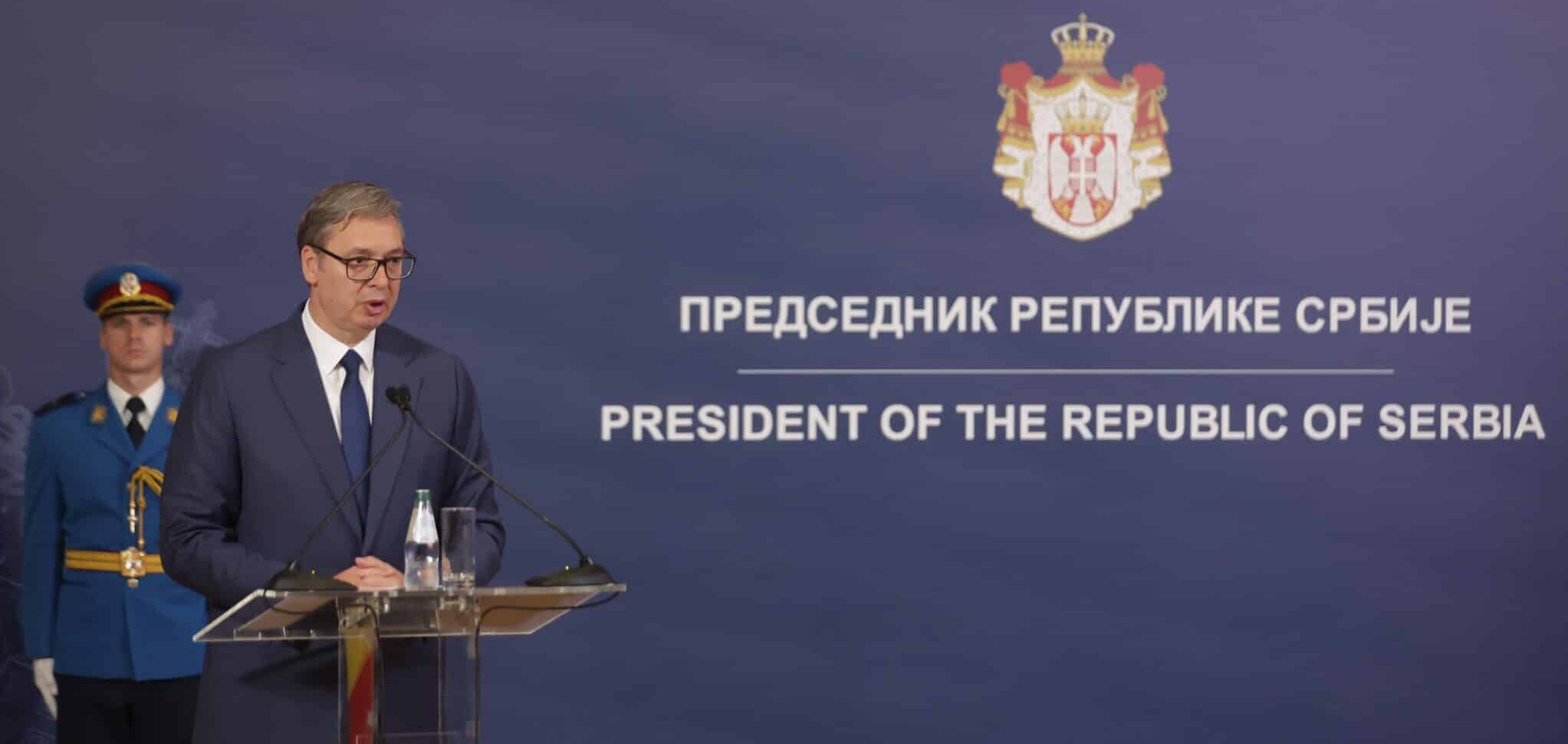
Early elections ahead? The National Assembly in Belgrade, March 2025. Photo: EPA/ANDREJ CUKIC Last week, a no-confidence motion in the Serbian government was held in the country’s parliament. A boisterous discussion ensued between ruling and opposition MPs, but the motion failed – as expected. Its real significance was not so much the outcome as the fact that the holding the vote, tabled at the beginning of the year, cleared an important obstacle to calling early parliamentary elections. President Aleksandar Vucic has fuelled speculation that polls are imminent. Our analysis takes a look a look at what will determine when they happen – and whether they will happen at all. Read more: Snap Elections Remain Uncertain After Serbia’s No-Confidence Vote (August 3, 2026) Fishing for votes Serbian President Aleksandar Vucic at a rally of the ruling Serbian Progressive Party (SNS) in Belgrade, June 2026. Photo: EPA/ANDREJ CUKIC Another sign that elections are on their way in Serbia, or are being seriously considered, is announcements of cash handouts to voters by President Aleksandar Vucic. The recipients reportedly will include pensioners, those on some form of social benefits and all adult citizens. Ruling party officials are pitching these measures as an expression of socially oriented governance. Experts, on the other hand, suspect they are a thinly veiled attempt at vote-buying. Read more: Serbia’s Vucic Accused of “Vote-Buying” With Cash Pledges (August 6, 2026) Gearing up Bulgarian President Iliyana Yotova (R) welcomes Albania’s President Bajram Begaj ahead of the South-East European Cooperation Process meeting in Sofia, June 2026. Photo: EPA/BORISLAV TROSHEV While Serbian citizens wait to find out when elections in their country might happen, Bulgarians are already preparing for presidential election on October 25. Acting President Iliana Iotova, a long-standing member of the traditionally Moscow-aligned Bulgarian Socialist Party, who is close to current Prime Minister and former President Rumen Radev, seems to be the favourite for now. We take a look at her background, as well as other likely candidates and challengers. Read more: Election Race Starts As Bulgaria’s Acting President Seeks Full Mandate (August 4, 2026) Political suspense LDK leader Lumir Abdixhiku, first left, and Vetevendosje leader Albin Kurti meet in Pristina in July 2026. Photo: Albin Kurti/Facebook Governance in Kosovo again hangs in the balance, amid uncertainty over whether the country’s third consecutive parliamentary elections have moved MPs any closer to electing a president – or to yet another general election. Post-election negotiations on assembling the votes in parliament needed to elect a new head of state have been suspended because of a leadership challenge within the opposition Democratic League of Kosovo, LDK. At the end of July, LDK leader Lumir Abdixhiku narrowly survived a vote of confidence at a party congress. But the vote was so narrow that his credibility was seriously damaged. He may have survived for now. But whether he has the authority to strike a deal with the ruling Vetevendosje party – and carry his MPs with him – is less clear. Read more: LDK Congress Confirms Leader, Opening Door to Kosovo Coalition Talks (August 3, 2026) Looking vulnerable A woman walks past a monument to Russian poet Vladimir Vysotsky near Moscow Bridge in Podgorica. Photo: BIRN. Montenegro is set to remain blissfully election-free this year, but a parliamentary election does loom in mid-2027. If all goes to plan, next year should also be make-or-break for the country’s hopes of joining the EU. As elections and EU accession converge, timewise, many are scrutinising the small Adriatic country’s vulnerability to ill-intentioned foreign influence. Our analysis takes a look at the country’s media sector and how planned changes in ownership could leave Montenegro more vulnerable to interference in a crucial year. Read more: Media Changes in Montenegro Intensify Alarm About Foreign Influence (July 30, 2026) Financial squeeze Media workers demonstrate against rising violence during a protest supporting press freedom in Belgrade, April 2026. Photo: EPA/ANDREJ CUKIC Life for Serbia’s small, independent media outlets has never been easy. Intimidation, physical assaults and spurious lawsuits have always been part of the mix of pressures applied against them. Increasingly, however, small media outlets in Serbia are also feeling a severe financial squeeze, threatening their very survival. At a time when the country faces extreme political polarisation, the collapse of small, independent media could have a particularly damaging impact. Our analysis looks at the challenges these small outlets face. Read more: Money the Greatest Challenge Facing Serbia’s Small, Independent Media (July 31, 2026)
Week in Review: The Electoral Merry-Go-Round
Full Article
Original Source
Read the full article at Balkaninsight →KhanList aggregates and links to publicly available news content. We do not host full articles from third-party sources. Always verify important information with original sources.