
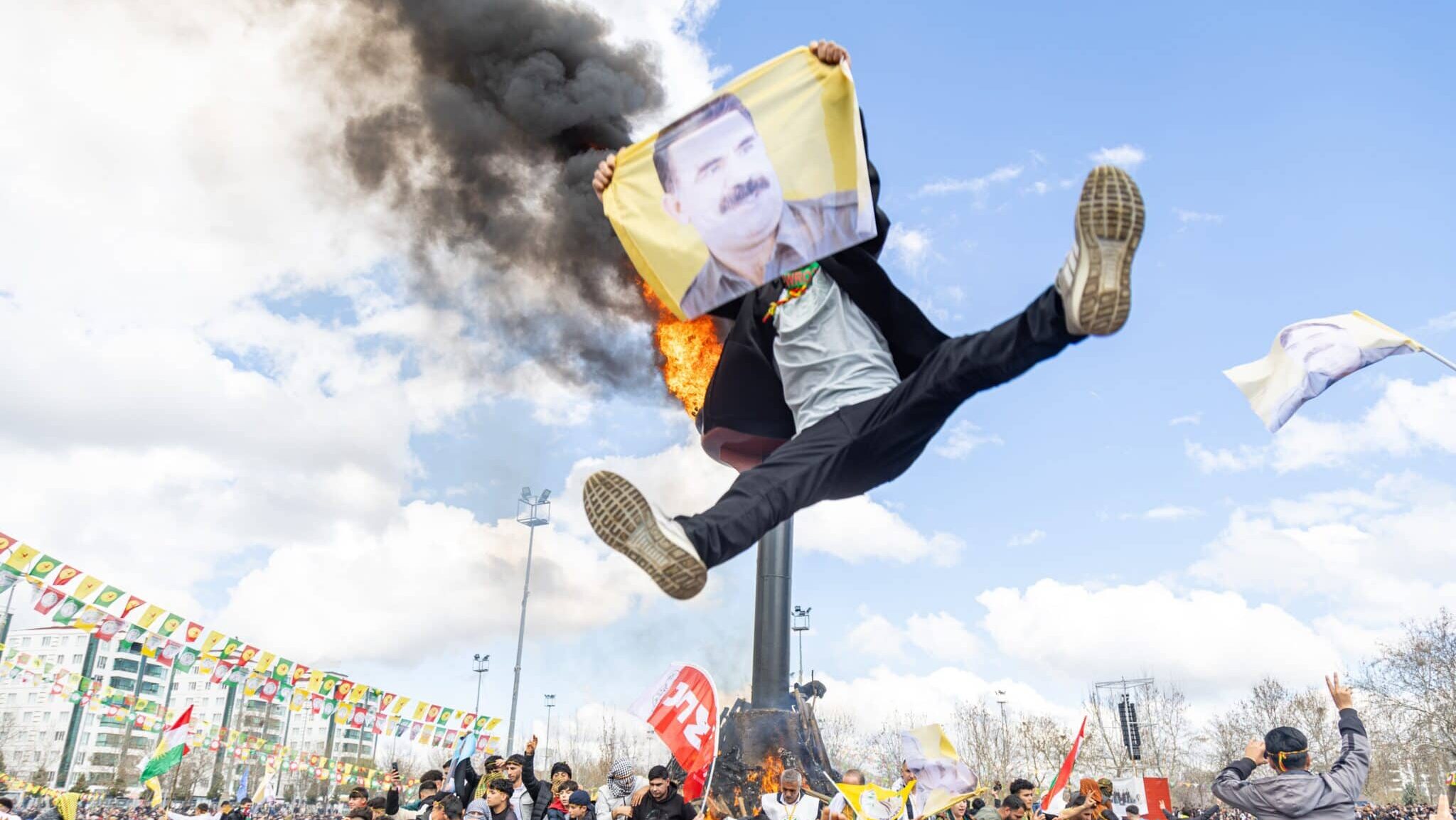
Landmark step Turkish President Recep Tayyip Erdogan delivers a speech in Ankara, July 2025. Photo: EPA/NECATI SAVAS Last week Turkey adopted a momentous law on the disarmament of the Kurdistan Workers’ Party (PKK). Many see the law as a major step towards ending the decades-long conflict with the Kurdish militants. In return for disarmament, the law foresees supervised release and postponed sentencing for many of those convicted of being involved in the PKK. While the end of the conflict with the PKK would be welcome news for Turkey, many still wonder what motives are driving the ruling party and President Recep Tayyip Erdogan to pursue such a deal. For many ordinary Kurds, there is still trepidation over whether they will truly see an improvement in their rights and freedoms. Read more: Turkey Welcomes PKK Disarmament Law Despite Fears About Its Misuse (August 17, 2026) Media freedoms Protest in front of the N1 television offices, April 2026. Photo: BIRN/Katarina Baletic Fears have been expressed that Serbia’s President Aleksandar Vucic and his ruling party are plotting to muffle critical media voices in the country as important parliamentary and presidential elections approach. The latest bout of speculation was triggered by the registration of Pedro Vargas Santos David as the director of the companies which own most of United Group’s media outlets in Serbia. United Group is in the process of selling its regional media empire to David’s Alpac Capital, which also owns the Euronews pan-European news network, but the deal still requires regulatory approval. Our analysis takes a look at what is going on behind the scenes and how it may impact regional media. Read more: Serbian Media Outlets’ Management Change Sparks Suspicion Ahead of Elections (August 18, 2026) Lobbying plans President of HDZ BiH Dragan Covic, member of the European Parliament Zeljana Zovko, and Croatian Minister of Foreign and European Affairs Gordan Grlic Radman. Photo: mvep.gov.hr. With national elections approaching in October, the main Bosnian Croat political party, the HDZ, has signed a lobbying contract with US government relations company Mercury Public Affairs. It appears that HDZ leader Dragan Covic is seeking to emulate the success of his Bosnian Serb ally, Milorad Dodik. But what is the agenda Covic and the HDZ are seeking to advance in Washington? Our analysis suggests that leveraging American power to ensure a better cut from lucrative energy projects and strengthening the Croatian position within Bosnia and Herzegovina may be the key goals. Read more: Courting Trump’s Allies, Bosnian Croat Political Party Signs US Lobbying Contract (August 17, 2026) Questionable intentions A protester holds a placard reading ‘Educator’ during a protest by members of education unions in front of the Serbian parliament in Belgrade, May 2024. EPA/ANDREJ CUKIC Amid peak summer holiday season, Serbia’s Ministry of Education has unveiled proposed amendments to the law on school education. Nominally, these changes are pitched as aiming to prevent schools from being ‘misused’. But with the education system having played a key role in the anti-corruption protests that have gripped Serbia since late 2024, critics are concerned that the real intention is to place the education system under tighter control to prevent a repeat. Read more: Proposed Legal Changes to ‘Limit Rights’ Send Chill Through Serbian Schools (August 17, 2026) Random violence Turkish border soldiers monitor the repair of protective fence of the Bulgarian-Turkish border near the village of Matochina, Bulgaria, November 2021. Photo: EPA/VASSIL DONEV Migrants and activists in Bulgaria claim that on July 26, Bulgarian police deployed indiscriminate violence at the Pastrogor detention facility. Until December, the camp functioned as an open camp hosting migrants whose asylum applications were being processed. Yet in December, it was turned into a detention facility in line with the EU’s new Pact on Asylum and Migration. Our story takes a look at what happened at the camp and how authorities are responding to the claims. Read more: Refugees, Migrants Tell of ‘Merciless’ Mass Beatings at Bulgarian Detention Centre (August 17, 2026) The AI minister A screenshot of Diella, the AI-generated Albanian ‘government minister’. Photo: EPA/ANDREJ CUKIC. It is not usual for ministerial appointments in Albania to capture international attention. Yet Albanian Prime Minister Edi Rama has a talent for grabbing the limelight, whether by appearing at an international summit in white trainers or by his decision in September 2025 to appoint an ‘AI minister’. The ‘AI minister’ is actually a chatbot named Diella integrated into the country’s digital services platform e-Albania. Rama had pitched that Diella’s role would be to eliminate corruption in public procurement tenders. A year on, our analysis takes a look at what, if any, results this unusual experiment has delivered. Read more: BIRN Reality Check: What Has Albania’s AI ‘Minister’ Achieved So Far? (August 14, 2026)
Week in Review: Momentous Moves and Dubious Intentions
Full Article
Original Source
Read the full article at Balkaninsight →KhanList aggregates and links to publicly available news content. We do not host full articles from third-party sources. Always verify important information with original sources.