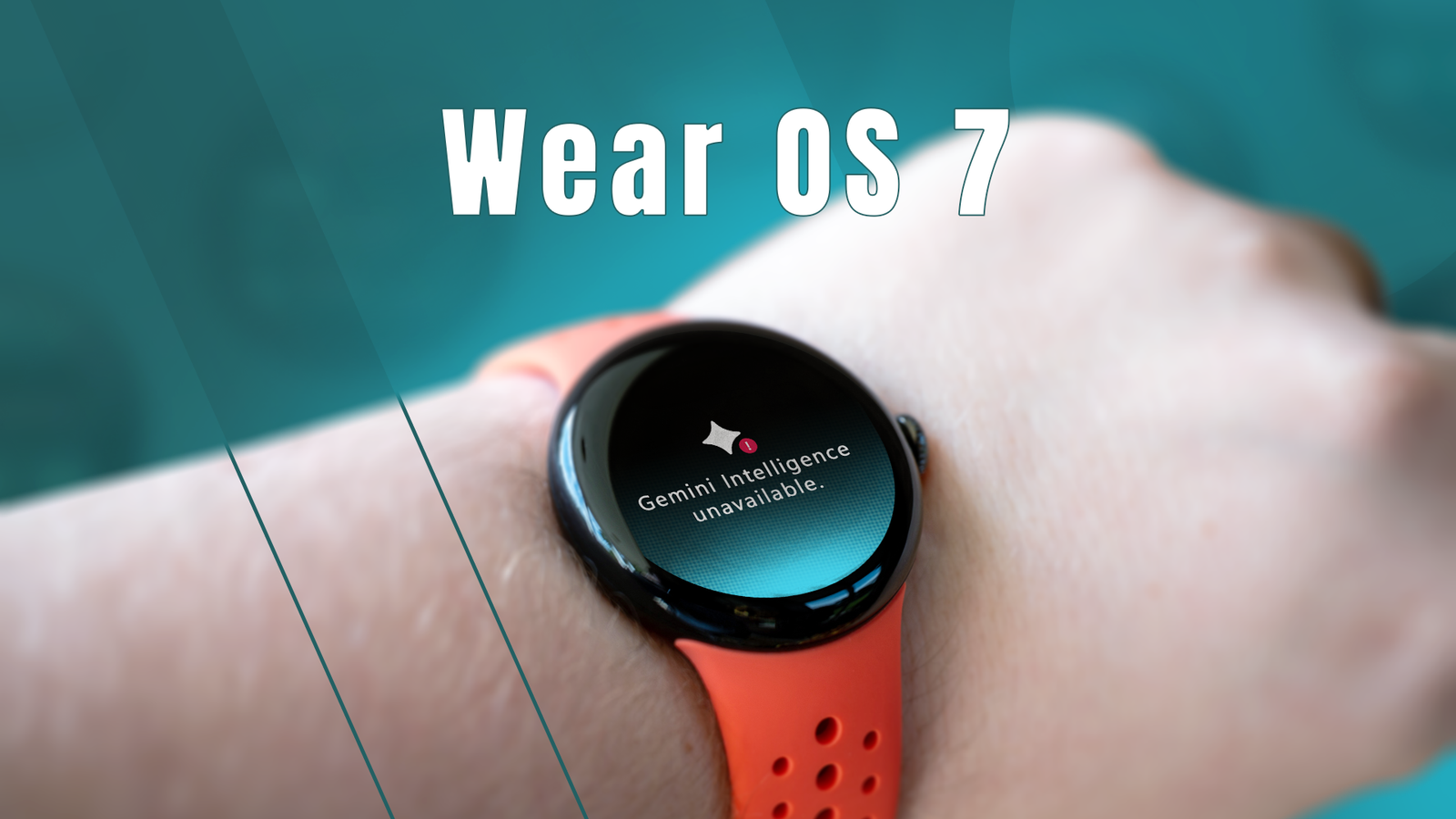
Published Jul 21, 2026, 7:00 AM EDT I’ve been covering Android since 2023, when I joined Android Police, mostly focusing on AI and everything around Pixel and Galaxy phones. I’ve got a bachelor’s in IT with a major in AI, so I naturally view technology differently. I usually take a pro-consumer angle instead of the marketing hype, which you’ve probably noticed in my writing. Google released Wear OS 7 for the Google Pixel Watch 2, 3, and 4 in June, and the original Pixel Watch didn't make the cut. For the watches that qualified, it's a welcome update that brings faster interactions, dynamic widgets, better battery life, and Android integration. What's missing, however, is the very thing Google gave the most stage time to at I/O 2026. The headline Gemini Intelligence features have been held back, and Google says they'll reach "select devices only” later this year. In other words, the watches that qualified still didn't fully qualify, and the reason comes down to silicon rather than software. What Wear OS 7 brings to eligible Pixel Watches Live Updates is the pick of the bunch for me. If you know the feature from Android 16, Wear OS 7 brings that same experience to the wrist. Sports scores, workout progress, your DoorDash getting close, all of it sits on the watch face and updates as things happen. Google is also retiring full-screen Tiles in favor of dynamic Wear Widgets. The new widgets support 2x1 and 2x2 grids that match phone widget sizing, giving developers more room to work with. There's also a new system-level media output switcher. It lets you pass audio between earbuds, home speakers, your Android phone, the TV, and just about anything else, including the upcoming Android smartglasses. More runtime from the same cell Google says users moving from Wear OS 6 to Wear OS 7 should see up to a 10% improvement in battery life, all from software-level power management. Getting more runtime from the same cell is a big deal on a device that tracks heart rate non-stop, keeps an always-on display, and holds Bluetooth connections. This also prolongs the useful life of older watches as their batteries degrade. For a Pixel Watch 2 owner, an extra hour or two per charge can be the difference between sleep tracking lasting the night or not. Judging by early talk, the battery gains appear to be true. Unglamorous as it is, this may well be the most consequential change of Wear OS 7. Two kinds of Gemini and one needs a new chip Credit: Lucas Gouveia / Android Police Your current Pixel Watch can still call on Gemini, either phone-tethered or through the cloud. Asking a trivia question or setting a timer works without any trouble because the processing happens on a remote server. Gemini Intelligence is a different beast, since some of its features are built to run on-device, and that only works with the right hardware underneath. CPUs are built for sequential work and can't run AI math without getting hot and cooking the battery. A Neural Processing Unit is purpose-built for that workload. Now look at the chips inside the current lineup. Chipset Process Devices Snapdragon W5 Gen 1 4nm Pixel Watch 2, Pixel Watch 3 Snapdragon W5 Gen 2 4nm Pixel Watch 4 These aren't the chips that run Gemini Intelligence, and here's the thing I keep coming back to. I don't think a watch can realistically do this locally at all, now or for a good while yet. These are educated guesses, so take them with a pinch of salt, but wearables battle brutal constraints that come with the form factor. For context, Google's requirements for Gemini Intelligence on phones are a flagship chip and 12GB or more of RAM. That bar is high enough to lock out the Pixel 9 series, and those phones already have 12GB of RAM. A wrist-scale model would be more forgiving, but if a 12GB flagship from 2024 doesn't make the cut, a 2GB watch running it is hard to imagine. So what did Google mean by Gemini Intelligence coming to watches later this year? Google routinely stages features by region, subscription, and model, and the "Gemini" name covers a lot of ground. I bet that whatever lands on the wrist leans on a tethered phone rather than the watch itself. A future Pixel Watch packing a rumored Tensor-class chip might change the math, but that silicon isn't here yet. Good today, gated tomorrow Wear OS 7 is a good update and makes existing Pixel Watches meaningfully better. Google still investing in older watches counts for something. But we're closing in on a ceiling. Better app hooks and media controls download over the air with ease. A neural accelerator can't. We're in a strange era where tech moves so fast that today's flagship could become tomorrow's e-waste, and pricing hikes due to the RAM shortage only make it harder to keep pace.
Wear OS 7 gives Pixel Watch owners what they've been asking for, except what matters
Full Article
Original Source
Read the full article at Androidpolice →KhanList aggregates and links to publicly available news content. We do not host full articles from third-party sources. Always verify important information with original sources.