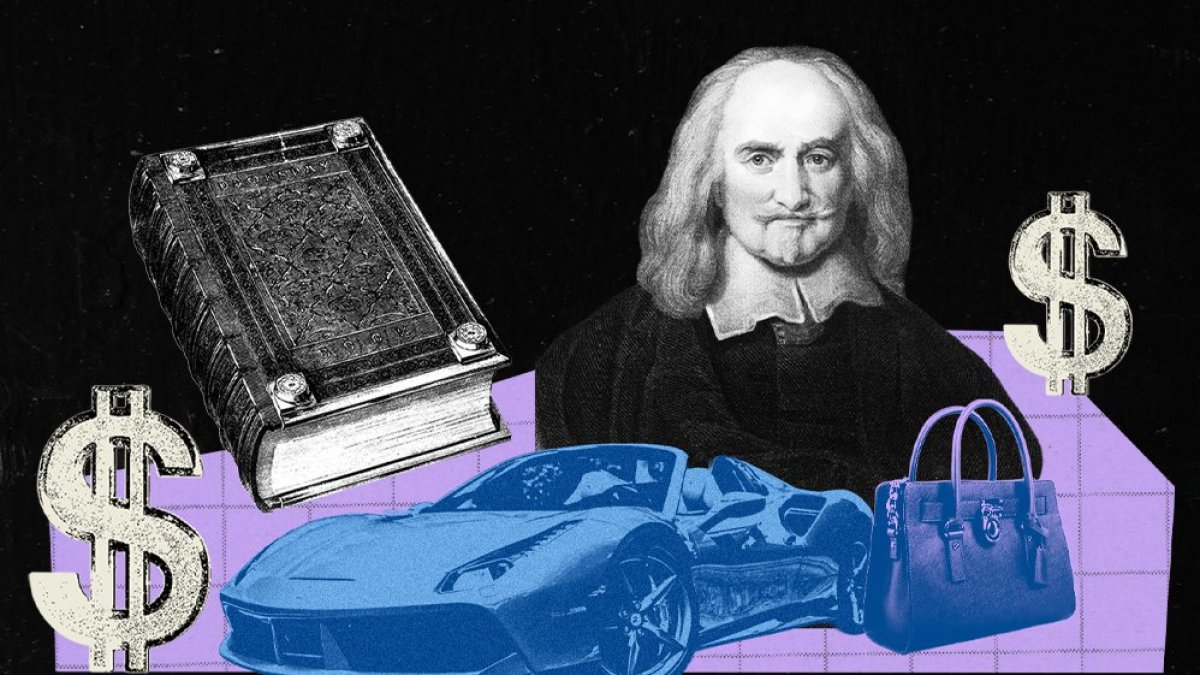
With Andy Burnham reported to be weighing up tax rises as he assumes office, some are calling for him to ramp up taxes on the richest people in the UK. Capital gains tax and income tax could go up for the wealthy, or Burnham could decide on a wealth tax, a levy on the entirety of a person or entity’s total worth. It’s a popular idea: last year YouGov found that 75 per cent of Britons backed it. Though other countries have brought in such a tax, they have had mixed success. And opponents suggest taxing the rich more would drive them abroad, and stifle the growth which Britain needs. So, should we tax the rich more? Entrepreneur Charlie Mullins, writer and broadcaster Zing Tsjeng and economist Professor Lucy Barnes give their perspectives. History shows that taxing wealth is expensive, difficult and often counterproductive. A targeted tax on luxury consumption would be fairer, simpler and far better for Britain’s economy. I’m a plumber, not a philosopher or a tax expert. But like most people, when I earn a quid, I feel like it’s mine and it should be up to me what I choose to do with it. I know lots of people see things the same way. Many, me included, get very passionate about tax and the way large chunks of money, legally earned, get hoovered up by income, inheritance and capital gains tax, so when the taxman comes at you for a second dip it seems wrong. I’d never heard of the philosopher Thomas Hobbes, not a big name in the plumbing world. But in a famous 17th century book, he came out with some proper old fashion common sense: “When the impositions are laid upon those things which men consume, every man payeth equally for what he useth.” Pay for what you use, which definitely rules out shelling out extra just because you own stuff. Plenty of people disagree though. The idea of a wealth tax is once again climbing the political agenda. If someone has accumulated millions, people say, why shouldn’t they pay a little more? But it’s also a fact that Britain’s highest earners already contribute disproportionately, with the top 10 per cent of earners contributing 62 per cent of all income tax. The question, therefore, isn’t whether successful people should cough up more, as most already do. The real question is whether Britain is taxing the right thing. Unfortunately, wealth taxes rarely work and the reason is very simple. Common sense should rule out wealth-based taxation at the first hurdle – how the hell are you supposed to figure out who is worth what? The last bloke who seriously tried to answer that conundrum was William the Conqueror. In 1086, he commissioned what became the Domesday Book, an astonishing survey of England’s wealth. Royal commissioners travelled the country questioning more than 60,000 witnesses before recording land, livestock, mills, property and other assets across more than 13,000 settlements. It was one of the greatest administrative achievements of the medieval world, even though late 11th century England only had a population of around two million. Britain today has almost 70 million people, a modern financial system and wealth that can be spread across companies, trusts, pensions, intellectual property, overseas assets and digital investments. Imagine trying to value every family business, every farm, every buy-to-let portfolio, every private company, every antique collection, every work of art, every pension, every cryptocurrency holding and every overseas investment in the country. Then imagine doing it all over again 12 months later. That’s what a wealth tax would demand. A modern-day Domesday Book would require an army of valuers, accountants, lawyers and civil servants. And unlike in William’s time, it wouldn’t be a one-off. There’s another difference too. In William’s day, hiding assets from the king could have very unpleasant consequences. These days, people with significant wealth can often move it, restructure it or simply move themselves. Basically, wealth taxes are a lot of work and they’re easy to dodge. France learned that lesson with its long-running fortune tax. Instead of delivering the promised windfall, it encouraged many wealthy people to leave the country, along with the businesses, investment and tax revenues they generated. By 2018, President Emmanuel Macron had effectively scrapped the tax on most financial wealth because it was doing more harm than good. So, what do we do instead? Well maybe old Hobbes didn’t earn the title “Father of Modern Political Philosophy” for no reason. Why wouldn’t you aim at lavish consumption rather than wealth? At least your mostly rich targets can choose their own tax fate. If someone spends £300,000 on a Ferrari, £2m on a yacht or millions more on luxury goods, that is consumption. It is a personal choice and a perfectly reasonable point at which the taxman can ask for a larger contribution. And here’s the good bit. If that same money were used instead to build a factory, open a call centre, expand a recycling business, back a technology start-up or employ another hundred people, society benefits. Jobs are created, wages are paid and the economy grows. Why tax that? A carefully designed luxury consumption tax would encourage exactly the behaviour Britain says it wants. Investment would become more attractive than extravagance. Entrepreneurs would have fewer reasons to move abroad and more reasons to keep building businesses here. The beauty of the idea is that it doesn’t punish success. It only asks those with the broadest shoulders to contribute more when they choose to spend lavishly rather than invest productively. Call it good economics if you like, but I’m sticking with common sense. Britain certainly needs tax revenues, but it also desperately needs investment, confidence and growth. A wealth tax risks driving all three away. Hobbes understood something that still rings true nearly 400 years later. Britain needs a tax system that rewards enterprise, encourages investment and raises revenue without driving wealth elsewhere.
Wealth taxes punish success. I’ve got a better idea
Full Article
Original Source
Read the full article at Inews →KhanList aggregates and links to publicly available news content. We do not host full articles from third-party sources. Always verify important information with original sources.