
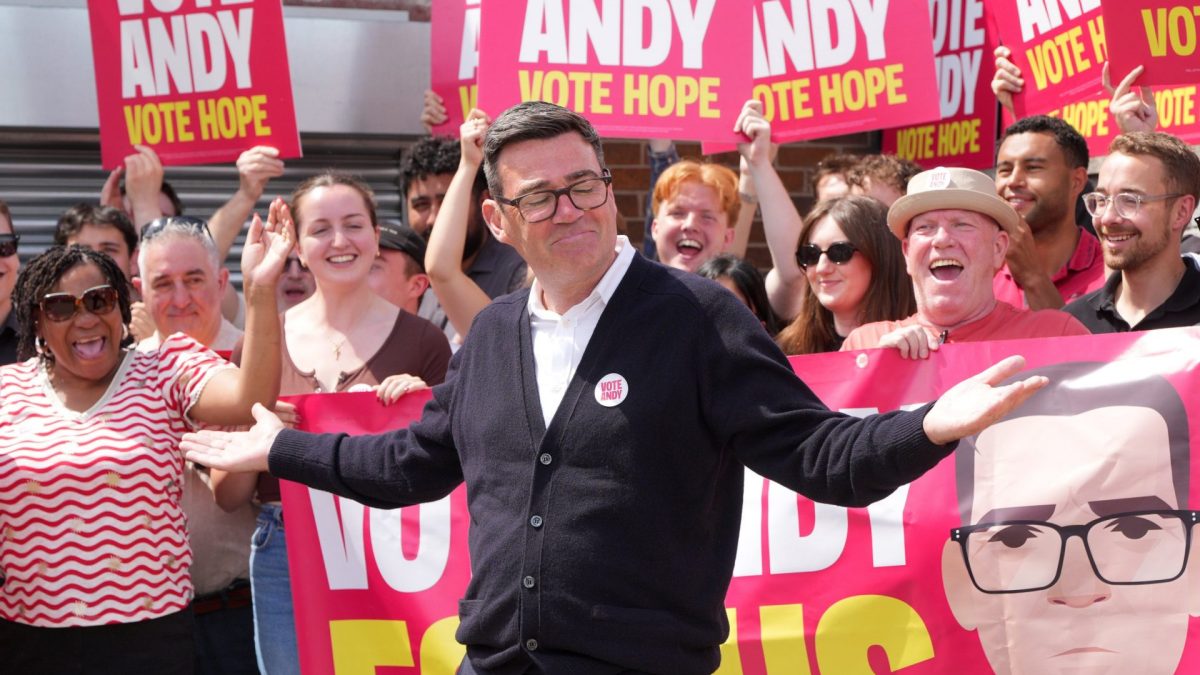
Andy Burnham’s first Labour conference as leader risks being overshadowed by competing demands from his backbench MPs over who – and what – should be taxed to bankroll his ambitions. The Prime Minister is expected to use the annual gathering of Labour members, politicos and journalists to set out his vision for reindustrialising Britain, taking power out of Westminster and delivering “growth in every postcode”. However, with the Budget just one month away, Burnham and his Chancellor, John Healey, are facing pressure from different factions of the Parliamentary Labour Party (PLP) on what they should raise or cut to bring in much-needed cash. Shorts It comes amid warnings that the Chancellor’s fiscal headroom could fall from the forecasted £23.6bn to roughly £14bn following a surge in the cost of government borrowing, triggered by the US-Iran war. Several MPs have backed different options, from wealth taxes and higher levies on big businesses to council tax reform and unfreezing the tax-free personal allowance for workers. But there’s also a deeper faultline running through the PLP, with one cohort seeing Burnham’s first Budget as an opportunity for “bold transformational policies to tackle inequality” and another insisting it must outline a “strategy for fiscal prudence”. Here are all the changes Labour MPs have been pushing for – including behind closed doors. Several Labour MPs have been actively campaigning for a wealth tax, which would see people pay an annual percentage charge levied on their total net worth over a certain amount. Brian Leishman, the Scottish Labour MP for Alloa and Grangemouth, has suggested an annual levy of 2 per cent on mutlimillionaires with assets over £10m, which he states would raise around £24bn a year to tackle “structural inequality”. “I would like to see something that would go a long way to trying to equalise society,” he told The i Paper, adding: “Let’s tax multimillionaires with generational wealth, not workers.” Rachael Maskell, the MP for York Central, suggested ministers should look at “how we target high-end wealth” to fund an increase to the National Living Wage to stop people from having to use the benefits system to subsidise low wages. When interviewed by the broadcaster and former footballer Gary Lineker before becoming Prime Minister, Burnham was non-committal about whether he thought the wealthiest should be taxed more – but he refused to rule it out. He said there should be a “greater sense of fairness”, but that he did not want to “create new divisions” or be seen as “demonising one group”. Capital gains tax Many economists and Labour insiders see an increase to the capital gains tax (CGT) as the front-runner when it comes to potential tax increases in the Budget on 28 October. CGT – paid on the profit of the sale of an asset such as a second home or shares – currently sits at 18 per cent for basic-rate income taxpayers and 24 per cent for higher and additional-rate taxpayers. This year, individuals can make £3,000 profit on capital gains before it is taxed. Labour backbenchers are pushing for CGT rates to align more closely with income tax rates to remove a loophole for those who earn money on properties and shares, compared with those who pay tax on normal earnings. Leishman said the Government should “equalise capital gains tax to match income tax”, while other backbenchers said it was a “good idea”. CGT has previously been backed by Burnham’s second-in-command, First Secretary of State Louise Haigh, and the Defence Secretary, Wes Streeting – albeit both before their roles in Burnham’s Cabinet were confirmed. Taxes on big business Labour MPs are split over taxes on big businesses, with some pushing for a crackdown on companies making large profits and others worried about any moves that could spook the market and affect growth. The i Paper previously reported that Healey was considering taxes on banks or raising the windfall tax on oil and gas profits. Several Labour backbenchers support a corporation tax paid by multinational companies, with one demanding a crackdown on firms that “make fortunes but do not pay the tax that they should”. An influential backbencher warned against ditching the 2 per cent digital services tax on multinational tech companies, despite pressure from Donald Trump to reduce or restructure the levy. They argued that tech giants already “pay little business rates” and use offshore havens to avoid UK tax. However, a backbencher who described themselves as a “fiscal hawk”, said the Government must “not be doing anything that spooks the market and leads to higher borrowing costs”. This could include a wealth tax, CGT or levies on multinational companies. “A populist vibe-driven soundbite Budget is not a strategy for fiscal prudence,” they said, insisting that the Government must raise money via spending cuts rather than taxes. The Budget next month will be John Healey’s first as Chancellor (Photo: Dan Kitwood/Getty) Property tax A group of Labour MPs mainly based in the North of England want Burnham and Healey to scrap stamp duty and council tax and replace them with an annual proportional property tax based on the value of a home. Jonathan Brash, the MP for Hartlepool, described the current council tax system as an “injustice built into a system that has not properly updated its valuations for 35 years”, and called on the Prime Minister to replace it. He said Burnham was “right” when he called council tax “regressive” before entering No 10, and said: “Now use the power of Government to do something about it.” Another MP said they were still hoping the Prime Minister may reform stamp duty – the tax you pay when buying a property or land in England and Northern Ireland – at the Budget despite insisting he would not be scrapping the tax. “With this sort of thing, you have to deny it until you’re doing it,” they said, adding: “People wouldn’t complete [deals] on houses if they think stamp duty is about to be abolished.” However, one of Burnham’s key allies, Lord Blunkett, warned that replacing council tax and stamp duty with a new land value tax (LVT) would take years to implement and could be “politically problematic”. Before becoming Prime Minister, Burnham advocated for a major shake-up of property taxation where owners would be charged based on the value of the land they own, rather than the buildings sitting on it. Mansion tax Labour MPs are split over reports that Healey is considering lowering the threshold for the high value property surcharge – or “mansion tax” – from £2m to £1.5m. In last year’s Budget, then-chancellor Rachel Reeves announced that owners of properties in England valued at more than £2m will have to pay a surcharge of at least £2,500 from 2028. Lowering the threshold would increase the number of homes forecast to pay the charge from 134,000 to 271,000 based on current values, with around half of the affected properties in London. One London MP told The i Paper the move would be a “catastrophic electoral own goal”, while even some left-wingers representing seats elsewhere in the country fear it could hit “ordinary families” living in the capital. Another MP who backs council tax reform said they were “encouraged that property tax is on the agenda, even if it’s a very unsatisfactory mansion tax”, suggesting this could lay the groundwork for further changes. Unfreezing the personal allowance An internal debate is also under way over whether or not Burnham should raise the tax-free personal allowance from £12,570, with some Labour MPs saying it is essential for supporting people with the rising cost of living, while others warn the country cannot afford it. The plan was suggested by Labour donor Dale Vince, who said: “Raising the personal allowance to £15,570 would give millions of people a meaningful boost, with the biggest benefit going to those on the lowest incomes.” Maskell, the Labour MP for York Central, said the personal allowance must be raised to accommodate for inflationary rises to food, energy and housing costs, which are leaving people in “financial security”, while another backbencher agreed the thresholds “should be unfrozen”. Critics have warned however that raising the threshold would come at a huge cost at a time when ministers are already going to have to raise taxes or cut spending to pay for higher borrowing charges. Another cohort of MPs would prefer Burnham crack down on welfare spending, with one saying: “The focus of the Budget should be on cutting spending and introducing a fiscal stimulus for growth – not on reducing personal taxation. “We simply cannot afford that at the moment.” An Treasury spokesperson said: “As has always been the case, decisions on tax are a matter for the Chancellor to set out at fiscal events, rather than routinely commenting on rumour, speculation or proposals.”
Wealth, capital gains and property tax hikes: All the Budget demands Burnham faces
Full Article
Original Source
Read the full article at Inews →KhanList aggregates and links to publicly available news content. We do not host full articles from third-party sources. Always verify important information with original sources.