
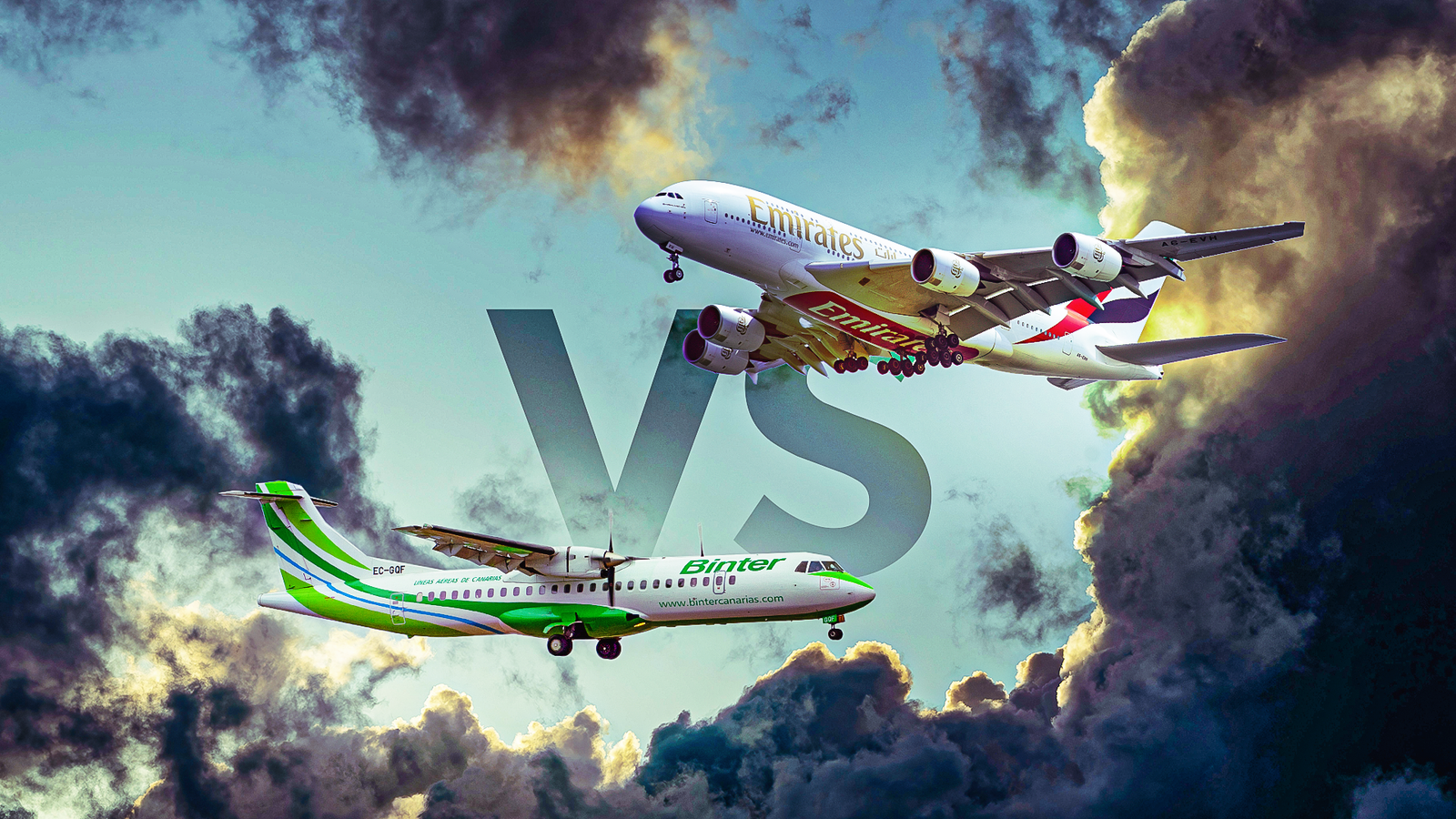
Credit: Wikimedia Commons | Simple Flying Published Nov 18, 2026, 4:00 AM EST Based in Maastricht, the Netherlands, Nick joined Simple Flying in October 2025 and has a strong passion for travel and tourism, and in particular, the aviation industry, for as long as he can remember. Nick's focus is on aviation economics, airline strategy, and digital innovation. Before joining Simple Flying, he gained industry experience in ground handling and in a leading European airline group. Academically, Nick holds a Bachelor's degree in Aviation Management and is currently pursuing a Master's degree in Strategy & Innovation. Sign in to your Simple Flying account Using the new Simple Flying Flight Tracker, we examined the world's busiest aircraft. A Divi Divi Air Twin Otter and a Hawaiian Airlines Boeing 717 each completed 75 flights in one week, making them the world's busiest individual aircraft by flight count. However, when looking at the time spent airborne, the results are completely different. An Air New Zealand Boeing 787-9 and an SAS Airbus A350-900 each recorded approximately 134 hours in the air during the same period, equivalent to roughly 19 hours per day. Our analysis of the flight schedules is based on two different measures: the number of flights operated and the total airborne hours recorded. Interestingly, all ten aircraft in the first ranking operate relatively short regional flights, while the second list consists entirely of widebody aircraft flying longer international routes. The Busiest Aircraft By Number Of Flights Are Island Hoppers Credit: Wangkun Jia | Shutterstock The aircraft with the most recorded flights was a De Havilland Canada DHC-6 Twin Otter operated by Curaçao-based Divi Divi Air, registered PJ-DVF. During the seven-day period, the aircraft completed 75 flights between just three airports in the Dutch Caribbean. According to our tracking data, 41 of these flights were between Curaçao International Airport (CUR) and Flamingo International Airport (BON) in Bonaire, while the remaining 34 connected Curaçao with Queen Beatrix International Airport (AUA) in Aruba. This corresponds to an average of almost 11 flights per day, despite the aircraft operating across a relatively small network. Interestingly, Divi Divi was not the only airline to achieve this number of flights. A Hawaiian Airlines Boeing 717-200, registered N484HA, also completed 75 flights during the same week. This aircraft served five airports across Hawaii, including Daniel K. Inouye International Airport (HNL), Kahului Airport (OGG), Lihue Airport (LIH), Kona International Airport (KOA), and Hilo International Airport (ITO). Its busiest route was between Honolulu and Lihue, with 15 flights in each direction, accounting for 30 of its 75 recorded services. Aircraft Operating Between Islands Dominate The Top Ten Credit: Markus Mainka | Shutterstock According to our analysis, the presence of aircraft operating island-hopping services extends beyond the two aircraft at the top of the ranking. Another Hawaiian Airlines Boeing 717, registered N487HA, completed 70 flights, while a Cessna 408 SkyCourier registered N974LA and operated by Lānaʻi Air recorded 72 flights. The latter operated exclusively between Honolulu, Molokai, and Lanai, including 44 flights between Honolulu and Molokai and another 28 between Honolulu and Lanai. These routes allow aircraft to complete multiple round trips without operating longer flights between major airports. A similar pattern can be observed in Spain's Canary Islands, where two ATR 72 aircraft also appear among the busiest in the world. Canaryfly's EC-MUJ completed 74 flights between six airports, particularly on routes connecting Gran Canaria with Lanzarote and Tenerife North with La Palma. Another ATR 72-600, registered as EC-NSF and operated by Naysa on behalf of Binter Canarias, recorded 69 flights across seven airports. Binter and Canaryfly both operate extensive regional networks within the archipelago, where the ATR 72 is particularly well suited to the relatively short distances between islands. The 10 Busiest Aircraft By Number Of Flights Rank Airline / Operator Aircraft Registration Flights 1 Divi Divi Air DHC-6 Twin Otter PJ-DVF 75 2 Hawaiian Airlines Boeing 717-200 N484HA 75 3 Finnair / Norra ATR 72-500 OH-ATL 74 4 Canaryfly ATR 72-500 EC-MUJ 74 5 Iberia Regional / Air Nostrum ATR 72-600 EC-LRU 73 6 Lānaʻi Air Cessna 408 SkyCourier N974LA 72 7 Hawaiian Airlines Boeing 717-200 N487HA 70 8 Finnair / Norra ATR 72-500 OH-ATE 69 9 Binter Canarias / Naysa ATR 72-600 EC-NSF 69 10 Oriental Air Bridge ATR 42-600 JA20RC 69 However, not all aircraft on the list exclusively operate on island connections. Two ATR 72-500s operated by Nordic Regional Airlines (Norra) on behalf of Finnair also recorded particularly high flight counts. OH-ATL completed 74 flights across 17 airports, while OH-ATE operated 69 flights serving 20 airports. Both aircraft primarily operated regional services connecting Helsinki Airport (HEL) with destinations across Finland and neighboring countries. Meanwhile, an ATR 72-600 operated by Air Nostrum on behalf of Iberia Regional completed 73 flights, primarily between Palma de Mallorca (PMI), Menorca (MAH), and Ibiza (IBZ). The final aircraft on the list was an Oriental Air Bridge ATR 42-600 registered JA20RC, which completed 69 flights connecting Nagasaki (NGS) with smaller Japanese destinations. Interestingly, eight of the ten aircraft on this list are turboprops, with Hawaiian's two Boeing 717s being the only jets. An Air New Zealand 787 And Two SAS A350s Led By Airborne Hours Credit: Steve Worner | Shutterstock Looking at the world's busiest aircraft based on the time spent airborne produces a completely different ranking. The aircraft with the most recorded flying hours was an Air New Zealand Boeing 787-9 Dreamliner, registered ZK-NZD, which completed 14 flights and spent 134.2 hours in the air. This represents an average of approximately 19 hours and ten minutes of flying per day, or almost 80% of the entire week. The aircraft operated through seven airports, including Auckland (AKL), Singapore (SIN), Hong Kong (HKG), Honolulu (HNL), New York (JFK), Melbourne (MEL), and Christchurch (CHC). According to our tracking data, flights between Auckland Airport (AKL) and Singapore Changi Airport (SIN) accounted for a considerable part of the aircraft's activity. ZK-NZD completed two flights in each direction on this route, alongside services connecting Singapore with Christchurch. Other flights involved destinations across Asia, Australia, and the US, showing how the airline rotates individual Dreamliners through different parts of its international network rather than assigning them exclusively to a single long-haul route. The second and third positions were occupied by two SAS Scandinavian Airlines Airbus A350-900s, registered SE-RSG and SE-RSH. The former completed 15 flights and recorded exactly 134 hours airborne, just behind Air New Zealand's 787. Its operations were concentrated primarily on routes between Copenhagen Airport (CPH) and Chicago O'Hare International Airport (ORD) and San Francisco International Airport (SFO), alongside services involving Atlanta (ATL). SE-RSH recorded another 131.9 airborne hours across 14 flights, including services connecting Copenhagen with Chicago (ORD), San Francisco (SFO), Bangkok (BKK), and Seoul (ICN). Emirates, EVA Air, And SWISS Also Recorded More Than 125 Hours Credit: Emirates The remaining aircraft on the airborne-hours ranking are also exclusively widebody jets, although they operate across considerably different networks. In fourth place was an Emirates Airbus A380 registered A6-EVH, which recorded 131.8 hours across just 11 flights. The aircraft served six airports, including Dubai International Airport (DXB), Sydney Airport (SYD), London Heathrow Airport (LHR), Hong Kong International Airport (HKG), Los Angeles International Airport (LAX), and San Francisco. Its activities included two flights from Dubai to Sydney, alongside services connecting the airline's hub with North America and Europe. EVA Air occupied fifth place with a Boeing 777-200LR registered B-16783, recording 129.7 hours across 14 flights. The aircraft operated between Taipei and several US destinations, including Los Angeles (LAX), Seattle (SEA), New York (JFK), and Dallas/Fort Worth (DFW), with Anchorage (ANC) also appearing in the tracking data. Meanwhile, a SWISS Boeing 777-300ER registered HB-JNF recorded 127.1 airborne hours over 12 flights. Its network included flights between Zurich (ZRH) and Miami (MIA), Bangkok (BKK), Hong Kong (HKG), Singapore (SIN), and San Francisco (SFO). The 10 Busiest Aircraft By Time In The Air Rank Airline Aircraft Registration Flights Airborne Hours 1 Air New Zealand Boeing 787-9 ZK-NZD 14 134.2 2 SAS Airbus A350-900 SE-RSG 15 134.0 3 SAS Airbus A350-900 SE-RSH 14 131.9 4 Emirates Airbus A380-800 A6-EVH 11 131.8 5 EVA Air Boeing 777-200LR B-16783 14 129.7 6 SWISS Boeing 777-300ER HB-JNF 12 127.1 7 Iberia Airbus A330-200 EC-MYA 14 126.2 8 Japan Airlines Boeing 787-9 JA867J 14 125.4 9 Air Canada Boeing 787-9 C-GWUU 15 124.3 10 KLM Boeing 777-300ER PH-BVU 13 124.3 Interestingly, the list also includes several aircraft operated by European airlines with networks extending well beyond the usual transatlantic markets. An Iberia Airbus A330-200 registered EC-MYA recorded 126.2 hours across 14 flights, serving destinations including Boston (BOS), Los Angeles (LAX), Guayaquil (GYE), Monterrey (MTY), Santo Domingo (SDQ), and San Juan (SJU) from Madrid (MAD). The final three positions were occupied by a Japan Airlines Boeing 787-9, an Air Canada 787-9, and a KLM Boeing 777-300ER. These aircraft recorded between 124.3 and 125.4 airborne hours, operating between 13 and 15 flights. Japan Airlines' JA867J primarily connected Tokyo Narita (NRT) with destinations in North America and Europe, while Air Canada's C-GWUU operated routes involving Vancouver (YVR), Newark (EWR), Brisbane (BNE), and Bangkok (BKK). KLM's PH-BVU served eight airports across Europe, Asia, and South America, including flights connecting Amsterdam (AMS) with São Paulo (GRU) and Tokyo Narita (NRT). Why Flight Counts And Airborne Hours Tell Different Stories Credit: JetKat | Shutterstock The difference between the two rankings is largely explained by the types of routes these aircraft operate. Divi Divi's Twin Otter completed 75 flights during the week, compared with just 14 for Air New Zealand's Boeing 787-9. However, the latter spent nearly 80% of the seven-day period airborne, while the Twin Otter operated numerous short flights between Curaçao, Aruba, and Bonaire. For regional airlines, operating multiple daily departures is particularly important when passengers depend on frequent connections between neighboring islands or smaller airports. Airlines operating widebodies, on the other hand, generally aim to maximize flying hours, allowing them to spread the relatively high ownership and operating costs of widebody aircraft across more time in the air.
We Tracked The World’s Busiest Aircraft For A Week: Island Hoppers Vs Long-Haul Workhorses
Full Article
Original Source
Read the full article at Simpleflying →KhanList aggregates and links to publicly available news content. We do not host full articles from third-party sources. Always verify important information with original sources.