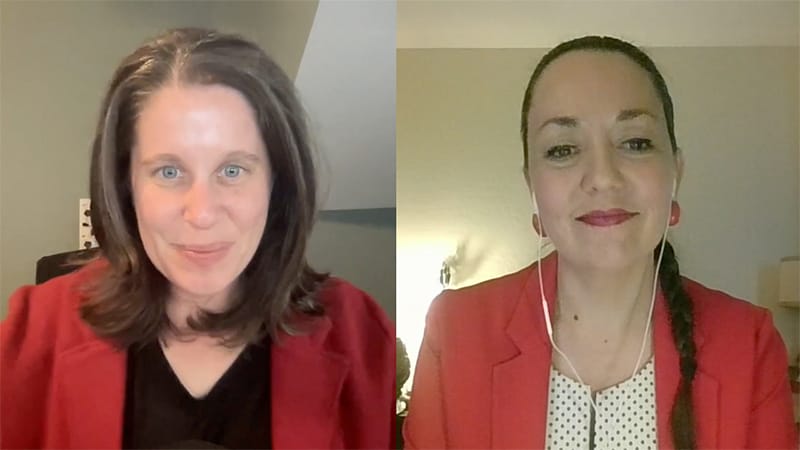
This transcript has been edited for clarity. Rachel Rubin, MD: Hi, everybody. I’m Dr Rachel Rubin, and welcome to another episode of Sex Matters. I’m a urologist who is fellowship-trained in sexual medicine, and I have an amazing guest for you today. I am so grateful that my friend, Dr Jewel Kling, is joining us all the way from the Mayo Clinic in Arizona. Dr Kling, why don’t you tell everybody your background and what you do at the Mayo Clinic? Jewel Kling, MD, MPH: Thank you so much for having me, Dr Rubin. I’m Dr Jewel Kling. I’m a women’s health internal medicine physician at Mayo Clinic in Arizona, where I have the privilege of providing primary care, mostly to cisgender women, but some cisgender men and transgender folks too. I also have expertise around menopause, sexual health, and breast disease, and love to spend some time working with my colleagues across Mayo trying to answer questions about clinical care around menopause, which I think is why you brought me here today, Dr Rubin. Rubin: Well, I brought you here for many reasons. You are one of my go-tos when I have complicated questions. I love teaching with you. You and I both care very much about the International Society for the Study of Women’s Sexual Health (ISSWSH) and we’re both a part of The Menopause Society. I’m a urologist and you’re internal medicine, and it is so fun being friends with people in different specialties because we all have different lenses that we look at these problems through, and we learn so much from each other. I saw this paper published just a few days ago, and my chin was on the floor, so I begged you to come on this Medscape journey with me. This publication was in Mayo Clinic Proceedings, and it was titled “United States Menopausal Hormone Therapy Usage Trends: An Observational Study.” Now, I’ve been talking about this paper since it was just an abstract presented at The Menopause Society, so I was so glad to see it in print. Why don’t you tell our audience all about this incredible paper that was just published? Kling: I would be happy to. Yes, in collaboration with colleagues and led by Drs Stephanie Faubion and Chrisandra Shufelt, this was a large retrospective observational study using claims data from Optum Labs. The study included data from over 13 million insured women aged 40 years or older. We looked at prescriptions of hormone therapy, which was ≥ 180 days of filled prescriptions in a year. We found that hormone therapy usage had dropped from 2007 to 2023, which was unexpected. Hormone therapy was at 4.4% in 2007 and dropped to 1.7% in 2023. When we looked at women aged 50-59 years — who are typically the most symptomatic and are the population where we see that the benefits largely outweigh the risks of hormone therapy — only 3%-4% of that group was using hormone therapy in 2023.This was not what we were expecting to find. We were hoping that we would have seen higher rates, given increased awareness about the safety of hormone therapy and the advocacy work of people like yourself, Dr Rubin, and others through The Menopause Society and ISSWSH who discuss the benefits of hormone therapy as a first-line treatment for vasomotor symptoms. Rubin: Yeah, it’s shocking, right? The WHI (Women’s Health Initiative) was in the early 2000s, and so by 2007 you’d probably expect low values. But in 2023, those numbers were even lower. Why do you think hormone therapy use is lower in 2023 than it was in 2007? Kling: That’s a great question. I bet some people are already thinking about this, so I’ll mention some caveats or limitations to our study design. First, we were just looking at prescriptions, so we didn’t have information about the custom compounded bioidentical hormones that a lot of women might turn to if their clinician won’t prescribe hormone therapy because their clinician thought it wasn’t in their wheelhouse or believed it was too unsafe. So, we didn’t capture that in the percentages. We also were only looking at insured women, so that creates a limitation as well. But it’s a really good question: Why are these percentages going down? I hope it’s not because the information is not reaching people, but you wonder if that’s some of it. It’s really a tricky question. I don’t know if I have the answer. Rubin: Everyone’s talking about this menopause moment. It’s always in The New York Times now. It is all over social media. All of our algorithms are so hyper-focused on menopause, and yet when you look at these data, it’s still such a small percentage of women who seem to have standard-of-care access, right? A very small percentage of patients are receiving FDA-approved prescriptions written by clinicians. And what’s interesting to me is that all of the people I know in this space who are very active in prescribing menopause hormone therapy are booked. Everyone’s got waitlists. Everyone is so swamped. Yet, we are only reaching a very small percentage of the population.My theory as to why only 1.7% of women 40 years of age and older are using hormone therapy is that we really stopped teaching people how to prescribe hormone therapy after the Women’s Health Initiative. Although people in The Menopause Society didn’t waver, stayed strong, and continued doing the research on menopausal hormone therapy, the generalists really stopped prescribing and stopped feeling comfortable with it. Now you have a generation of doctors who didn’t learn how to prescribe hormone therapy, and that’s where we’re running into this challenge. I’m seeing in Facebook groups a lot of primary care clinicians saying, “Well, is this in my wheelhouse? Am I allowed to prescribe hormone therapy?” As an internal medicine leader in this space, what would you say to that? Kling: I would say absolutely it is in your wheelhouse. We have clear evidence now that shows that hormone therapy is first-line treatment for treating the symptoms of menopause. The benefits of hormone therapy largely outweigh the risks. The list of contraindications is small. Unlike many of the complex things we do in primary care — managing diabetes, managing cardiovascular disease risk — this actually can be quite straightforward once you get that knowledge and information. It’s really empowering because it makes such a big difference in our patients. And certainly, many of the chronic disease management that we do so well in primary care is extremely important. But it’s so rewarding to have a symptomatic woman come in to see you, get treated, and then feel so much better and be able to show up in her life in ways that she wasn’t showing up before.I hope that any of the primary care clinicians who are listening will feel empowered. There’s plenty of information out there now, so that you can get those tools. Because Rachel, you’re 100% right. There was a huge gap in the training of our medical students, our residents, and beyond. But now is the time to learn, so you can show up for your patients like they deserve. And hopefully the next time we do a study like this, we’ll see those percentages more accurately representing the percentage of women who are having symptoms and deserve treatment. Rubin: You also published a study on the knowledge gaps in menopause management competency among residents in family medicine, internal medicine, and ob/gyn a few years ago. Do you think there’s been any improvement there? Has the pendulum shifted at all? Kling: I certainly hope so. I feel optimistic because we see The Menopause Society enrollment going up significantly, our meetings are selling out, and the courses we’re teaching are full of people that are interested in learning. I think that’s trickling down and hopefully once the faculty feel more comfortable, they can teach their residents and their medical students about menopause management and hormone therapy. I hope that we can repeat that study and we can demonstrate that increased access. I think that’s why it’s hard to understand why we see this decrease from 2007 to 2023, because we have had these efforts to increase knowledge, both in social media and in society. I’m hoping in the next 10 years we will really see that pendulum swing. Rubin: Anybody watching this knows I’m obsessed with vaginal estrogen or DHEA (dehydroepiandrosterone) for the prevention of urinary tract infections and treatment of the genitourinary syndrome of menopause (GSM). It improves quality of life and there’s no contraindication for breast cancer patients or blood clot patients. Vaginal hormone therapy is safe, and we worked really hard to remove those box warning labels from localized hormone therapy. Was your paper able to track the usage of vaginal hormones compared with more whole-body systemic hormone therapy? Kling: Yes, and I almost hesitate to share this with you, Dr Rubin, because the percentage for vaginal estrogen was lower than systemic therapy. Less than 1% of women were using vaginal estrogen. Rubin: This is a knife in my heart because we have known since the 1990s that vaginal hormones decrease urinary tract infections. In 1993, a double-blind, randomized, placebo-controlled trial was published in The New England Journal of Medicine and showed that vaginal estrogen prevents recurrent urinary tract infections among postmenopausal women. It was supported by the 2019 American Urological Association guideline on recurrent urinary tract infections. And then in 2025, we published a guideline on genitourinary syndrome of menopause that indicated we should be using vaginal hormones.For the primary care clinicians listening, there are really four buckets when it comes to menopausal hormone therapy: Whole-body estrogen therapy to help with hot flashes and night sweats and to prevent osteoporosis. Progesterone therapy or progestin therapy to protect the uterus from uterine cancer. Testosterone therapy, which is shown to help libido, but is a little bit more controversial because we don’t have an FDA-approved product. Vaginal hormones that we can prescribe to help with frequency, urgency, pain with intercourse, and to prevent urinary tract infections. Every clinician on earth who takes care of women should feel confident in prescribing vaginal hormones, whether it’s a little tablet insert, a vaginal estrogen cream, or a vaginal DHEA suppository. This is a call to action. Now Dr Kling, we’ve seen the emergence of these GLP-1 medications take the world by storm. They’ve been linked to decreased cancer risk and people think they can help with endometriosis, PMOS (polyendocrine metabolic ovarian syndrome), and all these other conditions beyond diabetes and obesity. How is it that medicine was so quick to jump on the GLP-1 train, and yet with hormone therapy, there is still such resistance among our colleagues? What are your thoughts on GLP-1 uptake vs hormone therapy uptake? Kling: I think a lot of it goes back to that moment in time right when the WHI was closed early. Not even the closure itself, but how the media talked about hormone therapy. They really over-touted the risks and undersold the benefits, so that got locked into folks’ minds and created this fear that grew over time. This fear grew not only among women, but also in medicine itself. And fear is a really hard thing to overcome. We haven’t historically prioritized women’s health. In fact, women were routinely excluded from clinical trials until 1993, so we still have a lot of work to do. But this conversation is shifting, and I know you see that. I know you’re leading the shift in this conversation. So hopefully we can take a page out of the GLP-1 playbook and use that to demonstrate how beneficial this therapy is for women at the time of menopause and beyond. Rubin: Now, you’ve read the headlines just like I have. Melinda Gates is pouring money into menopause. There are a lot of telemedicine companies jumping on board and there’s more industry than potentially ever before. I personally don’t think this is something money can fix. I think we are going to have to roll up our sleeves and have human beings teach other human beings how to write prescriptions. But, if you were given $10 million today, how would you solve this issue of low hormone therapy usage among patients who might benefit? Kling: As somebody who also works in medical education, I understand that what I’m going to share is complex and complicated, but we likely have to mandate menopause management education so that our trainees can learn about these therapies. We have to put it into some of the exams so that they’re really obligated to learn and even practice it. So, we should require a certain number of hours either in medical school or their residency training so that they’re getting some on-the-job skill training. Just like you do as a urologist when you’re learning to do procedures. Just like as an internist, I manage hypertension and I manage diabetes. I can manage menopause as well. I think making it a mandatory part of our training would be a first step on that path. Rubin: I couldn’t agree more, and I think that’s a brilliant answer. Is there anything else you would like to tell our brilliant, wonderful, overworked, tired primary care clinicians who are probably saying, “Oh my God, I have to do another thing”? Any last words? Kling: Primary care is not often celebrated as it should be, but you do so much for your patients. Adding this to your toolkit, taking care of women going through menopause, treating their GSM, and treating their vasomotor symptoms is so gratifying. You’re going to make a positive impact on their lives — both their immediate symptoms and also their long-term health as it relates to bone health and urinary tract infection prevention. You can do this. Rubin: I saw a patient just today who probably wouldn’t have been given hormone therapy prescriptions by a generalist, but with risk-benefit, shared decision-making discussions, she was now on vaginal hormones to prevent her crippling urinary tract infections. She has a 0.05-mg twice-a-week estrogen patch and takes 100 mg of progesterone every single night. For her libido, she puts a tiny bit of testosterone on her leg every single day. Today, she said to me, “You gave me my life back. I can sleep now. I was just able to do a 10-day hiking trip in France, something I never would’ve been able to do before because my body finally feels strong enough to do this. I am so grateful that you helped me get my life back.” That’s what you and I see every single day, and it’s what we want for all our colleagues because it is so joyful — I get chills every time. Kling: That’s a beautiful story, Rachel. Those of us in medicine have the power to make an impact, to help women feel better and function better and show up to their lives and to our community in ways that we haven’t been because only 1.7% of women have been getting prescriptions. This is evidence-based medicine. You can go to The Menopause Society and look at their position statement and their guidelines on hormone therapy. They read beautifully, and they’re always updating them with more and more information. I encourage you to learn how to write prescriptions and learn how to help your patients.Rubin: Dr Kling, thank you so much for joining me today. Thank you for doing this research. For anyone listening, it takes human beings that care enough about these topics to roll up their sleeves and do the hard work of publishing and gathering data. I’m so grateful to anyone who throws their hat in the ring to try to get more data out there. Our job is also to amplify it and talk about it, because it’s not enough to write the papers if no one knows they exist. I think this paper is a huge contribution to the literature, and it certainly puts a fire under me and my colleagues to say we have to do more and we have to get even louder — even though we all feel like we’re being pretty darn loud! So thank you for joining me. Keep doing the amazing work that you’re doing.
We Talk About Menopause More Than Ever. We Treat It Less
Full Article
Original Source
Read the full article at Medscape →KhanList aggregates and links to publicly available news content. We do not host full articles from third-party sources. Always verify important information with original sources.