
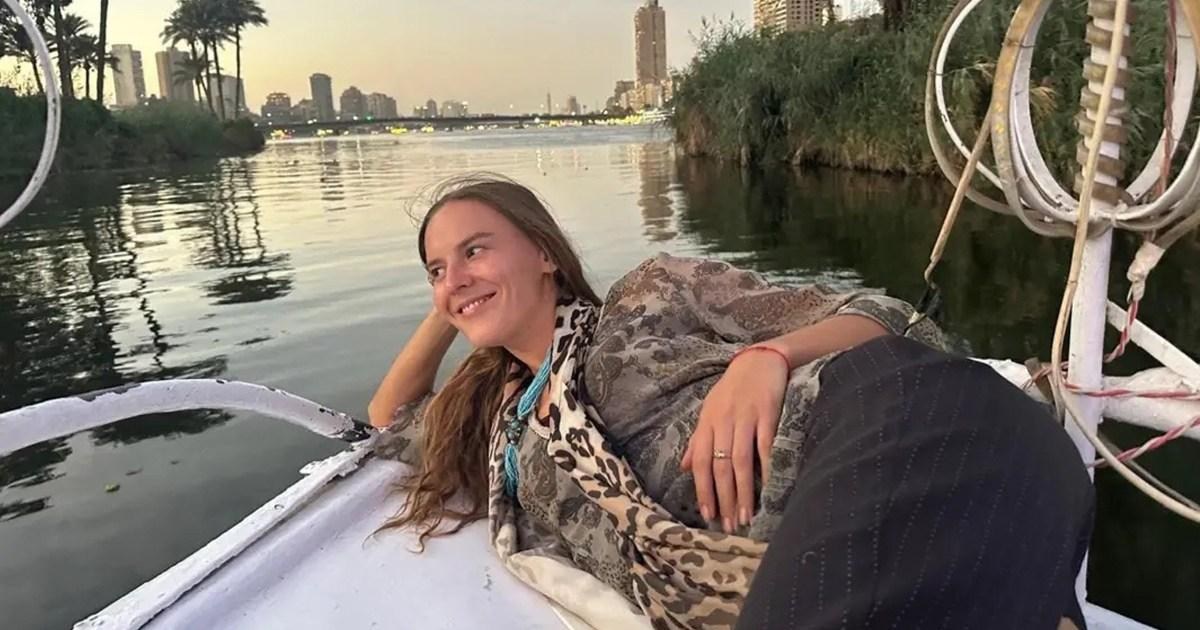
Mary chose to do IVF so she could choose what gender her and her husband’s first baby would be(Picture: Mary Grace Stewart) ‘I’ve always wanted a girl,’ says Mary Grace Stewart from her hotel room in Egypt, where she’s staying while undergoing gender selective IVF. ‘Growing up, I had three sisters and no brothers, and I really appreciated the sisterhood we had and still have to this day. I want that for my child.’ In the UK, it’s illegal to select an embryo’s sex for non-medical reasons, but it’s not illegal for British couples to travel abroad to clinics that offer such services. Mary, 31, and her husband, George, are currently in Egypt, having travelled more than 2,000 miles from their home in Reading for the controversial treatment. The British couple, who have no history of infertility, are due to have their embryo transfer imminently. ‘I think I need the mother and daughter bond too much to leave it to chance,’ Mary tells Metro. Look beyond the headlines Get a curated list of the most important stories of the weekend every Sunday from our weekend editor Jess Austin. Look beyond the headlines with exclusive articles, emotive interviews and must-read explainers from our expert team of reporters across news, lifestyle and entertainment. Sign up here. IVF has helped millions of people around the world become parents, with more than 21,400 babies born in the UK each year through the treatment. Though roughly 28% of IVF cycles are NHS-funded, the vast majority of prospective parents are shelling out thousands of pounds on private treatments. Mary and George, who have been together for three years and married for one, are hoping to welcome their first child together. Ask Metro Use AI to go deeper into the stories you care about – powered by Metro and trusted publications. ‘I want my firstborn to be a girl,’ she shares. ‘My husband loves the idea of being a girl dad and has been supportive of gender selection from the start. ‘I started out by researching natural ways to get pregnant with a girl, but since there’s no accurate or reliable way to do that naturally, that’s when I started looking into gender selection IVF, which was the best choice for us. ‘Doing it now also means I can freeze embryos to use when I’m older, which gave us peace of mind for the future too.’ The IVF process Selective IVF is only legal in a handful of countries, with most European Union countries and the UK banning it or heavily restricting it over concerns of gender bias, human rights laws and unnecessary medical risks. Countries which do permit it include Northern Cyprus, the US, Mexico, the UAE, Egypt and Iran. Each has local regulations and eligibility rules such as age, accreditation, or relationship status. The couple initially considered Cyprus, but had communication concerns and worries over extra fees. Mary then found a clinic in Egypt offering a free online consultation and help with flights, accommodation, and appointments, which eased her ‘initial nerves’ about travelling abroad. The couple travelled to Egypt, where the costs were lower, and Mary could choose needle-free treatments(Picture: Mary Grace Stewart) The procedure itself cost £3,500, which was a big appeal, as in countries such as the US, IVF can cost tens of thousands of pounds. This included the medications, consultations, scans, egg retrieval, gender selection, and embryo transfer. Accommodation for three weeks came to a further $700 (£530), which is significantly cheaper than other countries. But another factor made Egypt particularly appealing: a no-needle IVF stimulation option. ‘The no-needle IVF device was a game changer for me, since I could’ve almost let go of the whole IVF idea if it wasn’t there,’ Mary admits.No-needle IVF, or needle-free ovarian stimulation, replaces the one to two weeks of daily self-injections required during a standard IVF cycle with a small, wearable catheter port placed on the abdomen. While patients still require standard blood tests and an IV line for egg retrieval, the device eliminates daily needle pricks at home. The 31-year-old also had to arrange some blood tests in the UK before travelling, including AMH, TSH and prolactin tests, which she sent to the clinic ahead of her consultation. The treatment then involved ovarian stimulation on October 28, administering daily hormones through the wearable catheter port rather than injections, followed by egg retrieval under sedation. Mary describes the stimulation stage as manageable, although she experienced some bloating and tiredness. Following retrieval, her embryos underwent genetic testing (PGT-A), allowing the clinic to screen for chromosomal normality and predict chromosomal sex. This testing identifies chromosomal sex with over 98% accuracy and chromosomal normality with roughly 95% to 98% accuracy. However, testing only reveals the genetics of the embryos already created. It cannot guarantee that an IVF cycle will produce a chromosomally viable embryo of the desired sex. An embryo’s health is primarily determined by egg and sperm quality, with maternal age being the biggest factor, plus genetics and lifestyle habits. The result for Mary and George was seven viable embryos, four of which she describes as ‘lovely girls’. Mary is now waiting for embryo transfer, which will be done before the end of the year, knowing they can try again if needed and use them for future girls too. ‘The whole point in freezing them was to give us extra security and peace of mind,’ she says. ‘People called me a bad mother’ While family and friends were initially surprised, Mary says they were ‘super supportive’ once she ‘explained the whole backstory’ rather than it seeming like a ‘random whim’. Mary decided to document her experience on TikTok, but was not prepared for the amount of attention, a lot of it negative, with one video getting over 230k views in 48 hours. Mary and George’s decision has sparked some backlash online (Picture: Mary Grace Stewart) The graphic designer says some strangers called her a ‘bad mother’, told her she didn’t deserve to have a child, and even said they hoped she would have a boy. ‘It’s hard when strangers judge you from a 30-second clip. People online only see a tiny snapshot of your life and judge it,’ she says. ‘I’m always happy to reply kindly and explain our side, but if someone is outright rude, I don’t give it my energy.’ She adds: ‘I’ve had so many messages from women saying they’ve been quietly researching this for months, or that they’ve actually gone abroad for it too but never told anyone. ‘The amount of kind, supportive messages I’ve gotten from women who get it completely outweighs any judgment.’ She hopes the TikTok account will act as a time capsule for her future daughter, too. ‘I’m documenting my journey to let [my daughter] feel how she was wanted by us and how deeply wanted, planned and loved she was before she even arrived,’ Mary says. ‘I want to capture all these little moments for myself and our future family. ‘We literally travelled across the world to bring her into our family. There’s nothing to hide; it’s such a special part of her story.’ However, Mary says many people have responded positively to their choice too (Picture: Mary Grace Stewart) Ethical considerations In the UK, selecting an embryo’s sex for non-medical reasons is prohibited. The restrictions are designed to prevent sex discrimination and the selection of children for non-medical characteristics. ‘I completely respect why those safeguards exist on a broad scale,’ Mary notes. ‘At the same time, for families like ours who simply want to balance their family and experience a specific bond, our decision came from a place of pure love. ‘It’s a really sensitive topic with a lot of ethical considerations, so if rules were ever to change, I’d want it to stay really well-regulated. ‘More than anything, I just hope people realise that there’s no “one right way” to build a family. ‘Our decision came from pure love and wanting that mother-daughter bond.’ Do you have a story you’d like to share? Get in touch by emailing MetroLifestyleTeam@metro.co.uk Arrow MORE: Bonnie Blue is embracing this ‘eyebrow-raising’ kink that’s suddenly everywhere Arrow MORE: The best and worst hospitals to give birth in across England Arrow MORE: My rich sister expects me to pay over £2,500 towards her Christmas The Sunday Edit Look beyond the headlines with exclusive articles, emotive interviews and must-read explainers from our expert team of reporters across news, lifestyle and entertainment.
We spent £3,500 on gender selective IVF — our baby girl makes the online hate worth it
Full Article
Original Source
Read the full article at Metro →KhanList aggregates and links to publicly available news content. We do not host full articles from third-party sources. Always verify important information with original sources.