
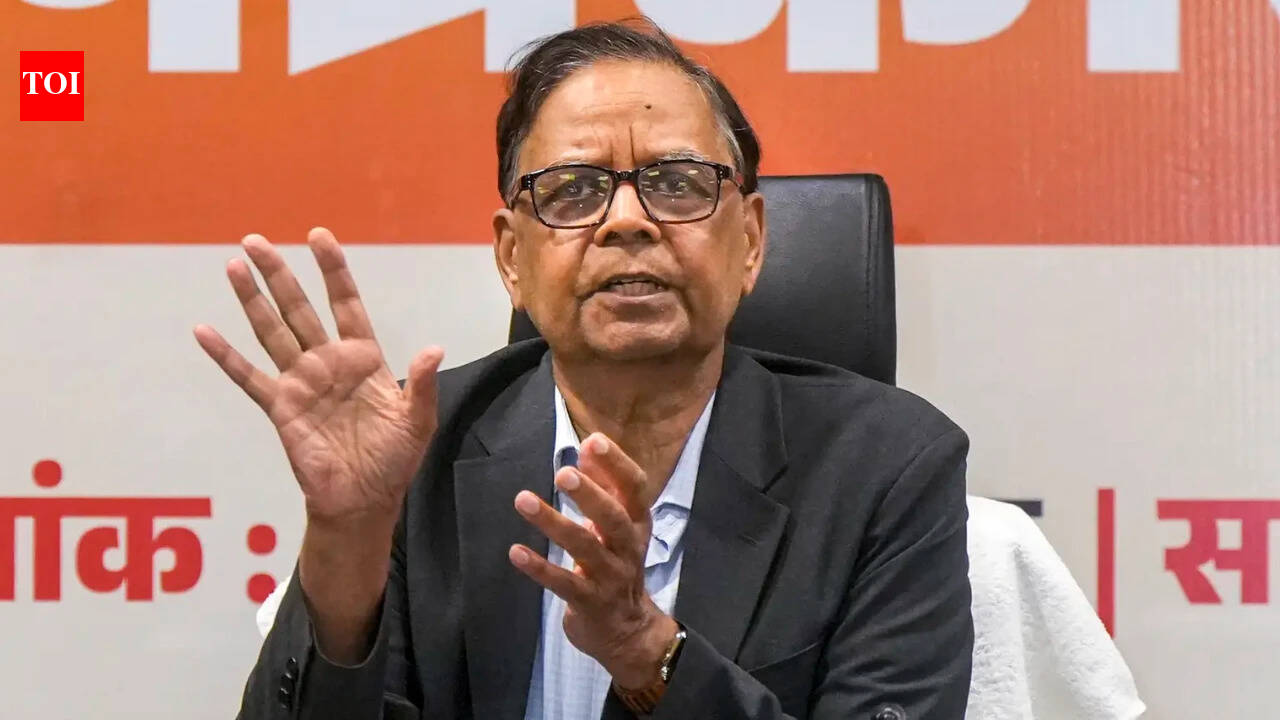
File photo: Columbia University professor and 16th Finance Commission chairman Arvind Panagariya (Picture credit: PTI)Columbia University professor and 16th Finance Commission chairman Arvind Panagariya says a weaker rupee will not just make exports competitive but will also keep the prices of finished imported goods higher. In an interview he calls for tariff cuts, doing away with quality control orders and revisiting bilateral investment treaties. Excerpts:Sitting in New York, how do you see the Indian economy evolving? What is the feedback that you're getting from colleagues and investors?The general perception of the Indian economy is very positive. My own assessment is that we will continue to grow at 7-8%. Manufacturing growth of 10% or so in the last three years gives me a lot of confidence; it is a very positive sign for the future. Inflation has remained stable, current account deficit has been very manageable. So, the vitals are all good.Given the headwinds due to west Asia in terms of higher cost, logistics, there is nervousness. Is that a big challenge?I don't see our entrepreneurs nervous about growth prospects. Headwinds have been there and entrepreneurs have learnt to live with these things. We emerged very quickly and robustly from Covid. Our exports to the US and overall went up despite Trump’s tariffs, which shows that exporters have learnt to cope with this uncertainty. Finally, we seem to also be learning that depreciation is not always a bad thing. It is a very important change in our own attitudes. Indian products have to be competitive in the domestic market compared to imported goods.A big concern with a weaker rupee has been that import bill rises.The increase in the cost of imports basically tells you that our goods are more competitive relative to the foreign goods. The cost of my inputs rises, but the cost of the goods that are coming in to compete with my (finished) goods rises even more. Historically, our exports did so well between 2000 and 2011 because the dollar appreciated against the rupee between 1991 and 2002 by 170%. But it stayed around that level till 2011 or so, actually the rupee appreciated in nominal terms, before weakening. As a result, after crossing $300 billion in 2011-12, it fell below that mark and only increased post-Covid.India has signed multiple trade agreements that reduce tariffs bilaterally. What else needs to be done?This is much needed and I had been wanting also the agreement with the US to go through as it will not only give us access, it will also lead to the opening up of our own markets, which is very much required. Several QCOs have been suspended but there are many more that need to be repealed because they are offering protection. The Bureau of Indian Standards does not have the staff to implement them domestically and the intent seems to be protectionist. India is also among the top users of anti-dumping duty. Anti-dumping is sometimes even more pernicious than tariffs because these duties can be very large and also very targeted as you go after your cheapest supplier.What about the bilateral investment treaty?We need to take a comprehensive look at the bilateral investment treaties because if we are going to attract foreign investors then we have to see what our competitors are doing, what China is doing, what Vietnam is doing.Do you see the US trade deal happening before the mid-term elections?The USTR has been pretty clear on this. So, it may not happen before the midterms.Do you see future American presidents weaponizing tariffs the way Trump has done?The US commitment to the WTO has certainly weakened. The current President has acted as if WTO really doesn't matter. The only restraint on him has been domestic US laws and even that he has at times neglected. I doubt if future presidents will do like that. But what has happened permanently, and is something that was already underway, is the weakening of the WTO discipline. Subsidies were given, like through the Chips Act during the Biden administration, which was in violation of WTO rules. With the appellate body not functioning there is no way it can be addressed.
We seem to be learning that currency depreciation is not always bad: Panagariya
Full Article
Original Source
Read the full article at Timesofindia →KhanList aggregates and links to publicly available news content. We do not host full articles from third-party sources. Always verify important information with original sources.