
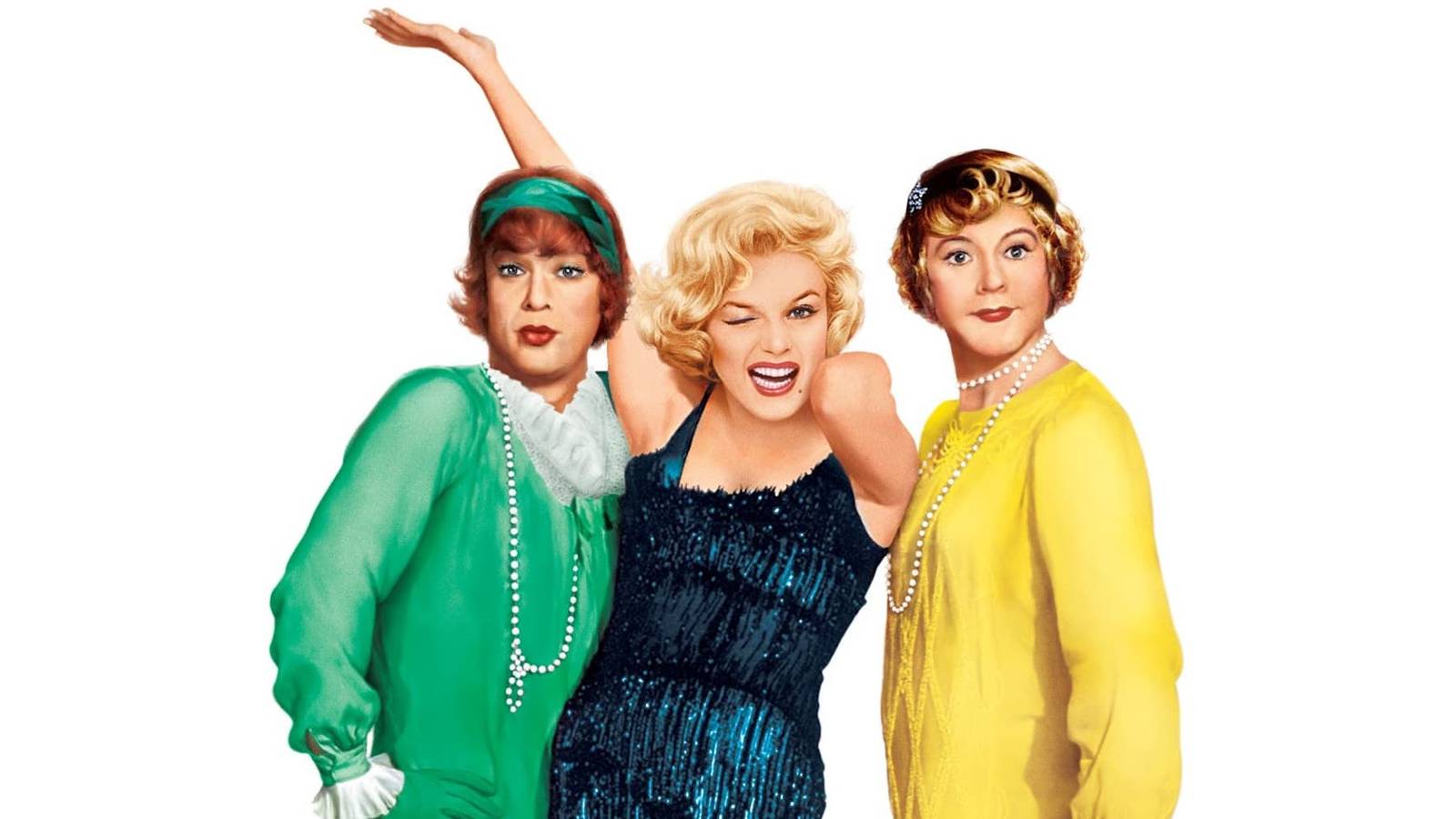
Image via United Artists Published Nov 19, 2026, 8:18 AM EST Thomas Butt is a senior writer. An avid film connoisseur, Thomas actively logs his film consumption on Letterboxd and vows to connect with many more cinephiles through the platform. He is immensely passionate about the work of Martin Scorsese, John Ford, and Albert Brooks. His work can be read on Collider and Taste of Cinema. He also writes for his own blog, The Empty Theater, on Substack. He is also a big fan of courtroom dramas and DVD commentary tracks. For Thomas, movie theaters are a second home. A native of Wakefield, MA, he is often found scrolling through the scheduled programming on Turner Classic Movies and making more room for his physical media collection. Thomas habitually increases his watchlist and jumps down a YouTube rabbit hole of archived interviews with directors and actors. He is inspired to write about film to uphold the medium's artistic value and to express his undying love for the art form. Thomas looks to cinema as an outlet to better understand the world, human emotions, and himself. Sign in to your Collider account Is there anything more innately satisfying than laughing while watching a movie? It's certainly the simplest and most responsive pleasure of the human body, but it's also arguably the most difficult task to pull off for actors, writers, directors, and crew members. Beyond just the jokes, comedies can also feature impeccable craft, cinematic wonder, and profound commentary via satire. Comedy is generally subjective, but this list of 10 masterpieces of laughter, hijinks, and absurdity sums up the best of the genre over the last 100 years of filmmaking. 10 'Lost in America' (1985) Image via Warner Bros. While not everyone has seen this 1980s gem, Lost in America's brilliance deserves recognition, so take this as a ringing endorsement. Everything Albert Brooks has done throughout his six-decade career as a comedian, talk show guest, variety show performer, writer, actor, and director is a stroke of genius, and nothing captures the nebbish, subversive, darkly comic Brooks experience better than this satire of yuppie Americans. Feeling rudderless at their lucrative office jobs, a married couple, David (Brooks) and Linda Howard (Julie Hagerty), abandon their affluent lives to become cross-country drifters in an RV. Failing to live out their Easy Rider fantasy by being constrained by finances and social norms, the couple reveals the inner insecurity of Ronald Reagan-era yuppies who long for a rebellious life despite having everything. Lost in America delivers as a road-trip comedy, featuring a handful of cringe-inducing conversations and signature explosive blow-ups by Brooks, whose chemistry with Hagerty is a sheer delight. The film magically split the atom as a broad comedy of errors and a biting commentary on the upper class before "eat the rich" became omnipresent in media. Lost in America is the serio-comic tragedy for all those who want to upend life under capitalism. 9 'The Lady Eve' (1941) Image via Paramount Pictures Preston Sturges, another luminary writer-director of the comedy world with incredible insight into the class system and American socialites, is perhaps the sharpest screenwriter in Hollywood history. Defined by their dense dialogue, quick rapport between actors, and manic screwball antics, Sturges constructed his strongest laugh machine with The Lady Eve, starring Barbara Stanwyck and Henry Fonda as the least inspired couple ever. After being the target of a con, socially awkward brewery heir Charles Pike (Fonda) falls for con artist Jean Harrington (Stanwyck), sparking a chaotic on-and-off-again romance filled with misunderstandings, teasing, and ruthless tormenting. While Sturges has a light touch behind the camera and script, his disdain for those stupidly in love packs a punch, as he runs wild with the hilarious toxicity between Charles and Jean, who somehow can't give each other up after countless betrayals. You can't have an amazing romantic screwball comedy without two dynamic performances, and The Lady Eve puts on a spectacle, thanks to the electricity running between Fonda and Stanwyck. The film is unafraid to be heartwarming, romantic, and even sexy. Sturges was always focused on humor, but his skills were versatile. 8 'Hot Fuzz' (2007) During his breakout on the film scene in the 2000s, Edgar Wright did things with the cinematic medium that seemed impossible, if not disobedient to the filmmaking rulebook. The second entry in his unofficial Cornetto Trilogy, Hot Fuzz, starring Simon Pegg and Nick Frost, once again, shows Wright at his best, blending an all-out blitz of cop-thriller action with uproarious, zany comedy. It's a showy film, but when executed this strongly, you can't help but adore it. After playing slackers fending off a zombie invasion in Shaun of the Dead, Pegg and Frost reunited with Wright as police officers investigating a series of gruesome deaths in West Country in England. Hot Fuzz knowingly salutes classic and contemporary cop movies, everything from Lethal Weapon to Bad Boys II, but it puts all the others to shame with its astonishing craft. The rare parody to match the pedigree of the subject it's targeting, Wright's signature rapid-fire editing and frantic sound design is a tour de force of comedic hijinks and genuinely exhilarating action. As a pure action-comedy, Hot Fuzz pushed the subgenre to unprecedented heights, filling each scene with too many jokes to keep track of. The film, beyond being hilarious, also captures the overlooked mundanity of the police force and our relationship to cops in the modern day. 7 'Bridesmaids' (2011) Image via Universal Pictures During a boom period for raunchy comedy on the big screen, it was always considered taboo by many for women to partake in gross-out and crude humor. Until Bridesmaids, most studio comedies pigeonholed female characters as the fussy, stuck-up ones shaking their heads at the crazy boys. Everything changed with Paul Feig's groundbreaking 2011 film, which showed that women could be raw, candid, and, most of all, uproariously funny in the most profane ways. Despite its reputation as the quintessential female gross-out comedy, Bridesmaids, featuring an all-star cast of Kristen Wiig, Maya Rudolph, Rose Byrne, Ellie Kemper, and Melissa McCarthy, is a surprisingly low-stakes and grounded film with intimately realized character relationships and universal dynamics between long-time friends at a major crossroads in their lives. The humor primarily stems from each actor's respective unique skills and their magnetic chemistry, with the banter between comedy experts like Wiig and Rudolph and relative newcomers like Byrne and Jon Hamm providing the movie with an indelible magic. Everyone knew that Bridesmaids was above the pack, including the Academy Awards, which gave it a Best Screenplay and Best Supporting Actress nomination for McCarthy, who gave one of the funniest screen performances of the century. Gender has no boundaries when writing is this observant, quick-witted, and idiosyncratic. COLLIDERInteractive Ballot sealed Movies/Academy Awards/Best Picture Collider · Best Picture Which Oscar Best PictureIs Your Perfect Movie? Five winners · ten questions · one envelope Five Oscar Best Picture winners. Five completely different visions of what cinema can be and what it can do to you. One of them is the film made for the way your mind works, and ten questions will work out which. The nominees 2020Parasite 2023Everything Everywhere All at Once 2024Oppenheimer 2015Birdman 2008No Country for Old Men Open the envelope Question 01 of 10TONE 01 What kind of film experience are you really after? The best movies do not just entertain. They leave something behind. ASomething that pulls the rug out, that makes me think I am watching one kind of film and then reveals I am watching another entirely. BSomething overwhelming: funny, sad, absurd and genuinely moving, all at once. CSomething grand and weighty, a film that makes me feel the full scale of what I am watching. DSomething formally daring, a film that pushes what cinema can even do. ESomething lean and relentless, pure tension with no wasted frame. ← Back Keys 1 to 5 or A to E · Enter to advance Next Question 02 of 10THEME 02 Which idea grabs you most in a film? Great films are driven by a central obsession. What is yours? AClass, inequality, and what people are willing to do when desperation meets opportunity. BIdentity, family, and the chaos of holding your life together while everything falls apart. CGenius, moral responsibility, and the catastrophic weight of a decision you can never take back. DEgo, legacy, and the terror of becoming irrelevant while you are still alive to watch it happen. EEvil, chance, and whether moral order exists at all or we just tell ourselves it does. ← Back Keys 1 to 5 or A to E · Enter to advance Next Question 03 of 10STRUCTURE 03 How do you like your story told? Form is content. The way a story is shaped changes what it means. AGenre-twisting. I want it to start in one lane and migrate into something completely different. BMaximalist and genre-blending: comedy, action, drama and sci-fi in one ride. CEpic and non-linear, cutting between timelines to build a mosaic of cause and consequence. DA single unbroken flow. I want to feel like I am living it in real time with no cuts to safety. ESpare and precise, every scene doing exactly what it needs to do and nothing more. ← Back Keys 1 to 5 or A to E · Enter to advance Next Question 04 of 10VILLAIN 04 What makes a truly great antagonist? The opposition defines the protagonist. What kind of opposition fascinates you? AA system: invisible, structural, and almost impossible to fight because it has no single face. BThe self, and the ways we sabotage, abandon and fail the people we love most. CHistory, and the unstoppable momentum of events no single person can stop or redirect. DThe industry, the machinery of culture that chews up talent and spits out irrelevance. EPure, implacable evil, a force so certain of itself it becomes almost philosophical. ← Back Keys 1 to 5 or A to E · Enter to advance Next Question 05 of 10ENDING 05 What do you want from a film's ending? The final note is the one that lingers. What do you want it to sound like? AShock and inevitability, a conclusion that recontextualizes everything before it. BEarned emotion. I want to cry, laugh and feel hopeful, even if the world is a mess. CDevastation and grandeur, an ending that leaves me sitting in silence for a few minutes. DAmbiguity, something open enough that I am still turning it over days later. EBleakness, an honest refusal to pretend the world is tidier than it is. ← Back Keys 1 to 5 or A to E · Enter to advance Next Question 06 of 10WORLD 06 Which setting pulls you in most? Where a film takes place shapes everything: mood, stakes, what is even possible. AA gleaming modern city with a hidden underside, beauty masking rot and wealth masking desperation. BA collapsing suburban life that opens onto something infinite, the multiverse inside one ordinary person. CThe corridors of power and science at a world-historical turning point, where decisions echo for decades. DThe grimy, alive chaos of New York and Hollywood, fame as both destination and trap. EVast, indifferent landscape, desert and highway where violence arrives without warning or reason. ← Back Keys 1 to 5 or A to E · Enter to advance Next Question 07 of 10CRAFT 07 What cinematic craft impresses you most? Every great film has a signature, the element that makes it unmistakable. AProduction design and mise-en-scène, every frame composed to carry meaning beneath the surface. BEditing and tonal control, the ability to move between registers without losing the audience. CScore and sound design, music that becomes inseparable from the dread and awe of what you see. DCinematography as performance, the camera not recording events but taking part in them. ESilence and restraint, what is left unsaid doing more work than any dialogue could. ← Back Keys 1 to 5 or A to E · Enter to advance Next Question 08 of 10PROTAGONIST 08 What kind of main character do you root for? The protagonist is the lens. Who you follow says something about you. ASomeone smart and resourceful who makes increasingly dangerous decisions under pressure. BSomeone overwhelmed and ordinary who turns out to be capable of something extraordinary. CA brilliant, tortured figure whose gifts and flaws cannot be separated from each other. DA self-destructive artist whose ego is both their superpower and their undoing. EA quiet, principled person trying to make sense of a world that has stopped making sense. ← Back Keys 1 to 5 or A to E · Enter to advance Next Question 09 of 10PACE 09 How do you feel about a film that takes its time? Pace is a choice. Some films sprint. Others let tension accumulate slowly, deliberately. AI love a slow build when the payoff is going to be seismic. Patience for a devastating reveal. BGive me relentless momentum. I want to feel breathless and emotionally spent by the end. CEpic runtime does not scare me. If the material demands three hours, give me three hours. DI want it propulsive even when nothing is technically happening, restless energy throughout. EDeliberate and unhurried. I want dread to accumulate in the spaces between the action. ← Back Keys 1 to 5 or A to E · Enter to advance Next Question 10 of 10AFTERMATH 10 What do you want to feel walking out of the cinema? The best films leave a mark. What kind of mark do you want? AUnsettled, like I have just seen something I cannot fully explain and cannot stop thinking about. BMoved and energized, like the film reminded me what matters and gave me something to hold onto. CHumbled, like I have been in the presence of something important and overwhelming. DExhilarated, like I have just watched cinema do something it has never quite done before. EHaunted, like a cold, quiet dread that stays with me for days. ← Back Keys 1 to 5 or A to E · Enter to advance Reveal my film The envelope, pleaseAnd the Oscar goes to ★ Best Picture, 2020 Parasite Bong Joon-ho, 2019 A film that hides its true intentions until the moment it is ready to reveal them. You are drawn to films that operate on several levels at once, that begin in one genre and quietly, brilliantly migrate into another. Bong Joon-ho's Parasite is a film about class, desire and the architecture of inequality that manages to be darkly funny, deeply suspenseful and genuinely shocking across a single extraordinary running time. Your instinct is for cinema that rewards close attention and punishes assumptions, right up to its devastating final image. From the Collider file The first film not in the English language to win Best Picture, in the Academy's 92-year history to that point. It took four Oscars in one night: Picture, Director, Original Screenplay and International Feature. It won the Palme d'Or at Cannes in 2019 by a unanimous jury vote, the first Korean film to do so. The Park family's modernist house was not a location. It was built from scratch on an outdoor lot. Reads between the lines Loves a reveal Attention to detail ★ Best Picture, 2023 Everything Everywhere All at Once Daniel Kwan and Daniel Scheinert, 2022 A film that refuses to choose between being entertaining and being meaningful. You want it all, and this one gives you all of it. The Daniels' Everything Everywhere All at Once is among the most maximalist films ever made: action comedy, multiverse science fiction, family drama, existential crisis, and an emotional core that sneaks up on you in the middle of the chaos. You respond to ambition. Being overwhelmed is the design, not the side effect, because the feeling of being crushed by infinite possibility is exactly what the film is about. From the Collider file Seven Oscars, including three acting wins for Michelle Yeoh, Ke Huy Quan and Jamie Lee Curtis. Michelle Yeoh became the first Asian woman to win Best Actress. The visual effects were handled by a team of fewer than ten people, most of them self-taught. Ke Huy Quan had all but left acting for two decades before this role brought him back. Wants everything Big swings Soft center ★ Best Picture, 2024 Oppenheimer Christopher Nolan, 2023 A film about the gap between what we can do and what we should do. You are drawn to cinema on a grand scale, films that treat history not as a backdrop but as a force, then place their characters inside that force and watch what happens. Christopher Nolan's Oppenheimer sits inside one of the most consequential moments in human history and refuses to look away from it. You want your films to feel important without being self-important, earning their ambition through craft and the gravity of the subject. This one is enormous, complicated, and offers no easy comfort. From the Collider file Seven Oscars, including Nolan's first wins for directing and for Best Picture. Cillian Murphy and Robert Downey Jr. both took their first Academy Awards for it. Kodak engineered a black-and-white 65mm stock that did not previously exist so Nolan could shoot those sequences on IMAX. A three-hour, R-rated drama about theoretical physics that passed 950 million dollars worldwide. Thinks in decades Scale and weight No easy comfort ★ Best Picture, 2015 Birdman Alejandro G. Iñárritu, 2014 A film doing something that probably should not be possible. You are drawn to films that foreground their own construction, where the how of the filmmaking becomes part of the what it is about. Alejandro G. Iñárritu's Birdman, stitched to appear as one continuous take, is cinema examining itself through the cracked mirror of a fading actor's ego. You respond to formal daring. Michael Keaton's performance and Emmanuel Lubezki's restless camera make something unlike anything else: a film about creativity, relevance, self-destruction and never quite knowing whether your work means anything at all. From the Collider file Four Oscars, among them Best Picture and Best Director for Iñárritu. Emmanuel Lubezki's win here was the middle of three consecutive cinematography Oscars, after Gravity and before The Revenant. Antonio Sánchez's improvised drum score was ruled ineligible for the score category, which caused a minor uproar. The long-take illusion was built from a handful of extended shots joined by hidden cuts. Formally daring Camera as character Ego and art ★ Best Picture, 2008 No Country for Old Men Joel and Ethan Coen, 2007 A film that treats dread as a form of meaning. You are drawn to cinema that trusts silence, refuses to explain itself, and lets unease do the talking. The Coen Brothers' No Country for Old Men is about the arrival of a new kind of evil: implacable, arbitrary, and indifferent to the moral frameworks we use to make sense of things. It is one of the most tightly controlled films ever made, and that control is the source of the terror. You want your films to haunt you rather than comfort you, and you have no interest in a resolution that would be a lie. From the Collider file Four Oscars: Picture, Director, Adapted Screenplay, and Supporting Actor for Javier Bardem. Adapted from Cormac McCarthy's 2005 novel, with much of his dialogue carried over intact. Carter Burwell's score runs about sixteen minutes and is nearly inaudible by design. Roger Deakins was nominated twice that year, for this and The Assassination of Jesse James, and won for neither. Trusts silence Dread over answers No tidy endings Ballot tally · your top three 1 2 3 ↻ Retake the quiz Copied to your clipboard Ballot counted byCOLLIDERCollider.com · The Awards Desk 6 'This is Spinal Tap' (1984) Image via Studio Canal Mockumentaries are everywhere in movie and television form now, but in 1984, the mode was a stunning breakthrough and revelatory path on how to create comedy. The late Rob Reiner, in his directorial debut, cemented a new formula in This Is Spinal Tap, which would later be expanded upon by master mockumentarian and Spinal Tap star Christopher Guest. Every faux documentary, and even brand of off-beat humor, is indebted to This Is Spinal Tap. There are quotable movies, and then there is This Is Spinal Tap, a movie that can light up a conversation by reciting any one of its indelible lines, from cranking a speaker to 11 to asking how much more black something can be. Reiner's parody of cinéma vérité documentaries capturing a band before a concert tour has become so cultural pronounced that younger audiences might go into the film assuming that Spinal Tap, the English heavy metal band fronted by David St. Hubbins (Michael McKean) and Nigel Tufnel (Guest), is a real band. At roughly 80 minutes, the movie is a diamond-cut masterpiece that's all killer and no filler, seamlessly creating the aesthetic of a serious, fly-on-the-wall documentary thanks to Reiner's steady hand. What makes This Is Spinal Tap so enduring is its free-flowing comedic rhythm and confidence in its palatable premise. 5 'Airplane!' (1980) Image via Paramount Pictures Even in the most rambunctious and bonkers studio comedies, there had to be a hard cap on jokes, as basic plot setups and character arcs needed to be executed straightly. In 1980, the writer-director trio of Jerry Zucker, Jim Abrahams, and David Zucker defied cinematic conventions by making Airplane!, a spoof of disaster epics and Hollywood's first certified joke machine. Even on rewatch, your body is never prepared to provide enough laughter within you to keep up with this gem. Even on rewatch, your body is never prepared to provide enough laughter within you to keep up with this gem. Airplane!, starring Robert Hays, Julie Hagerty, and Leslie Nielsen in his comedy breakthrough, is an exercise in joke excess. In the film, jokes are found in the dialogue through basic punchlines, non-sequiturs, wordplay, double entendres, and more. When counting all the slapstick gags and background quirks, Airplane! becomes a topsy-turvy experience that must have overwhelmed audiences in 1980. Today, the film is a cherished object that perfected the spoof genre and crystallized a style of madcap comedy often imitated but never matched. The film's only artistic merit is its humor, and the array of jokes and bits replace any semblance of character or story, but ZAZ's writing and execution is undoubtedly a work of pure art. 4 'Modern Times' (1936) Image via United Artists In many ways, Charlie Chaplin symbolizes the magic of movies. With his distinct blend of eccentric screwball comedy and sincere emotional affection, Chaplin's films have invigorated audiences and empowered them out of the world's darkest times. Released amid the Great Depression in 1936, Modern Times provided catharsis and warmth for the millions of impoverished Americans who needed hearty laughs and tender love. Chaplin's work as a writer, director, and actor was never more urgent. Although silent films were more or less distinct by the mid-30s, Chaplin proved in Modern Times, his final silent comedy and outing as the Little Tramp character, that dialogue is overrated. The film, in which the Tramp is an overworked factory laborer on an assembly line who becomes smitten with a local woman, played by Paulette Goddard. While the film contains smatterings of dialogue and an extended song sequence, Modern Times retains the trappings of a Golden Age silent comedy, featuring a bumbling but lovable protagonist up against all the odds. Chaplin's physical acting and daring choreography reached an all-time high in this movie, and his cinematic language, with the medium having greatly evolved since his debut, had never been sharper. The film's fast-paced energy and quick-witted sensibilities make you forget that it's 90 years old. Modern Times miraculously jumps between farce and melancholy, a trait that Chaplin made look easy. 3 'The Big Lebowski' (1998) Image via Gramercy Pictures A movie that, seemingly overnight, went from a misbegotten flop to an all-time classic, The Big Lebowski might be the source of your most annoying friend's vocabulary, but no matter how obsessed people have become with it, Joel and Ethan Coen's stoner comedy/neo-noir is a precious object. Watch just a few minutes of The Big Lebowski, and you'll fully buy into its ardent cult status, or rather, you'll abide by it. Most comedies aren't blessed with top-notch cinematography, production design, editing, and sound, but for a movie directed by the Coen Brothers, that's just par for the course. The Big Lebowski's vibrant legacy is partially shaped by its distinct visualization of contemporary Los Angeles as a vast wasteland filled with wandering drifters like The Dude (Jeff Bridges) and curious oddballs like Walter Sobchak (John Goodman). Despite parodying the hard-boiled private eye and cryptic mystery plot, the film is a captivating noir that wrestles with fate and one's purpose in a disillusioned world. Still, you come for The Big Lebowski to laugh your head off, and the film can do that every day at any time of the day. Made up of high-end farce and subtle asides and interjections, the Coens tapped into something beyond our basic comprehension of what humor could be. 2 'Some Like It Hot' (1959) Image via United Artists To cite the unforgettable final line of Some Like It Hot, nobody's perfect, but movies can be. Look no further than the filmography of writer-director Billy Wilder, a master of absurdist humor, hard-boiled noir, and poignant serio-comic character relationships. The epitome of Wilder's ingenuity came in 1959 with this film, led by the trifecta of Jack Lemmon, Tony Curtis, and Marilyn Monroe. This screwball comedy hasn't lost an ounce of its hysterical mania. Nine times out of 10, a scenario involving two male jazz instrumentalists dressing up in drag and posing as women to hide from the mob as they become romantically entangled with a gorgeous band singer would feel gross to watch through a contemporary lens. With Some Like It Hot, a film with a deft touch and a shrewd understanding of who and where to poke fun at, these comedic launching pads carry a shockingly progressive register for the time. Wilder imbues this story of two bumbling men caught in an awkward predicament and potential identity crisis with the dramatic sincerity of Sabrina and The Apartment, while the pitch-black screwball antics match the subgenre's golden age. Marked by rapid-fire dialogue, diamond-cut physical timing, and a smart screenplay that ties together all loose ends with the cleverness of a mystery, it doesn't get much better than Some Like It Hot. 1 'Dr. Strangelove' (1964) Image via Columbia Pictures Stanley Kubrick perfected just about every genre throughout his illustrious career, so, of course, he also needed to write and direct a comedy film to define all comedy films with Dr. Strangelove or: How I Learned to Stop Worrying and Love the Bomb. It's a movie that established veterans and aspiring filmmakers have been trying to re-create for the next 60 years since its release, and nothing touches the macabre hilarity and profound textual insight of Kubrick's satire on the nuclear arms race. When you think of a movie satire, Dr. Strangelove is likely the first film to spring to mind. Due to its absurdist yet controlled humor, eerie reflection of the stupidity of the real world, and its prescient commentary, Kubrick laid out the blueprint for the perfect satire that is both enlightening and sobering to the viewer. Strangelove, released in 1964 during the height of Cold War panic, marked the beginning of the Kubrickian vision that we've come to worship, as his precise and calculating command of the frame is a riveting juxtaposition to the comedic showcase put on by George C. Scott, Sterling Hayden, and Peter Sellers in a trifecta of versatile roles. The sheer weight of its bleak text and the virtuosity of Kubrick's craft and mise-en-scene never undermines the comedic spine of the film, which has irreversibly shaped the public's view of government and geopolitical affairs as nothing but a clown show. Never has a film been so easy to laugh at and be terrified of as Dr. Strangelove. Release Date January 29, 1964 Runtime 95 minutes Director Stanley Kubrick Cast George C. Scott General 'Buck' Turgidson Peter Sellers Group Capt. Lionel Mandrake / President Merkin Muffley / Dr. Strangelove
We Officially Ranked the 10 Best Comedy Movies of All Time
Full Article
Original Source
Read the full article at Collider →KhanList aggregates and links to publicly available news content. We do not host full articles from third-party sources. Always verify important information with original sources.