
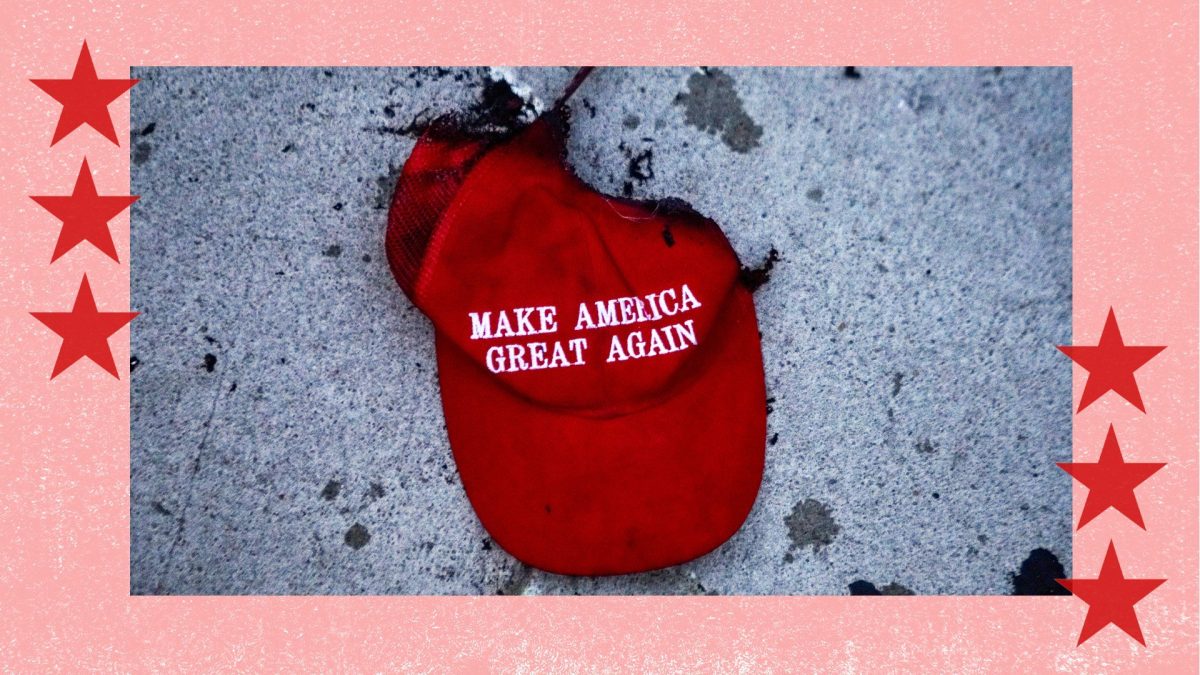
Welcome to Trump’s America, The i Paper’s World Insight series presenting the sharpest, deepest thinking on an era-defining shift in history and politics, investigating how Donald Trump and his administration have changed the US and the world – and where we go from here. • The hidden crisis of overqualified Americans who can’t get jobs• The rich are building their own America• The more America spends on healthcare, the sicker it gets With just over two months to go before voters are set to seal his fate in America’s midterm elections, President Donald Trump is once again bucking tradition: instead of uniting his party around him and leading from the front, he has spent days stoking divisions among Republicans that could advance the day when the GOP splits asunder. Trump has always laid claim to being the sole leader and dominant figure within his Make America Great Again movement. “I invented Maga. I know what Maga thinks,” he told Fox News presenter Laura Ingraham last November. So confident was Trump about the power of the Maga brand that, as early as November 2012, he even trademarked “Make America Great Again” in an application that was granted three years later. In a very literal sense, the former real estate mogul claims ownership of the movement. But last Friday night, the President fired the latest, dramatic salvo in his efforts to retain the leadership of a movement that shows every sign of fracturing beneath him. Amid collapsing trade talks with Canada, fresh revelations of the damage Iran has done to America’s military infrastructure, and several days of primary contest losses for a host of Trump-backed Republican candidates, the President turned his social media blowtorch on “traitors” around him. He fumed about a recent summit meeting of Maga dissidents hosted by hard-right influencer Tucker Carlson and former Republican lawmakers Marjorie Taylor Greene and Thomas Massie. “LOSERS ALL,” Trump raged, attacking each in turn. Ground Zero for the growing turmoil among Republicans can be found in Wyoming (Photo: David Williams/Bloomberg via Getty Images) Then, addressing the prospects that their cabal may be in the nascent stages of emulating Rupert Lowe’s Restore Britain in its ongoing challenge to Nigel Farage’s Reform UK, Trump targeted the elephant in the room. “What a team this would be,” he wrote, dripping with sarcasm. “THREE LOSERS, and a pocketful of change! The only chance they have is to join the Radical Left Democrats … To all of them I say, PRAISE BE TO ALLAH!” Greene responded to Trump’s rage, suggesting that she believed the President’s “insult laden attack” was sparked by a heckler who called him a “traitor” before being ejected from a rally in South Carolina last Friday. “We never changed. Trump did,” she said, as she presented the charge sheet levelled against the President by a growing number of disaffected right-wing figures. “He attacks us with such vitriol because we are actually everything he claimed to be, conservative and America First, and he has proven as President that he is nothing more than a neocon puppet for Israel, corporations, big donors with special interests and his dear friends in the Epstein class.” Greene – a noted conspiracy theorist – declared that Trump’s social media diatribes were “hurting America’s reputation and place in the world. At this point he is no different than an internet troll”. Ground Zero for the growing turmoil among Republicans can be found in Wyoming where, in April, five party lawmakers broke ranks and condemned the President for a social media post in which he compared himself to Jesus. (Trump later claimed he believed the image that he posted was portraying him as a doctor, not as Christ). Described as America’s “reddest state”, the home to the late former Vice President Dick Cheney is now deeply divided between supporters of Trump’s worldview, and a variety of other Republicans including some so-called “extreme Maga” who have split from him. Last week, the President’s choice for Wyoming’s next Governor, Megan Degenfelder (or as Trump dubbed her, “Maga Megan”) went down to a crushing defeat at the hands of Eric Barlow, a rancher and state senator who pledged to lower the temperature of extremist debate in the state. But Barlow owes his victory to splits on the right, after Brent Bien, who the New York Times describes as a far-right conservative, secured the endorsement of the Wyoming Republican Party in a rebuke of Trump’s choice for the race. Bien campaigned on a populist right-wing platform, promising a complete pause on the construction of AI data centres in Wyoming (a position opposed by Trump) and pledging to be an uncompromising opponent of American entanglement in foreign wars. Bien and Degenfelder went on to split the Maga vote between them, allowing Barlow to romp to victory. In Florida, this dynamic was on further display last week. Congressman Randy Fine – a Trump-backed combative Islamophobe who engineered a visit to Congress earlier this year by Stephen Yaxley-Lennon, the far-right British activist who calls himself Tommy Robinson – faced a challenge from antisemitic influencer Dan Bilzerian. Bilzerian’s inflammatory campaign targeted Fine as a “Jewish supremacist”. He accused Trump of leading a government that is “nothing but a tool for Israeli hegemony”. He won nearly 19 per cent of the vote, in a fresh indication that Trump and his approved candidates are vulnerable to accusations that the President has betrayed Maga and sold the movement out. James Fishback delivers remarks at the University of Central Florida in Orlando, Florida, during a campaign rally (Photo: Joe Burbank/Orlando Sentinel/Tribune News Service via Getty Images) Another loser in Florida also demonstrates the future threats that Trump is likely to face as he seeks to remain Maga’s dominant force. Jason Fishback, a 31-year-old aspirant to succeed Ron DeSantis as the Sunshine State’s governor finished third in last week’s primary, with just over 10 per cent of the vote. But many observers believe that – in the words of The Atlantic magazine – Fishback offers “an unsettling glimpse into the GOP’s future”. His racist slurs and unrestrained bigotry – such as calling his opponent, black congressman Byron Donalds, Osama bin Byron and a “slave” to donor and corporate interests – proved hugely popular with younger Republican voters, making Fishback the leading candidate among Florida Republicans under the age of 35. Many of them were attracted by what has been described as his social media-driven “ragebait campaign” that included admiring references to Mussolini and calling for a Black voter to be “lynched” after he raised questions about grooming allegations levelled against the candidate. Fishback argues that despite his loss, he “moved the needle in political discourse” among Florida Republicans, suggesting that he believes his political career is only just getting started, at the very moment Trump’s approaches his constitutionally required nadir. Trump now finds himself confronting a paradox. In many ways, Maga’s greatest strength since he announced his presidential candidacy in 2015 has been the movement’s ability to portray Republicans as a single insurgency seeking to overthrow an elitist radical-left establishment and the so-called “deep state”. But today, Trump’s control of Maga is threatened by a fresh insurgency vowing to overturn the very Republican elite that he now leads. Containing those threats will be no small matter, as Carlson, Massie, Greene and others build support for their version of Trump’s handmade political universe. Shorts
‘We never changed, Trump did’: Maga’s insurgency against its own leader
Full Article
Original Source
Read the full article at Inews →KhanList aggregates and links to publicly available news content. We do not host full articles from third-party sources. Always verify important information with original sources.