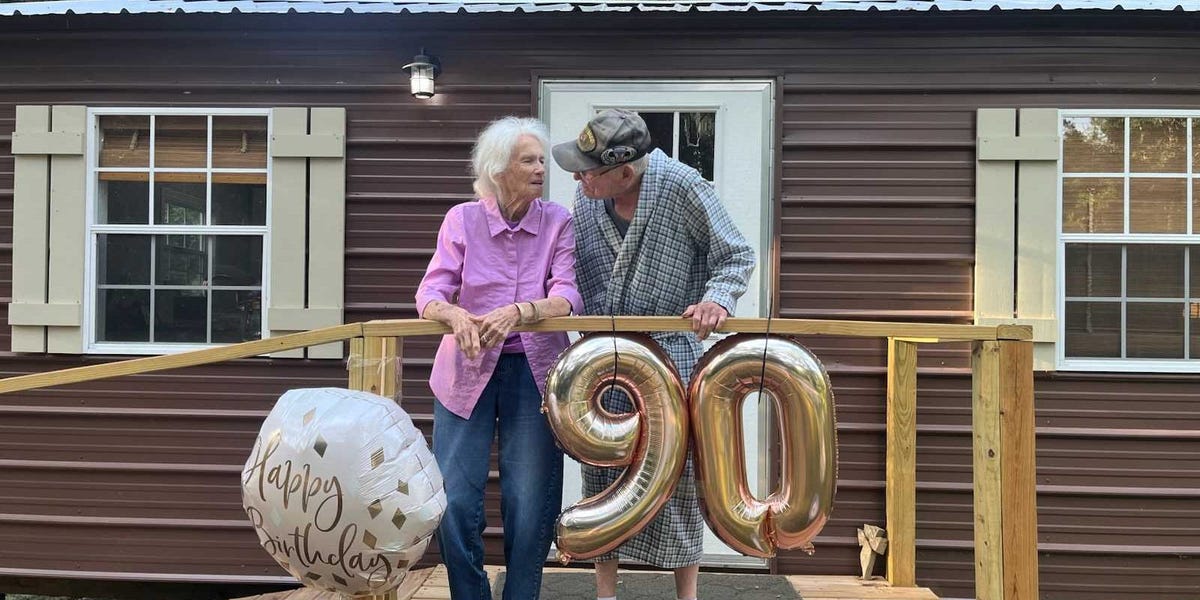
We moved our 3 aging parents into 2 tiny homes in our yard for $100k. It made caregiving possible. Linda Barton's parents have adjusted to life in their tiny home. Linda Barton This as-told-to interview is based on a conversation with Linda Barton, 55, who lives in Texas with her husband and works in criminal justice for the courts. They moved their three living parents into tiny homes in their yard to afford their care and manage their full-time work schedules. This interview has been edited for length and clarity.I was clueless and in my 40s when this journey began. I think most people are like me. I'm always throwing out ideas to people to help them navigate these years of their lives.My parents were older when they had me, and I'm 18 and 16 years younger than my older brothers, both of whom died by the time I was 20. My dad died when I was 30, and they were married for 52 years. My mom worked in accounting, and my dad was a truck driver and construction worker. Eight years after he died, my mom remarried. That was about 17 years ago; she was 75, and he was 73. She was very active in her 60s and 70s, working at a local state prison as a grievance clerk and a corrections officer. My stepfather had been in recovery from a massive stroke when they met, but they were both active into their 80s.At 85, my mom started to have AFib problems.She already had a heart stent. She got a pacemaker, and things went downhill from there. She had a collapsed lung as well.They realized they couldn't take care of themselves anymore. They wanted to stay at their home, but they lived 17 miles in the opposite direction from my job, which is an hour away. It was wearing me out going back and forth to check on them.I work in criminal justice for the courts. My husband is a superintendent in the commercial HVAC industry, managing multiple job sites. And he doesn't have a set schedule.We started talking about tiny homes.I didn't fully understand how much it would cost to do the whole setup. We were seeing some as high as $130,000. My parents had Social Security and small retirements, but they didn't have the money to pay that sort of mortgage. Linda Barton and her husband purchased two tiny homes for their parents. Linda Barton We found a place that does portable buildings that are already converted to tiny homes inside, and they were within what they could afford for their monthly payments. We own a house on eight acres, so we have the space. My husband is handy and was able to set up a lot of their utilities himself, including laying the water lines, installing the electricity, and building the driveway. Getting the permit and installing a new electrical line costs around $2,000. We got a heavy discount on installing a septic system because we have a friend who does that professionally. We suspect the setup would've cost upward of $20,000 if we hadn't done a lot of it ourselves, which halved the price. My parents put a $5,000 down payment on the house, which we bought for $37,000. They pay a little over $600 a month. We did install a ramp on their home, which wasn't too expensive.A year later, we got another tiny house for my father-in-law. Shortly before, my father-in-law started having health issues. We found him on the floor a few times, and he was 40 miles away.We went back to the same place and bought another home for $43,000, and we paid the down payment. We're glad we moved the three of them in when we did because they're not able to live alone anymore. My mom has dementia and is in hospice, but for a while, my parents and father-in-law had higher functioning. The two tiny homes are right next to each other. Linda Barton Navigating their healthcare has been a nightmare.My mom still knows my stepdad and me and others around her, but she's not capable of doing anything more than what you would expect of a child. My stepfather acts like he's 6 years old. He can turn on the TV and tell you what he wants, but he doesn't make meals or do other errands. My father-in-law is like a 13-year-old who wants to live life and do all the fun stuff, but he doesn't want to do anything that comes with it, like doing laundry or taking care of his vehicle.We started out with one caregiver through the VA, because my stepfather is a veteran, but did not serve during wartime and is only 10% disabled. His benefits are therefore more limited, and the maximum caregiver assistance that he can get is 20 hours a week. My mom gets no benefits through the VA.Eventually, we added another caregiver in the evening. As my mom got progressively worse, we hired somebody to come in the mornings to get her going. Medicare does not pay for care providers, which a lot of people don't realize. Medicaid will pay for people to come in, but my parents don't get Medicaid, at least not yet. I've been researching getting Medicaid to come help pay for a caregiver, but there is a two to three-year waiting list. I wish I had known that earlier.We also now pay for a third caregiver for my father-in-law, coming two or three days a week, to help clean his house and do simple tasks. The tiny homes have enough space for their parents. Linda Barton We're hanging in there as long as we can.These are our parents, and we do what needs to be done to take care of them. Still, there's absolutely no regard in the medical system for the fact that we have jobs. I'll get 15 calls in a day, and thankfully, I work a job where I can sometimes stop and answer them most of the time. A lot of people can't. Then, you can never reach them when you call back. It's like phone tag. Linda Barton provides as much care as she can for her parents. Linda Barton My husband and I have a decent income. We live in a rural area, and we're blessed because our income is good and probably higher than the average out here. I have a pension from my job, which I can get starting in two years, and he has a 401(k), but we both waited too long to start planning for a situation like this.We're at a crossroads where we have to choose between putting money into my retirement or paying for my parents' caregivers. If we don't pay for caregivers, we end up sacrificing work when they need something. It's a constant balancing act for us between our finances, helping them, and making sure we still have money when we're older. Read next Noah Sheidlower is a senior economy reporter with Business Insider. He covers retirement, aging, age tech, and employment trends.Noah reported a monthslong, award-winning series called 80 Over 80 about what working at 80 and older looks like. The 300-interview series includes over a dozen features and chronicles the lives of people like an 81-year-old Home Depot worker battling heart failure, a 93-year-old woman searching for a job, and an 85-year-old bus driver who died at work.In 2024, Noah led a 17-story retirement series on the regrets older Americans have about their lives. He has also reported on how Americans have navigated unemployment, what compels Americans to move, and how mass deportations could impact the economy. He has appeared on SiriusXM Business Radio, Vox, and CBS News to discuss his reporting.Noah received his Bachelor's in Sociology and English from Columbia University. Noah has covered the restaurant industry, transportation, retail, and markets for CNBC, NBC News, CNN, and The Atlanta Journal-Constitution. Family
We moved our 3 aging parents into 2 tiny homes in our yard for $100k. It made caregiving possible.
Full Article
Original Source
Read the full article at Businessinsider →KhanList aggregates and links to publicly available news content. We do not host full articles from third-party sources. Always verify important information with original sources.