
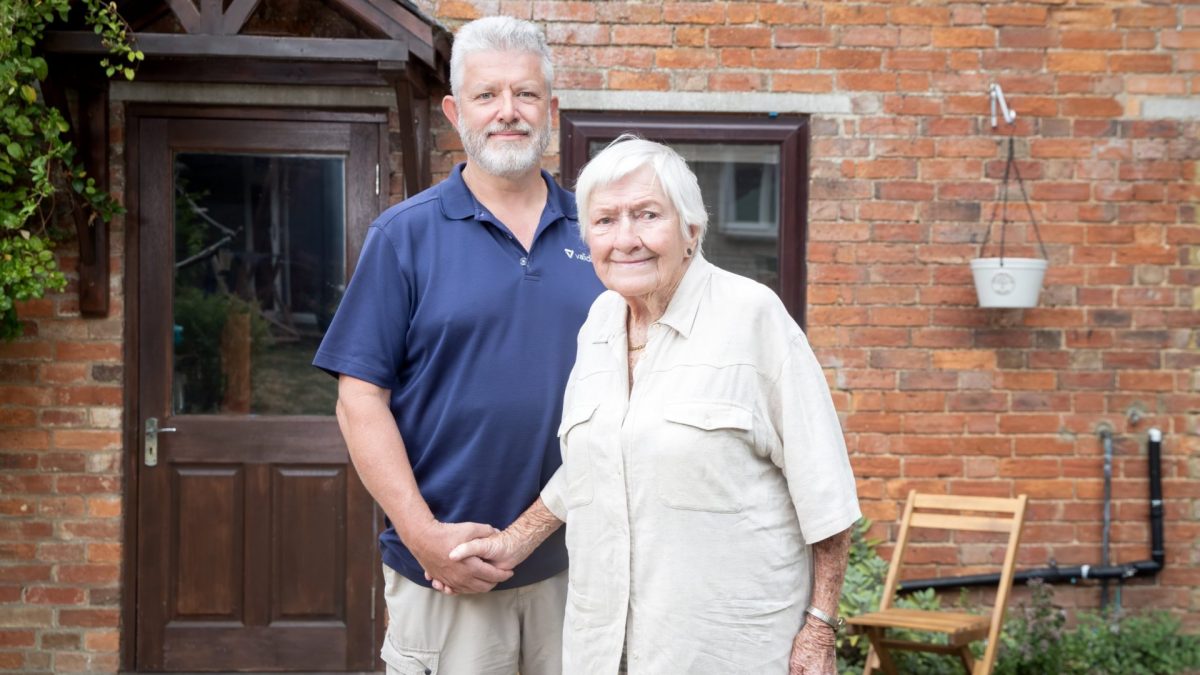
Elderly care is a costly business. The average fee for residential care homes is now around £1,300 a week and £1,512 for a nursing home according to Lottie, a platform comparing costs of care in the UK. This is the equivalent of between £67,000 and £79,000 a year. Fees are rising, and so are the number of years people need care for as life expctancy increases. It means more midlife adults than ever are facing difficult decisions over how best to look after their parents, financially and practically. Moving your parents in with you is a cheaper financial option, but places a far greater burden on you to manage care. Constructing or renovating an outbuilding for elderly parents (a “granny annexe”) has become an increasingly popular solution. According to recent figures from the Valuation Office Agency there are around 60,000 annexes in England and Wales alone. Guy Hanson, 56, an executive, and his wife live in a bungalow in a village in Northamptonshire and in 2022 they completed a conversion in their garden for his parents to move into. He tells Sadhbh O’Sullivan about the process, the potential pitfalls and why it was the best decision. Shorts We found our current home in 2014. It had an old, ramshackle outbuilding in the back that actually predated the house. We thought it would be a great place for our son, 15 at the time, to hang out with his friends in a safe environment and practise with his band. We were also thinking about our parents, particularly my parents, who both lived in South Africa. While I was born in the UK, I moved there with them in the late 70s and lived there for 30 years. My wife and I moved to England in 2001, while my parents (separated by then) stayed in South Africa. As they aged, we were very fortunate they did not need the same level of care at the same time. My dad came first, four years ago. Living with us in the bungalow wasn’t an option – neither of us wanted that level of close proximity if we could avoid it. Both my parents wanted (and deserved) a degree of their independence for as long as they were mobile. Perhaps slightly selfishly we wanted our own space too. We had made the outbuilding semi-habitable for our son – there was a pool table, TV and so on – but it hadn’t yet been properly converted. Turning it into an annexe was a perfect solution, both practically and financially. It was close enough that we could play a meaningful role helping my dad, especially as he became more frail. But we were also far enough apart (25-30 metres) that he retained his independence, and we retained ours. My dad’s pension had long since run out – he had no funds of his own for permanent care, and we weren’t in a position to cover that level of cost either. The annexe option ticked a lot of boxes that weren’t otherwise available. ‘My mum is still fiercely independent, but at 92 she’s ready to let us support her more closely and we’re so pleased to be able to have her,’ says Guy (Photo: Kirsty Edmonds) The structure was essentially a brick shell with two downstairs rooms and one larger room upstairs that ran the length of the building. We had to add secondary walls for insulation, connect water, fit a bathroom and mini-kitchen and, crucially, make sure it was accessible and easy to move around in. The total cost was around £35,000 which we funded from savings. While it was something we needed to do first and foremost for our family, it has also added value to the property. The next owner could use it to rent out, if not for family. My dad, then age 87, arrived in 2022. He was initially reasonably mobile, and we would see each other most days, but without feeling beholden to one another. He was getting on with his life, and we were getting on with ours. He loved going to the pub where he made new friends. As time passed his health started to decline. We were fortunate that he became eligible for council care. In the end he had a fall and was taken to hospital. He died the next morning at 89, and I spent that last night at the hospital with him. Having my father come to live with us brought some unexpected emotional benefits. Over the years our relationship had been difficult at times, but those last few years together gave us a chance to spend some good times together and for him to bond with my son. Having lived in different countries and only seen each other on holidays, they had not had much quality time together before. We also learned more about his life – he was a youngster in Manchester during World War Two and he’d tell us his stories about the bombers coming in and seeing the red glow of the city on fire at night. ‘The structure was essentially a brick shell with two downstairs rooms and one larger room upstairs that ran the length of the building’ (Photo: Kirsty Edmonds) That was just over two years ago. Now my mum has come to join us in the annexe. She’s still fiercely independent, but at 92 she’s ready to let us support her more closely and we’re so pleased to be able to have her with us. We haven’t made any major changes yet, but will possibly move the sleeping quarters upstairs, and perhaps install a stairlift to help her get up and down. There are fewer financial considerations this time around as she is more financially independent than my dad. My sister lives in a small farmhouse up in Yorkshire, so hosting my mum full-time would never have been viable. But my mum will go and visit her regularly, freeing us up to go on holiday with full peace of mind. If you’re planning this, the single most important thing is to look beyond how the parent is doing now and into future. There’s also a raft of practical things to consider. For example, getting a detailed letter of introduction from their previous doctor, putting power of attorney in place at the earliest possible opportunity, and making sure their will is up to date. That said, these financial and practical parts may even be the easier part compared to the emotional load. Human beings are complex and taking time at the start to ensure all parties maintain their independence, dignity, and self-respect is probable the single most important thing that can be done to make this kind of living arrangement work. But there are so many positives, too. It provides a wonderful opportunity to give something back in return for all the sacrifices our parents made when we were small. Life always comes full circle in the end, and at some stage it will probably be our turn to be looked after.
We moved my parents into an annexe in our garden – this is what I learned
Full Article
Original Source
Read the full article at Inews →KhanList aggregates and links to publicly available news content. We do not host full articles from third-party sources. Always verify important information with original sources.