
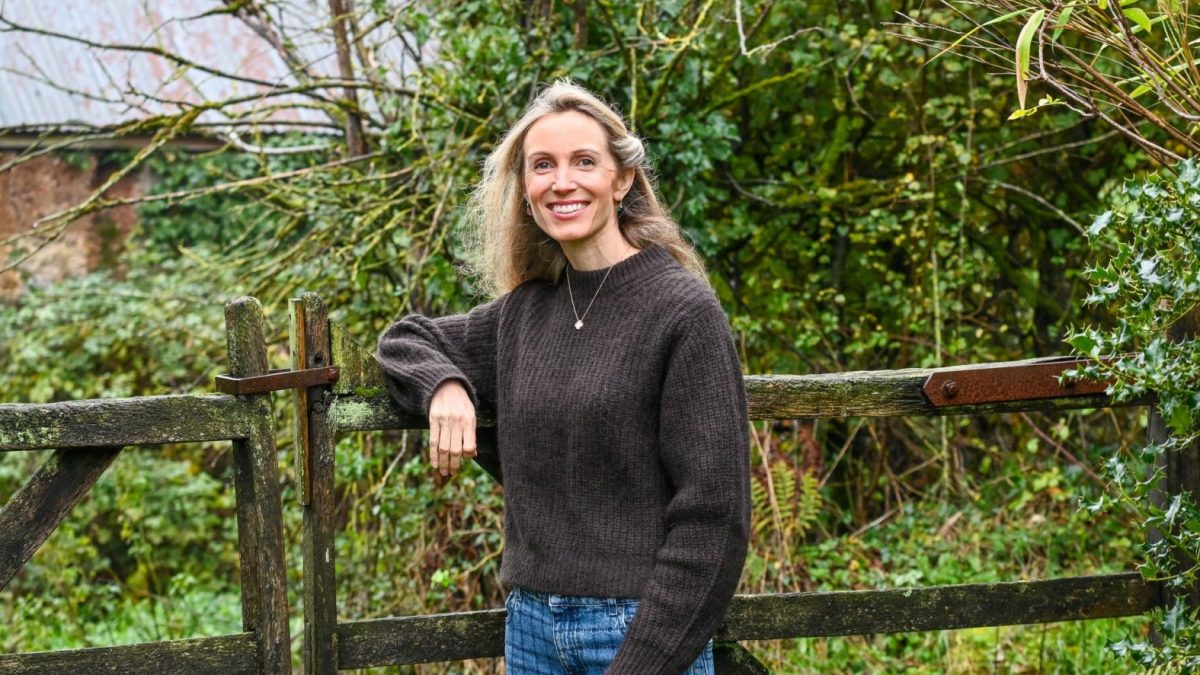
At the start of September, my husband and I moved from London to Somerset with our five children. We loved our city life but were lured West by the prospect of a smaller mortgage, cheaper school fees and lower living costs. I had no idea how or if it would work given that our jobs still require us to be in London (and our eldest child is 14 – far too old to leave town) but somehow we’ve made it through the first nine weeks. When I dared to suggest to a friend and fellow London-leaver that we are getting the hang of it, she assured me we are very much in the honeymoon phase. “Wait until the winter comes,” she warned. “November to March is when it gets truly depressing.” An unusually sunny autumn certainly made the transition easier. I was expecting mud and sheet rain, not weekend walks in trainers and t-shirts. Few things have turned out as I imagined, though. I was convinced the children would pine for London and their school, but while they miss their friends, they’ve slotted straight into their country schools. I worried that I’d spend all my time in the car, I’d feel lonely and isolated and I’d never drink a decent cup of coffee again, but again, these fears have also been largely unfounded. There have been low points – an early morning puncture on the way to the school bus, cows blocking the road, cancelled trains, broadband outages – but I don’t feel cut off. Life goes on outside London and there’s a great coffee place by school. You only need one, right? I was wrong about Halloween, too, which I’d been told doesn’t exist in the countryside. It does. The pub threw a party with apple bobbing, piñatas and a Mariachi band, and afterwards we headed out trick-or-treating – the pitch-black country lanes between each house made it, according to my city children, genuinely terrifying. Before the school Bonfire Night celebrations last weekend, there were no moans of “it won’t be the same as London” – thankfully, the countryside didn’t let us down. We arrived to find a candy floss stand and the largest, most ferocious bonfire any of us had ever seen. Our older children took off with their friends into the darkness (which I’d have totally forbidden in London) and I watched the fireworks with the little ones – hot dog in one hand, flashing fidget spinners in the other – wondering whether life in Clapham might actually be more sanitised. That was a revelation and there have been several more over the past few weeks. Even townie teenagers appreciate nature I assumed my older children were too urbanised to appreciate the beauty and sweetness of nature. Not so. They tell me about the misty morning views across the hills from the school bus, and the other day, I arrived home to find one of the boys herding an escaped sheep along the lane towards its field. They were furious with my husband when he accidentally injured a slow worm with the mower. Meanwhile, their younger siblings have celebrated their first Apple Day at school – unheard of in Clapham, but a major event here in Somerset. I still spend my life confiscating screens Given half a chance, the children will still stare at a screen all day. The difference is there are fewer opportunities for them to use devices: their school days are longer and there is a no-phone policy on the bus. I’m sure this is why they usually arrive home in a half-decent mood. Smartphones are less of an issue given that most of their new friends live as rurally as we do, thus would never get about the place independently. At our London school, many children had a phone by year six, but here most of the year eights are phone-free and their parents plan to keep it that way. Controversially, however, I don’t feel as bad as I used to about my children being on screens. They’re forced outside a lot more than before, so I don’t mind them relaxing with a show or film at the weekends, plus online games and messenger apps have enabled them to keep in touch with their London friends and still feel part of the group. There is less pressure Things that seemed desperately important in London don’t seem quite as crucial anymore. It’s as if a mute button has been pressed on worries such as reading ability, sports team selection, and future schools. I find it both refreshing and alarming. What will happen to my children if I cease to be “on it”? The teachers assure me that they are happy and thriving and that they’re working hard – no need to pile extra pressure on them at the end of a school day. In other words, back off pushy London mum. Time will tell which approach works best, although I think I already know. The countryside turns you into a hoarder I used to despair at my parents for their barn groaning with possessions but I now see how easy it is to accumulate items in the country. Every occasion requires a different set of kit that needs storing. At weekends, our hallway is a sea of abandoned wellies, trainers, coats, dog leads, footballs and Amazon deliveries. We need a boot room but we also, a wise friend informed me, need a covered area outside the boot room with a hose to wash muddy dogs and storage for muddy wellies. You never do any exercise In London, I pounded the streets, rushed up escalators and rode an (admittedly electric) cargo bike to and from school. In the country, I drive everywhere and have to make a conscious effort to fit a walk into my day. There are some positives: walking here is genuinely free – no tempting coffee place half way round the block – and it’s also a punishing workout as it’s so hilly, so a short walk leaves me out of breath. But it’s so tempting to stay inside by the fire rather than set off up the footpath. Yet somehow everyone is chic A London friend recently informed me that people who move to the country immediately look 10 years older and put on a tonne of weight. Why? All that tweed and red wine. So far, this is not my experience of Somerset. My new WhatsApp groups are not just filled with pilates and yoga classes (which take place at school after drop-off) but cold swimming, sound baths and breathwork courses. Rather than turning up to the school gates in Lycra, the parents wear riding gear, military uniforms and workwear suitable for a pottery studio or photography lab. My husband and I need to up our game. You spend a fortune on fuel I knew I’d be spending a lot of time in the car. I saw this as a penalty for living somewhere peaceful and beautiful. What I hadn’t banked on was the cost implications – up to £200 per week on diesel, thanks to the Iran war pushing up fuel prices. The electric car we never thought we’d buy due to living in the middle of nowhere arrived on Friday along with a charging station. But driving isn’t all bad While time spent behind the wheel was one of my biggest concerns about moving to the country, the morning school run together in the car is one of the unexpected joys of the move. We talk. We listen to music. We sometimes sing. When there’s a spelling test or French grammar to revise, we have an ideal window of time. Are we actually saving any money? One of the main points of moving here was to save on our cost of living, but I don’t think we are, or at least, not yet. There’s less temptation to spend money on coffees and meals out, and school fees are cheaper, but there’s been a lot of capital investment. We had to buy new uniforms, a new vehicle for the school run, and it’s expensive commuting back to London. We pay more for a cleaner here than in London, and we have an oil tank to keep filled. It doesn’t help that we’re renovating our new house and building costs are high. It’ll be interesting to see whether country life really saves us money or is simply a change of scene.
We moved from London to rural Somerset – this is what I wish I’d known
Full Article
Original Source
Read the full article at Inews →KhanList aggregates and links to publicly available news content. We do not host full articles from third-party sources. Always verify important information with original sources.