
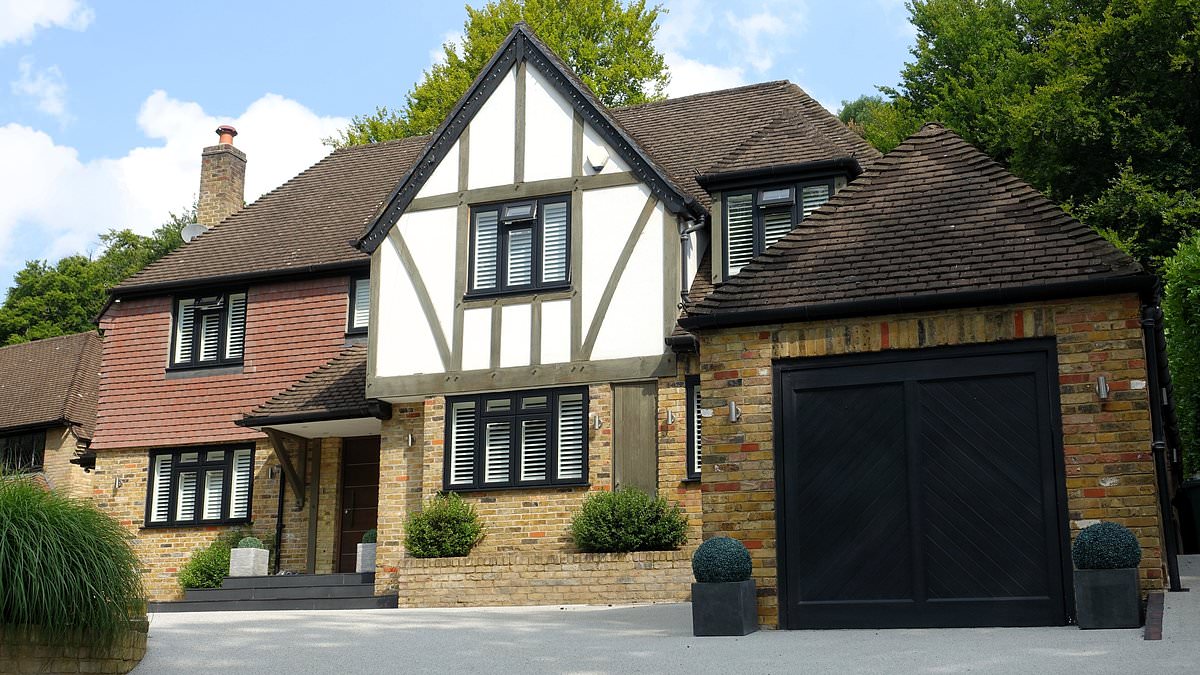
My husband and I transferred ownership of our house to our daughters in 2012 through local solicitors as he thought it would be easier for them when we died.My husband died in 2024 but I still live in the house and pay the bills. I could not afford rent to my daughters at the going rate.When I die will my daughters incur enormous tax bills? Should I transfer the ownership of the house back to myself?Heather Rogers replies: One of the most frequently asked questions in tax planning is 'can I gift the family home to my children'?I can guarantee that it will come up at least once during a tax planning meeting with a new client.The family home is usually the main asset people have to pass on to beneficiaries, but you can leave up to £325,000 (£650,000 for a couple) or £500,000 (£1million for a couple) free of inheritance tax.So, the first thing to think about is whether your family would be liable for an inheritance tax bill on your estate at all, before making risky decisions to avoid it. Second thoughts: If you give your home to your children will you regret it (Stock image)Because let me be clear to anyone reading this, gifting the family home to remove it from your estate is very risky, and as a rule it is not something we would advise a client to do.There are occasional exceptions but in most cases, this is a risk one can do without.I will explain the rules and what happens if you choose this path, and if you change your mind the implications of doing so.Why is gifting the family home so risky?When you make a gift to someone in your lifetime, it is known as a partially exempt transfer (PET).In order for it to qualify as being outside your estate for inheritance tax, you must live seven years from the date of gift.However, if you gift something, whether it be jewellery, works of art or property, you must give it away without retaining a 'reservation of benefit'.This means that if you gift something but still use the item for your own benefit, for example if you gift a work of art but it hangs on a wall in your house where you can enjoy it, or you still live in the family home as you did before, you are retaining a benefit.This is known as a Gift with Reservation of Benefit (GROB). The effect of a GROB is that the gift would fail and the asset would be deemed by HMRC to still be held in your estate for inheritance tax purposes, even if you are not the legal owner.If the gift fails, then the asset could be held in both the recipient’s estate as they are the legal owner and the donor’s estate as a failed PET.Is there anything you can do to mitigate a GROB?To avoid HMRC deciding a gift of the family home was not made outright, but instead was a GROB, the recipient of the gift must have done the following.- Made a tenancy agreement where the donor (the person making the gift) is the tenant and the recipient is the landlord.- Received rent paid at the market rate for such a property the entire time that the donor is living in the house. This for the entire duration – not just the period of seven years after making the gift. Scroll down to find out how to ask Heather Rogers your tax question- Paid tax on the market rate rent at their own marginal rate.- Reviewed the rent every two years or so, and adjusted it accordingly for market rate changes.- Updated their own will to take account of the gift – and the donor will need to do this too- Have a Deed of Gift drawn up making the transfer of the family home formal.You can also be caught out by something called the Pre-Owned Asset Tax (POAT) which is charged even if you avoid the GROB.For example, this can arise if you sell the family home, you gift the resulting cash proceeds to your children, and they use it to buy a house for you to live in.This would give rise to the POAT which is an annual charge on the value of the asset.If you stop paying market rent at any time this can trigger the GROB, even if it happens years after the original gift. It effectively starts the seven-year clock again from the date the market rent ceased being paid.If you move out, you cease to retain a benefit.How does gifting the family home affect the Residence Nil Rate Band?The RNRB is the £175,000 per person inheritance tax-free allowance you are allowed to add to the standard £325,000 Nil Rate Band, if you are leaving your property to your children, or grandchildren, or their descendants.To claim the RNRB, there must be an eligible property that is left to direct descendants on death, unless downsizing provisions apply that mean it still qualifies under the rules.In the majority of cases, this will be a property that at some point has been the home of the deceased.The individual doesn't have to be living there at the time of their death. The RNRB is only available when a property (or other assets when downsizing provisions apply) are included in the deceased’s estate and it is left to direct descendants.Properties in which the deceased has never lived do not qualify for RNRB.Are there exceptions when gifting your family home might be appropriate?If you live with someone else, for example an adult child of yours, and the house which is both your main residences is in your sole name, you could gift part of the property to them, providing you continue to pay at least 50 per cent of the bills.There would be no capital gains tax payable on the transfer of title from you, having sole ownership, to you and an adult child, having joint ownership.In this scenario, you would qualify for private residence relief (PRR) on the transfer to joint ownership of the property. A valuation would be needed, as well as a potential property life interest trust to protect any surviving spouse. What if you use a trust to gift your family home?Gifts into trust are caught in the same way – a GROB will apply if rent is not charged and this would be taxable on the trust.Depending on the value of the gift that is made into trust, inheritance tax can be due at the time of transfer and at ten-yearly intervals.Capital gains tax on property exiting the trust, either by sale or transfer to the ultimate beneficiaries, can often be negated if the property has been the main residence of someone allowed to occupy it under the terms of the trust during the trust period.Beware, because there have been unscrupulous claims made by some firms regarding the use of trusts and gifting the family home. Always take advice from an estate planning solicitor before proceeding.If you need care will the gift be ruled as 'deprivation of assets'?Remember that if you gift assets, then your local authority can go back as far as they wish to look at them, if you are unable to pay for your own care and therefore it is being asked to do so.There is no 'seven-year rule' in such cases. Local authorities can, in certain circumstances, treat your gifted assets as if you still own them. Can you undo the gift of your family home later?When the home is originally gifted, PRR will apply if it is your main residence and the gift is a PET.If you undo it, then the recipient is gifting it to you.This triggers a PET from their estate and a Deed of Gift is needed.As it isn’t their main residence, unless they live with you, CGT will be payable on any increase in value from the date of the original gift from you to them. Stamp Duty Land Tax could also be payable. Don't wait until Budget day. You need to start protecting yourself nowI'm Simon Lambert, publisher of This Is Money, and you need to know that your pension, savings and property could soon be under attack. On October 28, Andy Burnham's government will set out its Budget. We don't know what they will do, but we do know about tax raids already on the way. The best thing you can do is get prepared. So I've called on some of Britain's leading financial experts to create my new six-week plan. I'll cut through the noise and take you step-by-step through everything you need to do to protect your money. Don't wait. Click here and sign up to Protect Your Money now. What action should you take now?Hopefully the explanation above has made your position clearer. When it comes to your own circumstances, I believe you need to take advice from a solicitor experienced in estate planning before doing anything else.The gift you made was in 2012 and I do not know if market rent was correctly paid during the period prior to your husband’s death.However, regardless of whether it was or not, the property could fall back into your estate as a Gift with Reservation of Benefit from the time you ceased to pay market rent, as you are the surviving one of two original donors.The GROB could be either in full or in part, depending on the way the house was originally owned between you and your late husband.Your solicitor will need to establish whether you were joint tenants (you owned the property with your husband jointly as one) or tenants in common (you owned a specific share each), how your husband left his estate on death, and whether any GROB was applicable on his death.If the house was owned as tenants in common at the time you and your husband made the gift to your daughters, and market rent was correctly paid to them until his death, then his share will qualify as a gift if all the conditions I listed above are met.This would leave just your half on which to pay rent at market rate, as you are benefiting from your gift if you don’t do this.If the rent was not paid correctly, then your late husband's share would not qualify as a gift.And, if your husband left everything to you in his will, then the whole property would fall into your estate, and you would be deemed to be benefiting from it in full as his gift would have failed due to not meeting the conditions as explained above.As I said, you need to get up to date legal advice, but you should also go back to the old solicitor who drew up the original Deed of Gift transferring your house to your daughters, who would have no doubt given you and your husband advice at the time.Either your new solicitor, or the old one should you decide to instruct them again, should review the file from that time and the facts, on which they can then advise you as to the best course of action in your circumstances. Ask Heather Rogers a tax question Heather Rogers, founder and owner of Aston Accountancy, is our tax columnist. She is ready to answer your questions on any tax topic - tax codes, inheritance tax, income tax, capital gains tax, and much more.If you would like to ask Heather a question about tax, email her at taxquestions@thisismoney.co.uk.Heather will do her best to reply to your message in a forthcoming monthly column, but she won't be able to answer everyone or correspond privately with readers. Nothing in her replies constitutes regulated financial advice. Published questions are sometimes edited for brevity or other reasons.Please include a daytime contact number with your message - this will be kept confidential and not used for marketing purposes.If Heather is unable to answer your question, you can find out about getting help with tax here, including sources of free professional advice if you are elderly and/or on a low income.You can also contact MoneyHelper, a Government-backed organisation which gives free assistance on financial matters to the public. Its number is 0800 011 3797.Heather gives tips on how to find a good accountant here, including when to seek help, hiring the right type of firm and typical costs.
We gifted our house to our daughters - will they still face IHT bill and should I take ownership back?
Full Article
Original Source
Read the full article at Dailymail →KhanList aggregates and links to publicly available news content. We do not host full articles from third-party sources. Always verify important information with original sources.