
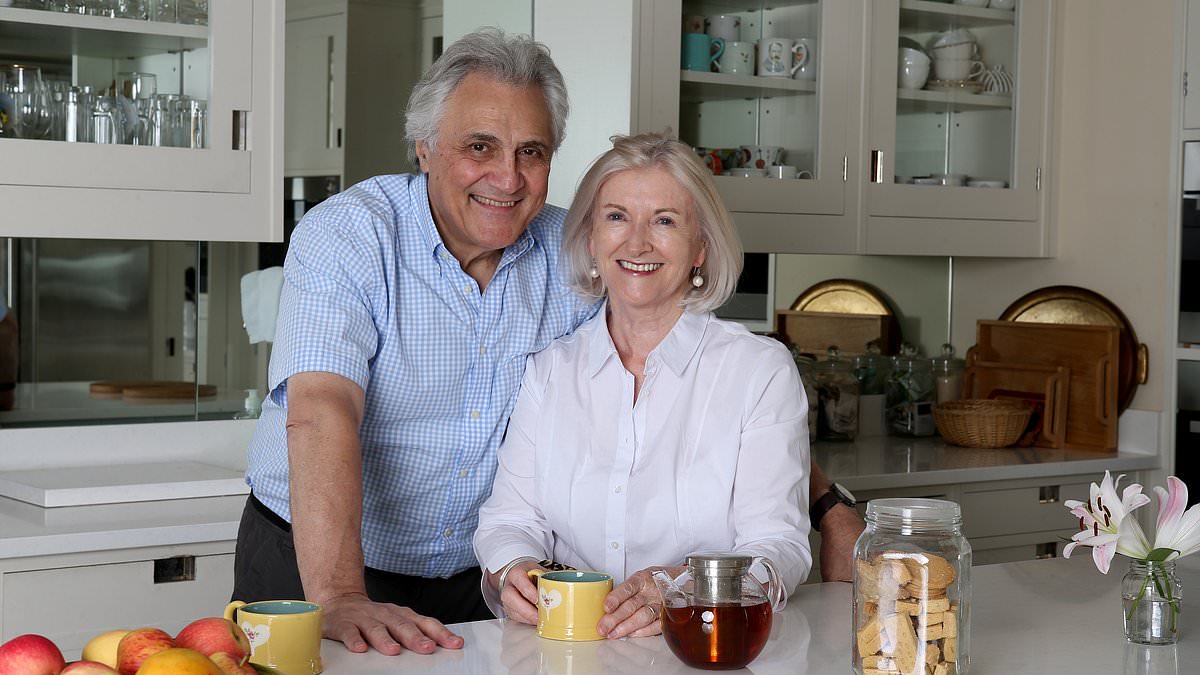
John Suchet received one of the greatest honours in British TV in 2008 – a Lifetime Achievement Award from the Royal Television Society. Few would have questioned the choice.Whether reporting from abroad or presenting in the studio (for most of his TV career at ITN, but latterly at 5 News) John was, for decades, the voice of authority, calmly delivering news and analysis of whatever catastrophe the world had thrown up that day. What’s remarkable about the timeline, though, is that two years earlier, on the first day of that job at Channel 5, John had gone to his boss and done the unthinkable by telling him he wasn’t sure he could continue.The man who had spent his working life looking unflappable on live television (‘dealing with everything they could throw at me’, as he puts it) was no longer sure he could hold everything together.The reason? Dementia. Not his own, but that of his wife Bonnie. He had acquired the second job that no one ever applies for, as her carer. The fact that the neurologist delivering the diagnosis advised him to go home and put a sign on the bathroom door, so that Bonnie could find it, says so much about the future they were facing.‘My first day on the job was exactly two weeks after Bonnie’s diagnosis,’ he recalls. ‘I remember going to see the editor and saying I was going to have to pull out. As it happened, I lasted for another two years.’Two years in which he went through hell, though – a hell understood by every single person who is trying to hold on to their own life while their spouse is losing theirs.Like every carer, John, now 82, can pinpoint moments of sheer desperation. Struggling to shower his wife when she could no longer manage it herself, drenching them both – and the floor – in the process. TV newsman John Suchet pictured with his wife Bonnie, who was diagnosed with dementia in 2006 aged just 64 Nula Black pictured with her husband James, who in 2004 was diagnosed, aged just 57, with Pick’s disease, a form of frontotemporal dementia A love born of tragedy: John and Nula, who met in the care home their partners were in, married in 2016 Losing his temper with her as he struggled to get her undressed for bed, or gripping her so tightly that he left a bruise. Wanting to weep as he made yet another late night microwave meal, exactly the sort of food Bonnie – once a brilliant cook and meticulous about nutritional standards – would never have served them. Attempting to take her on work trips because she could not be left alone, but facing the horror of her going awol from hotel rooms in strange cities.Bonnie was at his side for those glittering TV awards where he got his gong, but by then she had little idea of what was going on. And she could only come because they also brought the housekeeper who had become a paid carer. It would be her last public outing.The following year, 2009, John made the heartbreaking decision to put his wife in a care home and ‘the guilt demon’ still haunts him, even if it was the right thing to do.There is a passage in the memoir he wrote in 2010 where he detailed watching himself on TV, in a pre-recorded show, on the night he submitted papers to put Bonnie in a care home. ‘How thoroughly professional I looked,’ he wrote.‘I sat watching myself as if I were looking at some entirely different creature. On screen, the television presenter with decades of experience, able to cope with anything they threw at him. In the armchair, watching him, an emotional wreck with tears pricking at the back of his eyes and a sodden tissue in his hand.’There was a cruelty to his situation, he says today. The person with whom he would once have shared that agony was Bonnie.‘What makes it so lonely is that you can’t share your experience with the person you love most in the world,’ John tells The Mail on Sunday.‘If your partner has cancer at least you can discuss it with them. Bonnie didn’t understand what was happening to her. We couldn’t talk about dementia because she didn’t know she had it. Suchet pictured with his wife Bonnie in 1996 ‘It’s why, when I met Nula, we talked and talked about it. We couldn’t stop talking.’His darling Bonnie died in that care home in 2015 but, by then, John had met Nula, the woman he would go on to marry, and the woman still at his side today.Theirs was a love story born out of tragedy but also shared experience. Nula, 77, had been stumbling along a parallel path.In 2004, her beloved husband James, a gifted filmmaker and writer, had been diagnosed, aged just 57, with Pick’s disease, a form of frontotemporal dementia. He was a resident in the same home as Bonnie. Both spouses died there – James a year before Bonnie.The couple are speaking today because they are supporting the Mail’s ground-breaking Dementia Carers Together campaign which aims to raise at least £1million to fund courses giving unpaid carers practical advice and, crucially, someone to turn to.‘Dementia is unlike any other disease because the carer takes the whole burden on their shoulders,’ says John. ‘Carers need to be able to pick up a phone and talk to someone who can support them. They shouldn’t have to go it alone.’Like John, Nula was a high-achiever when she was hurled into the world of dementia care, and ill-prepared for it. An interior decorator whose work took her abroad, she – like John – initially tried to take her spouse on business trips, hoping she could somehow continue with ordinary life.‘I remember travelling to New York and Paris and paying the hotel porters to keep an eye on him while I went out to work,’ she recalls. ‘But it quickly became too difficult to leave him alone. I eventually had to give up work completely. I had no money coming in and I had to sell the house.’ Suchet (pictured with Nula in 2019), met his new wife in a care home, while Bonnie had dementia and he and Nula were going down similar paths Dementia presents differently in every sufferer. While Bonnie remained gentle, even docile, until the end, James’s personality changed. His inhibitions disappeared, Nula explains. He would throw food from his plate in restaurants, urinate where he pleased and go to bed in a suit and tie. He began to become physically aggressive. ‘He was 6ft 2in, I am 5ft 3in, so it was terrifying at times. I wasn’t eating or sleeping.’John had the financial means to eventually employ help and had access to an Admiral nurse – specialists in dementia care – a man he credits with saving his life.Nula did not. She found herself not merely frightened and in a financially precarious place, but horribly alone. Friends who might have offered comfort withdrew. It’s part of a carer’s journey that isn’t acknowledged adequately.‘One friend even said to me: “I’m sick and tired of you talking about dementia”. But that was my life. And it was very lonely.’Both talk of how everything – career, finances, friendships, security – can be destroyed, and at speed. ‘It changes your entire life. Every aspect of it,’ says John. ‘Everything that is familiar.’He talks about grabbing on to whatever help was available. In his case that included alcohol.‘We were knocking back quite a bit of wine at the time,’ he says. ‘It calmed Bonnie and, to be honest, myself too. But looking back it didn’t help that we were eating bad food and drinking too much.’ John and Bonnie pictured together at an awards ceremony. The pair married in 1985John and Bonnie, who had once been neighbours, had married in 1985. They were kindred souls with a shared love of music and travel. They imagined – nay, expected – a retirement in their farmhouse in France, travelling to opera houses across Europe as John carved out another life as a writer (he has written biographies of several composers).Except that she had begun losing things. Forgetting things. Then came terrible headaches. ‘Bonnie described it as though the wiring in her head had become tangled.’There was a curious event in an airport departure lounge when she popped to the loo – only for him to be summoned to the information desk over the Tannoy. There was Bonnie, looking bewildered. They went from doctor to doctor without finding an explanation.‘I firmly believe Bonnie had it for years before the word dementia was ever mentioned,’ says John. ‘We went to one quack after another but nobody could work out what was wrong. It was something of a relief when we were finally told it was dementia.’Relief was short-lived. A diagnosis gave the illness a name but did not tell John how to be a carer, or how to watch the woman he knew lose one basic skill after another.Bonnie had always done the cooking. John admits he had never cooked, nor wanted to. So he found himself hurling ready meals into the microwave when he came home from presenting the news.At first he would let Bonnie serve them, so she could still feel she was doing something useful. ‘But eventually even that was too much for her,’ he says. He arranged for a housekeeper to help, only to discover Bonnie found the presence of an unfamiliar person confusing.Every day brought a new challenge, a new horror. Bonnie – so elegantly put together, so careful about things like manicures – became incontinent and took to shredding toilet paper around their home. Bizarre and distressing behaviour for John. He finds it almost a mercy she was oblivious. A journey through Stansted, en route to France, stands out as particularly distressing. It was packed. The airport security officer told Bonnie to remove her shoes before going through the scanner. She didn’t understand. He shouted at her. ‘I turned to him and said: “That’s my wife. She’s got dementia.” He said: “I don’t care.” I had to take her shoes off for her.’ The indignity still smarts.John’s Admiral nurse eventually persuaded him Bonnie needed residential care. If his health failed, who’d care for her? But understanding did little to make the decision less agonising.‘I told her we were going on holiday to somewhere nice,’ he says of taking her to the care home. ‘It was heartbreaking but I knew it was the right thing to do. It’s common for carers to die first. What would have happened to Bonnie if I had gone before her?’Nula’s parallel decision to admit James to a care home came when she could no longer physically get him into the shower.John and Nula met in 2011 at a lunch laid on at the care home. They might have shared a love of opera and travel, but there was a deeper understanding there too. Each grasped the decisions the other had had to make.They began meeting for dinner. ‘We had both been so bottled up with worries for years,’ John says.The friendship developed into something more, but it was by no means straightforward. Bonnie and James were still alive, but in advanced stages of dementia and no longer able to recognise or communicate with their spouses. John and Nula felt guilty about their growing relationship.A trip together to Vienna should have been a delight, a release. Instead, says Nula, ‘once we got there we felt so guilty about what we were doing it ruined the trip’.Nula’s account of James’s last weeks is incredibly moving. She played him The Marriage of Figaro. He had barely responded to anything for some time, but that morning tears ran down his face.When James died in 2014, she decided she wanted to stop seeing John. He continued writing to her, often sending articles about dementia. Her friends urged her to reconsider. ‘So I gave him another chance and that’s how we fell in love,’ she says.Bonnie died in 2015 and John and Nula married the next year. At their wedding they raised a glass to Bonnie and James, and continue to do so. Over the last ten years, they have built a happy home in Dartmouth, Devon, enjoying the sort of life each had planned with their original spouses.John presents on Classic FM and writes about his great passion, Beethoven; Nula is working on a novel. But neither mistakes their happiness for an erasure of the past and they are honest about the scars they are carrying. They tell us they would like others to feel a little less alone than they did.‘There’s no roadmap to dealing with this disease,’ says Nula. ‘I had no one to reach out to; no one who could help me.’ John adds: ‘No one can do this on their own and no one should be expected to.’ Dementia Carers Together Dementia Carers Together is raising money to fund new courses across the UK to give tens of thousands of struggling unpaid dementia carers vital emotional and practical support. For further information, visit dailymail.com/dementiaHow you can donateOnline: Click here.By text: To donate £10, text CARER to 70115. To donate £20, text LOVE to 70115. To donate £30, text HEART to 70115. Texts will cost your donation amount plus your network charge.By phone: Call 0300 1234577. Standard charges may apply.By cheque: Send cheques made payable to Mail Force Charity to:Dementia Carers Together, 42 Phoenix Court, Hawkins Road, Colchester CO2 8JY As the Mail launches landmark campaign for dementia carers, TV news veteran and sufferer Alastair Stewart says: 'I'm at the point where I wonder if life is worth living... I only exist because of Sal' SARAH VINE: It was a blessed relief when my dementia-stricken father finally diedHelp us back UK's dementia carers: Daily Mail launches major appeal to fund vital new support networkAll you need to know about the Mail's Dementia Carers Together appeal 'The despair in her eyes was unbelievable': In heartbreaking detail, a husband recounts how his wife's Alzheimer's diagnosis devastated both of their lives
'We found each other as dementia robbed us of the loves of our lives': After putting dementia-stricken wife into care, TV newsman John Suchet found love with woman facing the same plight
Full Article
Original Source
Read the full article at Dailymail →KhanList aggregates and links to publicly available news content. We do not host full articles from third-party sources. Always verify important information with original sources.