
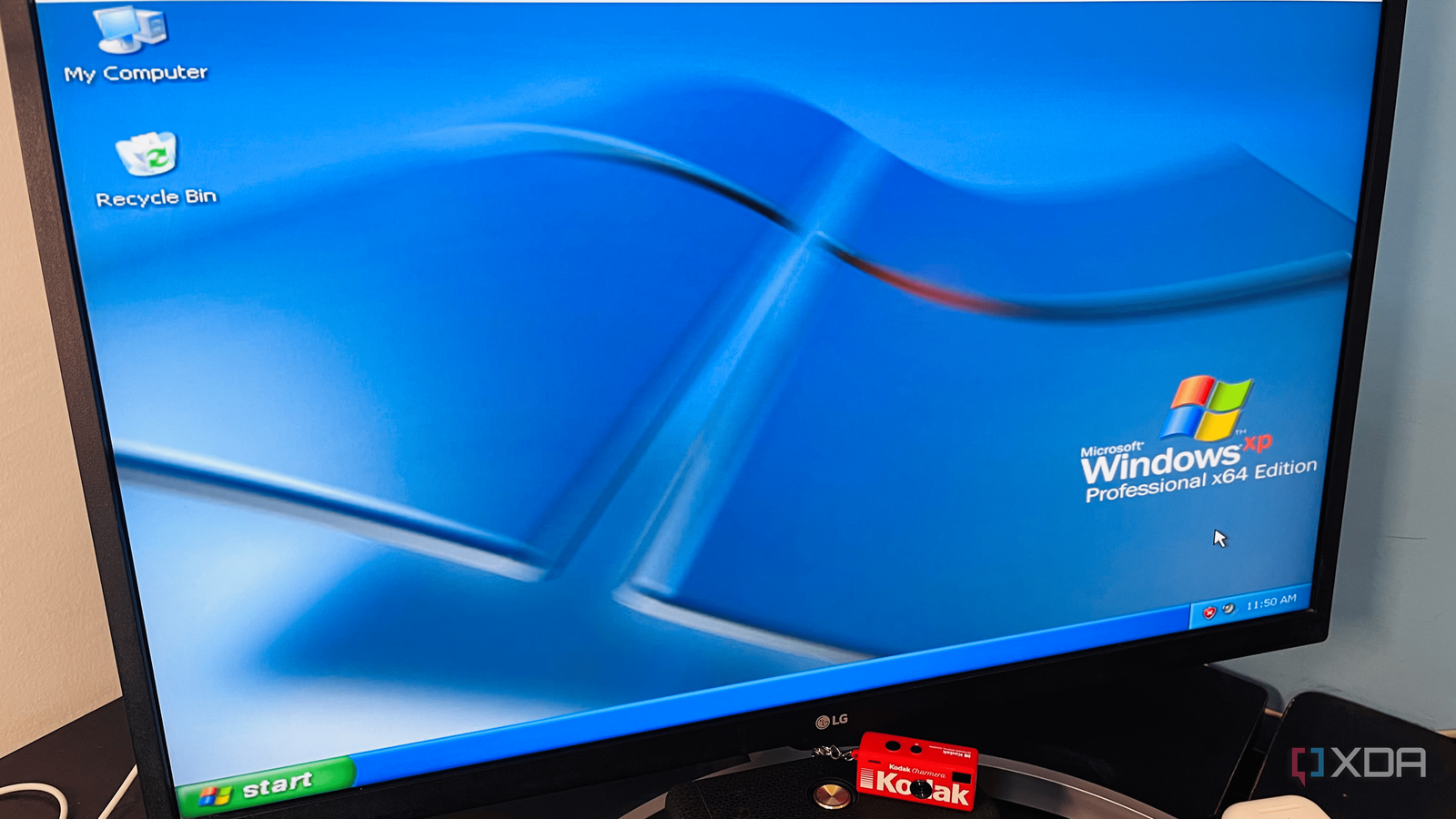
Published Sep 17, 2026, 1:27 PM EDT Patrick O'Rourke is XDA's News Editor and Entertainment Segment Lead. Previously, he was Pocket-lint's Editor-in-Chief, the Editor-in-Chief of Canadian tech publication MobileSyrup, and earlier in his career, he worked as the technology editor at the Financial Post and Postmedia. He's based in Toronto. Over the past 15 years, he's written thousands of articles. Patrick has also interviewed dozens of tech industry executives and covered GDC, E3, Gamescom, WWDC, Apple keynotes, Samsung Unpacked events and more. Patrick has a BA in journalism from Toronto Metropolitan University. Sign in to your XDA account If you were a Windows XP user in the mid-2000s, you likely remember this iconic key: FCKGW-RHQQ2-YXRKT-8TG6W-2B7Q8. It's probably the best-known Windows XP product key out there. When paired with a specific version of Windows XP, it allowed anyone to install and run Microsoft's operating system with just the installation disc or ISO, as long as they installed the Volume version of Windows XP. I've never used this key, of course, and in fact, I don't even know why I recognize it so well. With that in mind, I've always wondered why Microsoft left such a glaring hole in Windows XP's copy protection, and now I finally understand why. In a recent Twitter post, former Microsoft engineer Dave Plummer explained that there were actually two versions of Windows XP: Retail and Volume (via Tom's Hardware). Retail was for anyone just buying the operating system at their local Best Buy, while Volume was for Microsoft's partners and OEMs that needed to install the OS on thousands of devices. Activating thousands of PCs individually with unique codes wouldn't be practical, so volume solved that issue. Plummer notes that "very few" companies had access to Windows XP's volume image and its licensing key. He believes that someone at a big OEM, likely Dell or Intel, leaked the Volume media version of Windows XP and the key ahead of the official release. Pirate group Devils0wn then spread the Volume version of Windows XP and its corresponding authentication key across the internet. In some cases, Windows XP Volume images even circulated online with the key baked in, or in other cases, you'd often see it written directly on the disc. I never owned a copy of Windows XP with the CD key written on the disc in black Sharpie. Never — definitely not. "As you likely recall, Product Activation required that you have a key, and you'd have to activate it online or over the phone," writes Plummer on Twitter. "But Microsoft had large corporate customers... and those customers did not want to have to activate every offline PC." That's why the FCKGW key wouldn't work with the standard Windows XP CD. Windows XP's copy protection was partially powered by Microsoft's Bob The FCKGW key was eventually blacklisted when Service Pack 1 released Credit: XDA There's a bit of a funny story behind the authentication system, too. According to Plummer, to confirm the legitimacy of a Volume Windows XP disc, the activation system looked for a secret 10MB "binary blob" that existed only on the Volume disc. That blob just happened to be an encrypted version of Microsoft Bob, the tech giant's ill-fated predecessor to Clippy. The FCKGW key was eventually blacklisted when Service Pack 1 arrived, and then with Service Pack 2, Microsoft added Windows Genuine Advantage checks to the mix. You could still install the Volume version of Windows XP with the FCKGW key, but some updates would be blocked. Before Plummer's Twitter explanation, the common belief was that the FCKGW key worked because Microsoft's key generation algorithm was very basic, though he denies this claim. On Twitter, he says that the algorithm was written by "ACTUALLY smart guys with heads so big that they bumped the doorjamb on the way into your office."
We finally know how Windows XP’s infamous FCKGW product key ended up everywhere
Full Article
Original Source
Read the full article at Xda-developers →KhanList aggregates and links to publicly available news content. We do not host full articles from third-party sources. Always verify important information with original sources.