
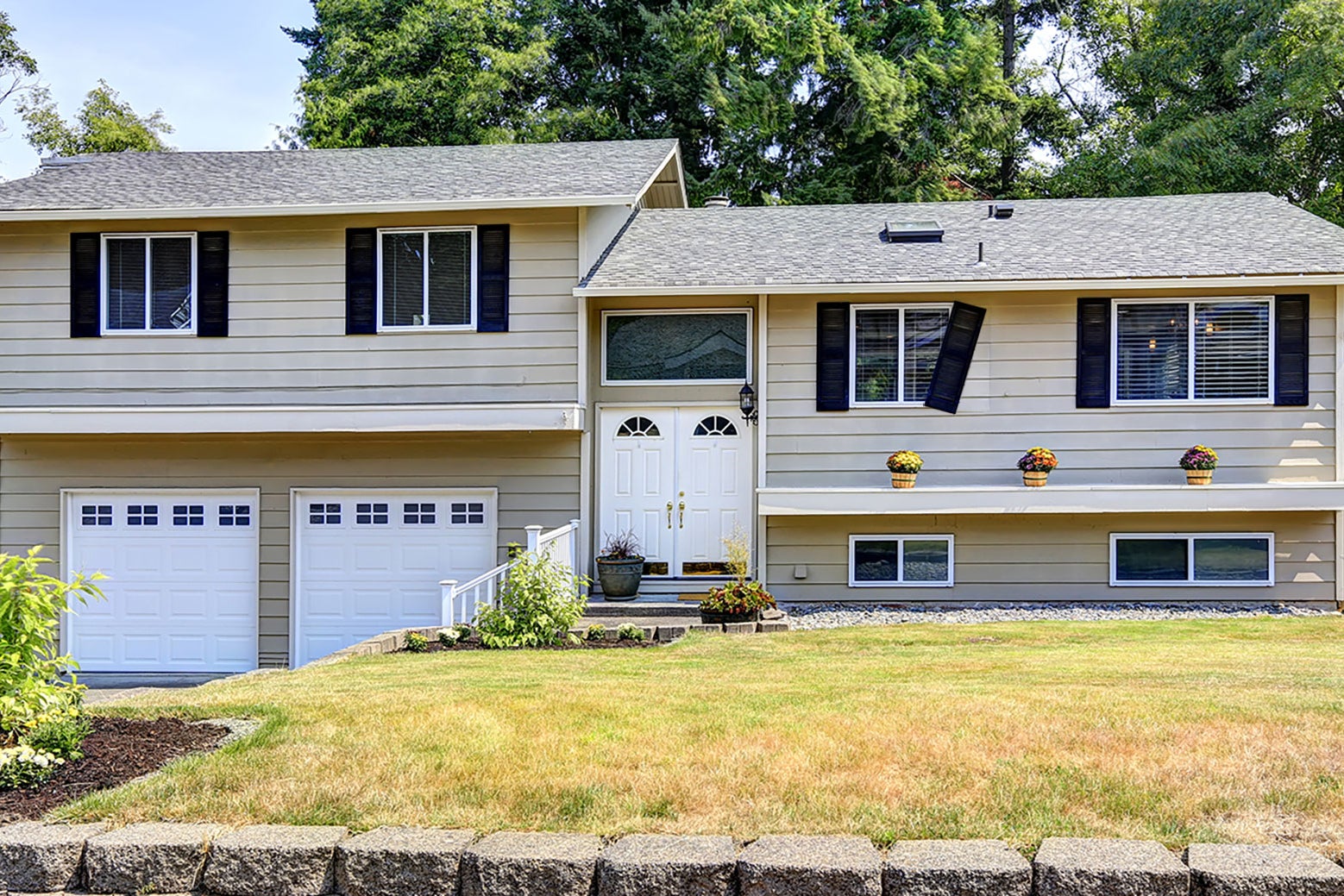
Moneybox Owning your own place is supposed to mean you’ve “made it.” But attempting to maintain a property far away from our friends has made our lives worse. Photo illustration by Slate. Photo by Getty Images Plus. Sign up for the Slatest to get the most insightful analysis, criticism, and advice out there, delivered to your inbox daily. It was the screaming that did it. I think we could have been happy, my husband and infant daughter and I, living in that apartment. It was walking distance from the subway and had a lovely if nonfunctional fireplace, and when the baby bunnies nested in our herb garden, I thought, Yes. I could make this a home. But the upstairs neighbors in our Boston triple-decker were screamers. They screamed at each other, mostly, but they also screamed at their toddler, relentlessly and with a cruelty that made me, freshly postpartum and clutching my 6-week-old to my chest, want to bury myself at the bottom of one of our (small, insufficient) closets. “I can’t do this anymore,” I hissed to my husband, the baby nursing, the neighbors screaming, tears streaming down my face. “We need to move.” So we did what you’re “supposed” to do in certain socioeconomic spheres after you’ve gotten married and had a kid: We decided we would make our family an island unto itself. We would buy a house. We couldn’t afford a single-family home in the walkable, transit-friendly neighborhood where we lived, so we looked farther afield, still technically within the city of Boston but beyond the reach of the T. How much difference would an extra 20 minutes of travel really make? It was easy to brush aside the question. The house that was to become ours was listed on a Friday; we saw it on a Saturday; offers were due Sunday at midnight. We’d been looking for about a month, and it was the only place we’d seen in our price range that met our criteria (three bedrooms, a yard, “room to grow,” no evident screamers), though it lacked charm. Our agent urged us to act quickly. We had to waive the inspection, and we offered $60k over asking. We were in a fierce seller’s market and this was typical: Friends of ours in Boston had been making wild highball offers for years, and had always been outbid. We assumed that our journey would be the same, that this house would be the first of many we’d attempt, and then fail, to acquire. It all felt a bit like a game, the numbers completely incomprehensible. So when our realtor texted early Monday morning to tell us our offer had been accepted, we assumed we’d misunderstood. We hadn’t. We were homeowners. We had no idea what we’d done. While much has been made about the dearth of millennial homeowners, approximately 55.4 percent of millennials now own their homes, according to Redfin data from 2025. We’ve been slow—at age 36, only 57 percent of millennials owned their homes, compared to 61 percent of Gen Xers and 64 percent of baby boomers at the same age—but despite high home prices, volatile mortgage rates, student debt, and a general unwillingness to grow up, here we are. How are millennials doing it, in spite of the economic headwinds? As Anna Holmes recently pointed out in her blistering New Yorker essay, more than half of millennials have had parental help purchasing their home. We’re among them: When my husband went to grad school, his parents gave him the down payment for a small apartment in Tucson, Arizona. When he graduated, they encouraged him to rent it out and keep the income; when we decided to buy, he sold the apartment and we used the proceeds for our own down payment. My husband’s parents are first-generation immigrants, impossibly proud of their son, satisfied in their ability to give him what they didn’t have: a financial leg up, the gift of stability. They moved to rural Canada from India in their early 20s and built their careers and equity from the ground up. My parents did something similar, my 26-year-old dad borrowing money from his younger sister to buy his first house in Toronto for $42,000 (Canadian!). He and my mother slowly but surely scaled the financial ladder, choosing careers that afforded them better and better salaries, trading their homes for better and better options, homes that appreciated appropriately, and returned their investments three- or fourfold. While they didn’t give us any money for our home, we knew they would, if we asked. In other words, we are really, really lucky. And yet—for us, and for others in our generation—buying a home might turn out to be the biggest regret of our lives. For Kelsey, the problem is the trees. She and her husband purchased their first home in Connecticut in 2018. New Haven, where they had been living, had high taxes and terrible schools. When they found an older, character-filled home in a lush nearby town, they snapped it up. Then the trouble started. “It rained one of the first nights we slept in the house,” Kelsey says. “And then suddenly it was raining in the hallway.” In the following months, every appliance died, one by one. And then came the trees. “If you haven’t owned a home, you don’t understand that trees are bad. Who would have known?” she says. “We’ve spent over $40,000 on trees.” The recent nor’easter felled eight more. Between that and the ongoing maintenance of an older home, Kelsey feels stuck. “We have two kids, two full-time jobs. We don’t even have time to talk about the repairs we need to make or what we should do,” she says. “We don’t make nearly enough to hire a house manager or nanny or anything like that, so even when things do go wrong, we don’t have time to figure out how to handle it or even who we would need to hire to outsource it.” A house manager may sound like a luxury (and it is). But the share of couples with children in which both parents work full time is now 52 percent, up from 31 percent in 1975. When both parents work outside of the home, the labor of taking care of the home, in ways large and small, doesn’t simply disappear. How much of this did she consider before buying? “None of it,” she says honestly. Buying a home, she says, “was just ingrained.” That remained true despite the fact that she is a city person, prefers not to own a car, misses walking to work. Kelsey says that they’ve considered selling. “But our mortgage is 4 percent, and our kids love their schools.” And besides, growing up means owning a home. Thomas, in Seattle, echoes this sentiment. He was in his late 30s when he bought, feeling that it was “just what a person does.” “I found a cute house that fit my budget but definitely needed a little work. Windows and siding were old. The kitchen was very small and not super usable. The furnace was getting up there in years. But it was my house. I did the thing.” After a few months, however, he realized it felt “more like a responsibility than a home.” He resented yard work, and his job kept him too busy for the endless repairs. There was the constant background worry that something else would go wrong. Plus, he was isolated and disconnected, having moved from a neighborhood near his friends to one farther from transit and his community. So, sure. He, in true millennial parlance, “did the thing.” But what did he lose in the process? This is a common refrain in so many of the stories I’ve heard about homeownership: We gave up the things that made our lives meaningful in order to have the thing we thought we were supposed to want. When my husband and I bought our home, we knew we were making concessions: the neighborhood, the proximity to friends. And we knew we would need to tackle a few things: stripping garish wallpaper, repainting, taking the one full bath down to the studs. I made some Pinterest boards. But there’s nothing charming about composite decking, which is what I found myself researching when our wood started rotting under the weight of New England winter. The house was built without insulation, so our heating bills regularly run upward of $800 a month even though we keep the house at a chilly 67, urging the kids to wear extra sweaters. We should put in a heat pump, though that would cost us $30k we don’t have. As I was working on this article, our garbage disposal started leaking swamp water to the tune of $750. When we bought the place, I envisioned our children running wild in the backyard under the climbing wisteria, but the wisteria is invasive, and it ate away at our fence and choked the rhododendrons. Plus, ticks. A house is meant to be the foundation of stability and safety in our lives. Instead, ours is a high-pitched stress alarm. In Seattle, Thomas faced similar regrets over buying. Still, he tried to ignore the nagging feelings. He’d done what he was meant to do. He had a “crazy good” sub–3 percent mortgage, one that will “likely never come around again.” These “crazy good” mortgage rates certainly fueled some of the millennial homebuying boom: In 2020, post-pandemic, mortgage rates hit record lows. Over the past five years, inflation pushed rates to a volatile 7-plus percent, with experts predicting they will stay high. These numbers make little sense to me, but here’s one that I can understand: If we bought our house today, assuming we were able to put the same amount down, our monthly payment would be closer to $5k per month than our current $3k, between the interest rates and the fact that real estate has gone up in price. We will never be so financially lucky again. Which means, in essence, we will never be able to be so stupid again. Never again will we be able to make a decision with so little foresight or preparation, with such a lack of understanding about what this means. Financial expert Ramit Sethi would say we fell victim to “one of the biggest myths about money: If you rent, you’re a loser, and buying a house is the best investment.” Sethi cautions that just because you can purchase a house doesn’t mean buying one is a good idea; far from it. It is important to determine whether buying a home will lead to “a rich life: a life that is full.A life lived intentionally, proactively, and abundantly.” Before we put in an offer on a house, we didn’t ask ourselves what it would feel like to live so far from our friends, to be beyond the reach of easily accessible transit, for my husband’s commute to increase so dramatically. We didn’t run the numbers on childcare for the second baby we wanted to have, who would arrive the year after we bought the house. We didn’t factor the additional 30 to 50 percent of our monthly mortgage that experts suggest we set aside for taxes, utilities, and repairs. We assumed, naively, that my husband’s salary would continue to increase, not that raises would be paused due to university budget concerns, and that once he got tenure, his earnings would essentially plateau. According to a recent report, a family of four needs an annual salary of $368,742 to live comfortably in Boston. We make barely one third of that. People on the winning side of the homeownership ledger (boomers with considerable equity and an empty nest) like to tell you that you should just get into the market however you can, that a home is an appreciating asset. We may, indeed, be “building equity” by staying in our home—but that equity accrues only over many, many years, years we would be spending on long car rides to and from work and friends, away from our closest community, pouring money into a house we do not particularly love, attempting to cope with the relentless stress of some new emergency, some new demand, well aware of our own stupidity and foolishness and all the sheer dumb luck that allowed us to make such a reckless decision under the guise of growing up. Here is the actual reality of our grown-up life: When our youngest daughter was 2 months old, she was hospitalized in the intensive care unit for a lung infection. She has had two more subsequent ICU stays, and deals with ongoing asthma and allergies. We have a running tab at Boston Children’s Hospital, and a baseline level of uncertainty about her health. Since we live multiple flights away from both of our families, we have to rely on friends for emergency help. It feels stark now, our choices: We picked the yard with the ornamental cherry tree over the proximity of a friend who can run over when our baby is struggling to breathe at 3 a.m. That’s the kind of math no one can teach you: how to put the living, breathing needs of the people who rely on you ahead of any fantasy. Five years after buying our home, we are now, to the dismay of our parents, considering what would have once been unthinkable—going back to renting. Our financial situation hasn’t improved in the past five years: We have more expenses, less savings, and an ever-expanding list of home projects. As the kids say: The math simply isn’t mathing. We could not afford to buy a home in our preferred, walkable neighborhood close to friends five years ago, and we definitely cannot afford to now, with prices for 2-bedroom apartments north of $1 million. So we’ve started casually looking at rental listings, letting friends know that we’re on the hunt, preparing our kids for the idea of a smaller place, a new school. Whatever we make on the sale of the home will go toward rebuilding our savings to give us a cushion for unexpected expenses. Maybe I’ll even open a retirement account. Renting may be a “regression,” but it’s one that, we hope, will change our lives for the better. Maggie, in Tucson, also purchased her home in 2021. It was the third home she’d owned; she bought her first at 20, thanks to subprime mortgages and help from her grandfather. She’s grateful for the stability her homes provided, especially for her children during an unstable marriage. But when her family chose to move to L.A. last year, “buying a house right away felt like too much of a financial stretch given housing costs here and our family size,” says Maggie. They decided to rent, and ended up “stumbling into” their dream place in their dream neighborhood. “We now live in a large duplex with our landlady and her daughter,” Maggie tells me. “They feel almost like family. I already feel more attached to this home than I did to the home we sold, and I think a big part of that is how easily we’ve become integrated into our new neighborhood. I honestly wouldn’t be that surprised if we are still living here 20 years from now.” She doesn’t regret giving up her ownership stake. “There are some ‘shoulds’ around homeownership as a financial decision, which I also now believe to be untrue, at least for us,” she says. “We feel so relieved not to be responsible for maintenance costs. We’ve felt more financially stable because we were able to free up that equity for other purposes that have been more beneficial for us. And if something about our current place stops suiting us, we’ll just move to a place that suits us better, no biggie.” Maggie’s life, to me, sounds similar to what I dream of now: a small rental apartment near friends, in a walkable neighborhood, surrounded by community. If the garbage disposal breaks, I know who to call. If a tree falls down, someone else will pick it up. If a neighbor screams—well, what are earplugs for? In Seattle, Thomas made the same calculation. Earlier this year, he put his house on the market and moved to a 1-bedroom rental in a more central location near friends. “It just became harder to justify staying for all the responsible adult reasons,” he told me, when it was compromising his day-to-day happiness. His one regret is that he didn’t go back to renting sooner. Economy Housing Personal Finance Millennials
We Bought a House. We Had Help From My Husband’s Parents. It Was One of the Biggest Mistakes We’ve Ever Made.
Full Article
Original Source
Read the full article at Slate →KhanList aggregates and links to publicly available news content. We do not host full articles from third-party sources. Always verify important information with original sources.