
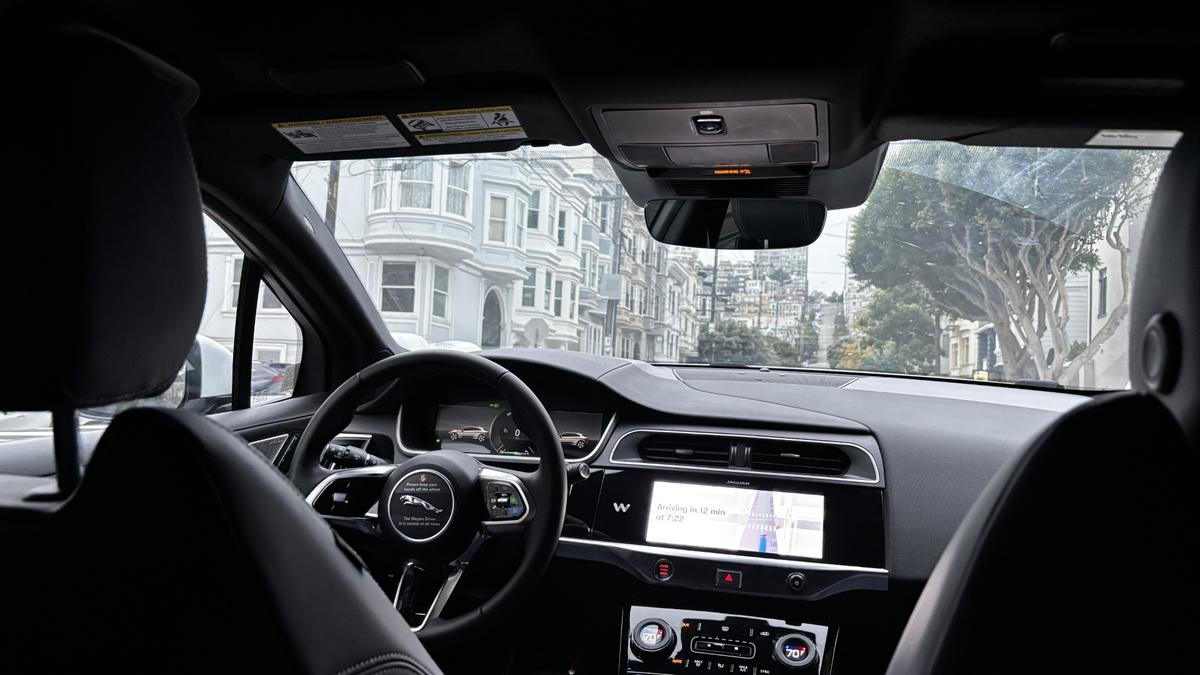
On October 27, 2025, a car ran over a cat in San Francisco. Oceans away, I filed a report on the tragic killing of nine-year-old KitKat. Why did news about the death of a cat in California make international headlines? That’s because KitKat was run over by a self-driving Waymo car, owned by Google-parent Alphabet. The company runs a fleet of self-driving electric taxis that are gradually being deployed across cities in the U.S.While local residents slammed Waymo’s safety standards and erected a monument for KitKat, supporters of self-driving cars pointed out that thousands of animals are run over by human-driven cars every year. Robotaxis, on the other hand, are designed to become safer with every iteration, they claimed.Almost a year later, I booked a Waymo ride in San Francisco, from my hotel to a nearby metro station — when the roads were empty. And here’s what I discovered. Reviewing a self-driving Waymo Robotaxi in San Francisco What a ride in a Waymo looks like from the backseat | Video Credit: Sahana Venugopal Cost and DesignHailing a robotaxi is not too different from ordering an Uber or even an Indian auto. Simply download the Waymo app, set up your profile and payment information, and choose your pick-up point and destination. Riders can decide if they want a car instantly, or if they want to schedule it for later. Waymo ride costs are relatively higher than human-operated taxis. At a Glance Waiting Time: Under 2 minutes Ride distance: 3 kilometres Ride duration: 14 minutes Cost: $23.55 The Waymo app, while slow to load, was easy and intuitive to use. Apart from arranging rides, it allows users to unlock their self-driving car and start their ride. Users can adjust interior settings or seek customer support via the app, as well as request fewer announcements and shorter walking times to their pick-up point.The payment process was seamless in spite of using an Indian credit card, and I quickly received an e-receipt. Additionally, Waymo gifted me some credit for my next ride.InteriorsThe Waymo vehicle that pulled up to the curb to take me to my destination was a Jaguar, which was a pleasant surprise. The dark interiors were pristine, comfortable, and scent-free. I had enough space to sit in the back with a large suitcase resting next to me. There was a skylight above, outside of which was mounted the Waymo’s spinning sensor.There were two main screens within the car: a longer one at the front and a wider one for those sitting at the back. The screens show your journey status, traffic navigation visuals, estimated arrival times, safety announcements, and media settings. After the greetings and safety briefing, the system played soothing, ambient music throughout my ride. Those taking longer rides can sync their Spotify and YouTube lists in order to listen to their preferred media. The Waymo touchscreen controls for passengers in the backseat | Photo Credit: Sahana Venugopal The car’s default internal temperature was warm since it was a chilly morning, but riders can adjust this to suit their needs.The Waymo’s steering wheel moves on its own as the car makes its way along its route, giving you the sense of being chauffeured by an invisible person. There are also brake and accelerator pedals, but these do not visibly move during the journey. Unlike the sleek, minimalistic Tesla Cybercab, the Waymo does retain many of the driving and media buttons in the front seat.SafetyNeedless to say, this should form the heart of any self-driving taxi experience.Remembering poor KitKat, and having seen multiple videos of Waymo cars running red lights or driving into restricted emergency zones, I was naturally on edge as I booked my car and waited for about two minutes. Though I had entered a preferred pick-up point right outside my hotel, Waymo altered the location and directed me to walk towards the new pick-up point across the road. Why the change? Because my original pick-up point put the car right on a tram line.Once the Waymo car arrived, I was prompted to unlock it through my phone app. After this, the handles popped out and I was able to open the door. Such a mechanism prevents strangers from taking over or misusing the ride. Once inside and buckled up, a passenger can start the ride via the car’s touchscreen or the app. (The Waymo car is programmed to wait for five minutes before leaving, if the rider does not show up.)As the Waymo began to gently move, a friendly safety message reminded me to buckle up at all times. I was informed that the cabin could be monitored for safety and security purposes when needed, but that I had the privacy to sing my heart out, if I was so inclined. There were blinking recording panels on the ceiling of the car, both at the front and back.The ride was on the slower side, but smoothly operated for the most part. The Waymo handled steep, near-vertical roads with confident ease, even when it had to brake on the slopes. There were no rollbacks in these instances. The car also unfailingly braked at every stop sign and complied with all the traffic signals and speed limits, despite the roads being empty at the time. Turnings were fluid and predictable.The screen tracked the car’s path, as well as other cars, objects, people, and obstructions. Unexpected adjustments were made with caution, and I felt as though I were being chauffeured by a skilled and patient human driver. There were some bumps, though this was largely due to the terrain.Once at my destination, the car took a couple of extra minutes to find a safe space to pull over, because the sides of the roads were lined with parked cars. In order to exit, riders are directed to pull on the door handle twice. They are given sufficient time to exit the car and collect their things.My ride, which was a little over 3 kilometres long, took 14 minutes to complete and cost me $23.55. Waymo informed me that I had saved 486 grams of Co2 by riding with them. A Waymo robotaxi A Waymo robotaxi driving away | Video Credit: The Hindu ConclusionThough U.S. regulators and San Francisco locals are still divided on autonomous driving technology, a short Waymo ride opened my eyes to the heavy mental load that a robotaxi removes. One has no need to worry about swapped license plate numbers, aggressive or inebriated drivers, sudden fee and route changes, or unfair/discriminatory ride cancellations. Instead of faking a loud safety call to one’s family during a late night or early morning drive, riders can sit back and truly relax within the comfortable robotaxi cabin.There are still flaws to be addressed, of course. Users have flagged concerns about miscreants potentially blocking cars, while the NHTSA regulator warned about self-driving cars barging into restricted zones and obstructing first responders. It remains to be seen how Waymo handles the safety issues that arise with longer drives, after its coverage area grows to encompass suburban and rural roadways across America.But ultimately, Waymo is a game changer for short, inner-city rides where accessibility and women’s safety are priorities.So, if you find yourself in a city where Waymo is live, take the plunge and experience how an ordinary taxi ride becomes the serene highlight of your day.This is an independent, non-sponsored review of the Waymo self-driving taxi.
Waymo Self-Driving Taxi Review | Making peace with autonomous driving technology
Full Article
Original Source
Read the full article at Thehindu →KhanList aggregates and links to publicly available news content. We do not host full articles from third-party sources. Always verify important information with original sources.