
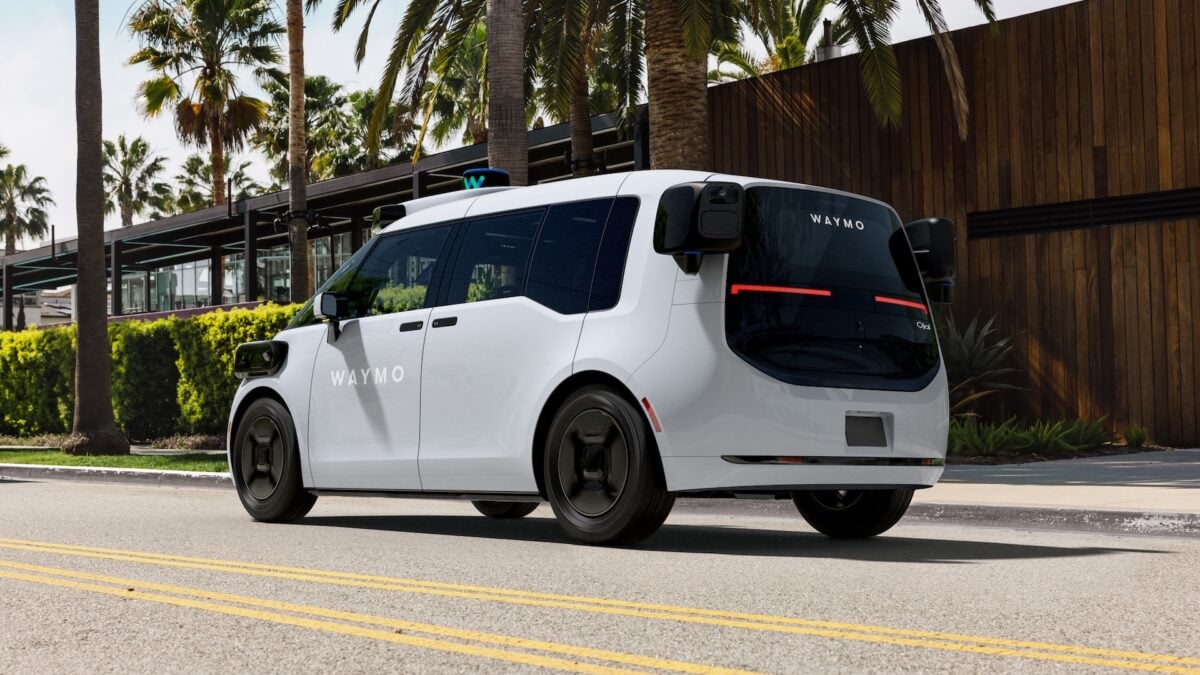
Get ready to see a lot more driverless Waymos on the road. Semafor is reporting that Waymo plans to use some of its newly secured funding to rapidly expand its robotaxi fleet over the next 14 months, citing people familiar with the matter. The Alphabet-owned company reportedly wants to grow its fleet fivefold, from roughly 4,000 vehicles today to 20,000 by the end of 2027. By the end of this year alone, Waymo aims to have 8,000 vehicles, doubling its fleet in less than three months. The news comes less than two weeks after Waymo announced that it had secured a $5 billion loan, marking its first debt financing and what the company called an “important step in our evolution into a scaling commercial enterprise.” Waymo also raised $16 billion from investors earlier this year. The company said the new financing would help accelerate the expansion of its driverless ride-hailing service across the United States and around the globe. Waymo currently operates in 15 U.S. cities, including Atlanta, Los Angeles, Miami, and the San Francisco Bay Area. Just last week, the company opened its service to everyone in San Antonio, San Diego, and Tampa. Waymo has announced plans to expand to London and Tokyo, and on Tuesday, it revealed that it’s also headed to Madrid, where it hopes to begin offering rides in 2027. A major part of Waymo’s expansion plans involves importing thousands of Chinese-made electric vehicles. The New York Post reported Monday, citing data from research firm MoffettNathanson, that Waymo is on pace to import roughly 5,100 Ojai vehicles by the end of this year. The Ojai is Waymo’s next-generation robotaxi, built on an electric vehicle supplied by Zeekr, a Chinese automaker owned by Geely. It runs on Waymo’s sixth-generation autonomous driving system, which the company says uses fewer, less expensive components and is designed to handle a wider range of driving conditions. The new vehicles mark a major shift for Waymo, whose fleet has largely consisted of Jaguar I-Pace EVs running on its fifth-generation self-driving system. Jaguar discontinued the I-Pace in 2024, and Waymo received its final delivery of the vehicles last year. But importing Chinese EVs into the U.S. is not simple task. Steep tariffs and national security restrictions have largely kept Chinese-made vehicles out of the American market. Chinese EVs face a 100% tariff on top of other import duties, while the Commerce Department has placed restrictions on Chinese and Russian-connected car tech. Waymo has found a way to navigate those restrictions. The company imports versions of the Zeekr vehicles without the Chinese-made autonomous driving systems or connected software covered by the rules. It then installs its own U.S.-developed self-driving technology at a facility in Mesa, Arizona. And despite the steep tariffs and growing scrutiny from U.S. lawmakers, the numbers appear to be working for Waymo to keep importing them. Waymo did not immediately respond to Gizmodo’s request for comment.
Waymo Reportedly Plans to Put 20,000 Robotaxis on the Road by the End of 2027
Full Article
Original Source
Read the full article at Gizmodo →KhanList aggregates and links to publicly available news content. We do not host full articles from third-party sources. Always verify important information with original sources.