
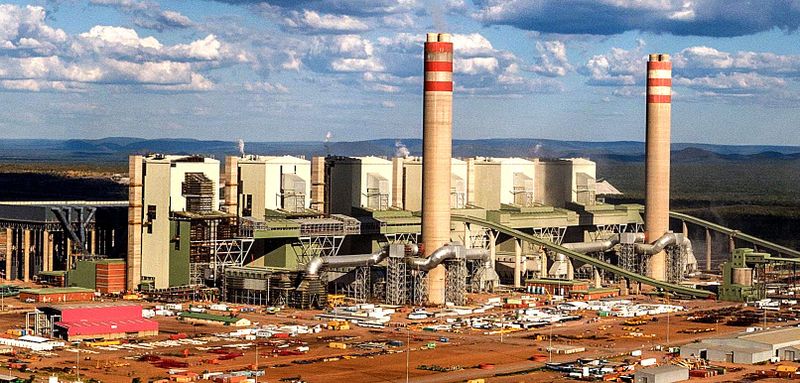
On 12 November Chris Yelland hosted a webinar called New Nuclear Power in South Africa – business case, technical need, safety, risk, flexibility and decarbonisation considerations. I presented the opening talk, but was only given 15 minutes – insufficient time to cover all I wanted to say. Herewith what I would have liked to say in full. Two things surprised me about the debate: first, the three government representatives provided detailed presentations justifying why new nuclear generation capacity will be required by 2040, but never once referred to the costs; and second, Grove Steyn, one of South Africa’s most experienced energy modellers, made the unchallenged claim that the inclusion of nuclear in IRP 2025 was not justified by the modelling that was done to generate the core logic of IRP 2025. In other words, we do not know why we will need 5,200MW of nuclear capacity by 2040 and have no idea what it will cost. This is not evidence-based policymaking and every potential investor knows this. But let’s put this all into a global context. It is now widely accepted that the world is in fact going through an energy transition, now accelerated by the Iran war. As the current COP co-president, Turkey is emphasising the need to accelerate electrification of everything. Unsurprisingly, as renewables expand it becomes easier to power everything with electricity on condition that the grids are expanded to connect everything up. Since the start of the Iran war, 25 countries have announced accelerated electrification plans. Electricity currently meets 23% of final energy demand, trending to 29% by 2035 – below the 35% target. Hence Turkey’s slogan 35-by-35 – 35% electrified by 2035. For this, about $1-trillion per annum is required for grid expansion and storage. This is how countries want to reduce dependence on fossil fuel imports, including South Africa. By 2025 renewable energy accounted for 33.8% of total energy generation. No less than 75% of all new demand for energy in 2025 was met by solar power. By contrast, fossil fuels continued their global decline, this time by -0.2% in 2025 compared with 2024. Nuclear generation continued its decade-long gradual increase of 1% per annum. However, its share of total generation declined to 8.9% in 2025 because total generation is growing faster than 1% per annum. That said, by 2025 75 nuclear reactors were being built in 15 countries. Those who oppose nuclear like to use the internationally recognised “levelised cost of energy” (LCOE) metric to show how expensive nuclear is compared with the alternatives. Hence it can be shown that nuclear power cost $175 to $255 per megawatt-hour in 2025, compared with $40 to $98 per megawatt-hour for utility-scale solar and $37 to $99 per megawatt-hour for onshore wind. However, this ignores the wider system dynamics, in particular the costs of making sure that a given national electricity grid is reconfigured to accommodate new generation technologies. For example, in South Africa, the Transmission Development Plan is projected to cost R400-billion, primarily to prepare for more than 50GW of renewables. A fleet of coastal nuclear plants would also require upgrades to the grid. South Africa’s swing from too little electricity to too much is a good example of the challenge. All South Africans know that load shedding has ended (except for those connected to municipal grids where load shedding can still apply). What most do not know is that whereas load shedding was caused by too little supply to meet demand, now South Africa faces the challenge of too much supply and not enough demand in the midday hours. The National Transmission Company of South Africa’s System Operator has no option but to switch off utility-scale solar plants (curtailment) to balance the grid during these times. However, the IPPs must still get paid. This has cost the transmission company R2.5-billion in 2026 – a cost for electricity that is not generated and therefore cannot be sold. The reason for the problem – which will get worse – is that we have an inflexible system because coal-fired and nuclear power cannot be ramped up and down to meet the rise and fall of demand. Part of the solution would be large batteries to store electricity in the midday hours and reuse it at peak times – this would help make our system more flexible. What most South Africans also do not know is that the total demand for electricity in 2025 is the same as it was in 2005 – about 225 terawatt-hours (TWh). The difference is that Eskom supplied nearly 100% of this electricity in 2005, and now it is down to 80% as non-Eskom generators have come online. This is what created the operating space for Eskom to both fix up our fleet of old power stations and to run them at low levels of efficiency (to limit the threat of tripping). Price rises of 860% between 2008 and 2025 compared with CPI of 125% for the same period also suppressed demand and improved efficiencies – it took 250MWh to produce R1-billion worth of value in 2008, compared with 160MWh for the same output in 2025. Will we need it?Looking forward, demand is projected by a number of models to increase from the current 225TWh per annum to 425TWh by 2040. If we do build 5,200MW of nuclear by then, it will generate 36TWh if the plant runs on average at 80% capacity. This would be below 10% of expected demand by 2040. This assumes that the models are right – to date, all models have been wrong, with demand in 2025 running at 14% below 2010 levels. But assuming demand does get to 425TWh, will we need 5,200MW of inflexible capacity by 2040? And will the cost be justifiable if there are alternatives?By 2025 renewable energy accounted for 33.8% of total energy generation. No less than 75% of all new demand for energy in 2025 was met by solar power. (Photo: iStock) According to the IRP 2025, 15GW of coal-fired power must close by the mid-2030s. To compensate, massive amounts of renewable energy must be built by then, supported by batteries and (hopefully) some gas (for back-up purposes only). In other words, by 2040 we will have built a highly flexible grid capable of meeting our energy needs. Will we really need 5,200MW of inflexible generation capacity by then? Let the technical specialists answer that, but as Grove Steyn pointed out, the models do not substantiate the claim that we will need 5,200MW of nuclear by 2040. The modelling work done by the collaboration between the National Planning Commission, the Presidential Climate Commission, the Development Bank of Southern Africa and SA-TIED substantiates Steyn’s claim. For purely affordability reasons, none of the three scenarios assessed by this modelling work (including a scenario similar to IRP 2025) generated a need for additional nuclear power.What really matters is the real cost of nuclear – an inconvenient truth that pro-nuclear proponents prefer to just ignore. Two studies are worth citing. The US Department of Energy analysed 75 reactors built between 1966 and 1977. They found that average real overnight costs increased by 207% compared with the original budget. In 2020, an MIT team published a study in Joule of the cost of 107 reactors over five decades. They discovered that contrary to almost all other new technologies across most sectors, the learning curves in the nuclear sector are negative, i.e. the costs over time doubled rather than reduced. Significantly for South Africa, 50% of the cost overruns could be attributed to soft costs – design faults, rectifying construction mistakes, poor project management – all the problems that ballooned the costs of the Medupi and Kusile power stations. The Kusile coal-fired power station in Mpumalanga. (Photo: Waldo Swiegers / Bloomberg via Getty Images) The financial record of some of the biggest nuclear projects speaks for itself: the Vogtle plant in Georgia (US) was supposed to cost $15-billion, but in the end cost $34-billion; the costs of the VC Summer plant in South Carolina grew from $1.4-billion to $9-billion before it was abandoned (contributing to the bankruptcy of Westinghouse); Hinkley Point in the UK went from £2-billion per reactor to £16-billion per reactor (there are two); the Flamanville reactor in France escalated from $3.5-billion to $20 billion. The IRP 2025 estimates of the overnight cost of building a 5,200MW nuclear plant in South Africa were between $19.4-billion and $22.3-billion (even though the commissioned expert background report put the estimate at closer to $30-billion). Some government officials have even referred to $15-billion. However, the global median of the cost per MW for countries without a nuclear construction programme would bring in a 5,200MW nuclear plant at closer to $60-billion. Like the projects referred to above, we can only assume these budget estimates ranging from $15-billion to $60-billion will be wrong given that we are talking about a 10-year build programme (if we are lucky) that will dwarf all other energy investments during the 2030s. Furthermore, given that we don’t build nuclear plants, it will be built by a foreign company which will be paid in US dollars or yuan, thus reinforcing the outward flow of capital. The same amount spent on smaller projects at lower cost per MWh undertaken by South African companies would recirculate capital within the South African economy and therefore drive industrialisation and economic growth. New hypeWe have no idea whether the 75 reactors under construction will be delivered within budget. Based on the above track record, this seems unlikely. But who knows, maybe a positive learning curve might finally be emerging. But the alarming cost overruns that characterise conventional large-scale nuclear plants has triggered a new hype: small modular reactors (SMRs). This is the dream solution for the energy-hungry server farms and data centres. But the record here is no better and even the tech companies are having second thoughts. Although there are different types, all of the following have shut down: 26 small Magnox reactors in the UK; three small reactors in Canada; six in France and four in Japan. China’s advanced HTGR reactor cost three times more than the original budget, and so China cancelled plans to build more. Argentina’s Carem reactor (which had been planned for decades) cost $750-million for a tiny 32MW reactor which does in fact work out cheaper than conventional nuclear ($29.30/MWh at a capacity factor of 80%). The most depressing SMR story is the recent failure of NuScale’s Idaho project to build a 426MW plant originally estimated in 2016 to cost $55/MWh. This went up to $58/MWh in 2020, and eventually to $89/MWh (similar to the conventional Vogtle plant). This despite a $4-billion subsidy from the government. After spending rose from $5.3-billion to $9.3-billion, the project was eventually abandoned in 2023. Proponents of SMRs argue that SMRs could be effective load-followers in renewable energy-based systems (i.e. play a back-up role). This, however, raises the costs per MWh. Take NuScale, for example. The actual cost of $89/MWh was based on the assumption that the plant would operate at a 90% capacity factor from day one (a feat no nuclear plant has achieved). If this dropped to 75%, the cost would be $141/MWh. Many studies show that nuclear projects are particularly sensitive to the cost of capital. The authoritative annual LCOE report by Lazard reveals this. They show that if the cost of debt and equity rises, the costs of nuclear rise faster than the costs of solar PV. For example, assume the cost of equity goes up from 6% to 12% and the cost of debt goes up from 5% to 8%, then the cost of nuclear would go up by 65% and solar PV by 30%.SMR proponents are placing their bets on China’s new ACP 100. The original 2011 estimate was $787-million for two units, and the final budget in 2021 (which is when construction began) was $820-million for only one 125MW reactor. It has not been commissioned and so we have no data on the actual costs. The test will be whether they build another one. In short, it is easy for policymakers to be adamant that South Africa needs a nuclear build programme. But surely we need to ask the two most basic questions: will we need 5,200MW of nuclear by 2040? Can we take the risk that the actual cost will be double the estimated overnight cost? To answer the first question, none of the energy models used by various stakeholders (including the IRP 2025) confirms that 5,200MW of nuclear power will be required by 2040 given the cost of alternatives and the state of the grid by then. To answer the second question, given the global track record of nuclear (i.e. negative learning rates), and given our own experience of building the two most recent mega-generation projects (Medupi and Kusile power stations) which were delivered very late and well over budget, the risk of a nuclear megaproject in a small economy like ours in the 2030s is unacceptably high. Even if the budgeted cost of 5,200MW was as low as $40-billion by the start of construction in 2030, this would be an investment of R800-billion in the 2030s (at a R20-to-the-dollar exchange rate and ignoring all real-time escalation costs that will undoubtedly kick in). To put this in perspective, this is double the cost of the Transmission Development Plan, and equal to 26% of the national budget by 2030 (assuming it grows to R3-trillion). Who will fund such a risk? At what cost? And who will insure a South Africa nuke? And how much will this insurance policy cost us? In short, if we want electricity costs to remain low and affordable, we should avoid the nuclear option. DMMark Swilling, Centre for Sustainability Transitions, Stellenbosch University.
WATT PRICE REACTORS OP-ED: To keep electricity costs low, avoid the nuclear option
Full Article
Original Source
Read the full article at Dailymaverick →KhanList aggregates and links to publicly available news content. We do not host full articles from third-party sources. Always verify important information with original sources.