
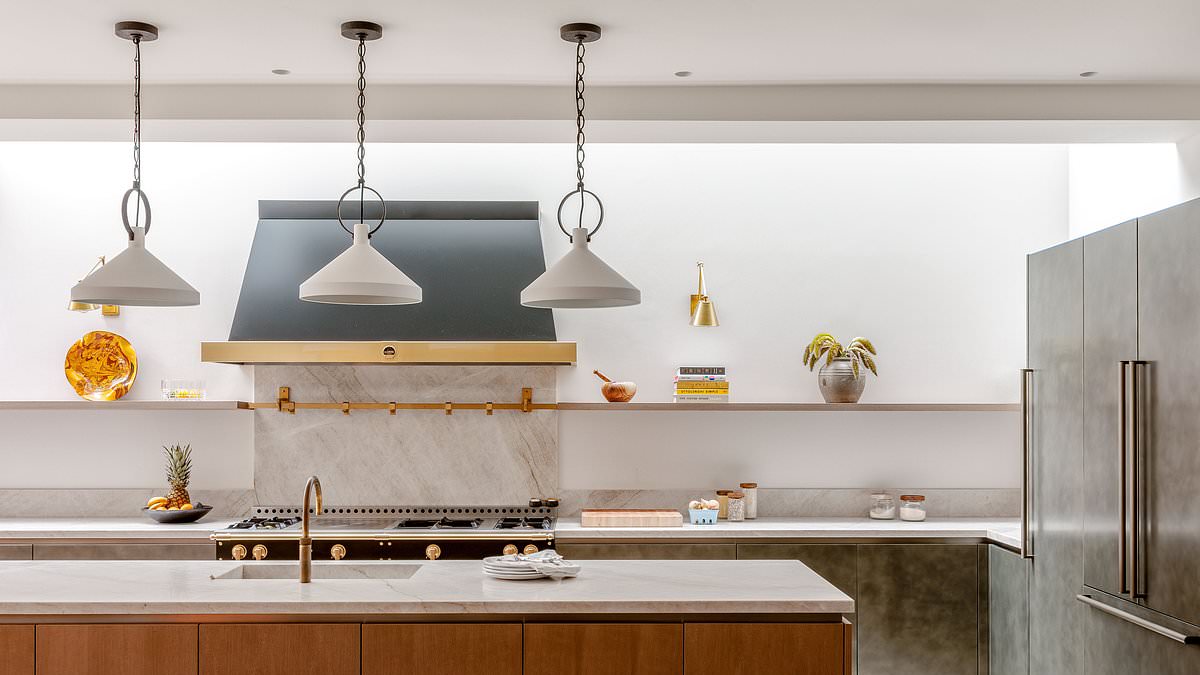
There was a time when the dream kitchen was easy to identify: sleek handleless cabinetry, cool grey tones, a huge marble island and not a kettle, toaster or coffee machine in sight. But as our kitchens have become increasingly central to how we live, entertain and spend time at home, designers are beginning to question whether these ultra-polished spaces are actually working for us.The message from the experts is clear: the kitchen is becoming less about achieving a flawless, showroom-ready look and more about creating a space that feels personal, practical and lived-in. Here are the once-coveted features designers think we’re ready to leave behind – and what to do instead.The oversized waterfall islandOnce the ultimate luxury-kitchen status symbol, the waterfall worktop – where stone cascades down the sides of an island to create a continuous, seamless effect – has had a very good run. But according to Saskia Blyth, Founder and Creative Director of Blyth-Collinson Interiors, its reign could finally be coming to an end.‘Waterfall worktops have had a very strong run, but I think we’re starting to see their limitations,’ she says. ‘The look can feel quite heavy and overly ‘designed’, particularly when the same stone is carried dramatically down both sides of an island.’ Kitchens are becoming ‘softer, more architectural and less formulaic’There’s a practical consideration, too. Carrying an expensive stone across multiple surfaces uses a significant amount of material without necessarily adding any functionality.Blyth is instead seeing kitchens become ‘softer, more architectural and less formulaic’, with beautiful stone used more selectively. A simple overhang, curved edge or contrasting material can create a more considered finish without making the island feel like one enormous slab of stone.The all-grey kitchenCool grey kitchens have been a fixture of contemporary interiors for years, but Ntola Obazee, Creative Director at Kutchenhaus, says the familiar combination of cool grey cabinetry, handleless doors and extreme minimalism is losing some of its appeal.The issue isn’t that pared-back design has suddenly become undesirable. Rather, it’s that a kitchen can become so restrained that it loses any sense of the people who live there.‘Kitchens need to work hard in a real home and, regardless of style, should still reflect the personality of the people who live there,’ says Obazee.Her alternative is to introduce warmth through natural textures, more interesting hardware and colours that give the room a sense of individuality. The result is still elegant, but feels less like a template that could belong to anyone.The completely handleless kitchenFor a while, the sleekest kitchen was the one where you couldn’t see any handles at all. Flat-fronted cabinetry, uninterrupted surfaces and push-to-open doors became synonymous with contemporary luxury.But Laura Hammett, Creative Director of Laura Hammett Living, says the ‘ultra-minimal, handleless kitchen has had its moment’, with homeowners now looking for more character, texture and contrast.That doesn’t mean traditional handles are suddenly back in fashion. Tom Howley, Creative Design Director at Tom Howley, says hardware is becoming ‘far more integrated and architectural’, with edge-pull handles in finishes such as burnished brass and polished nickel offering a more refined alternative. Hardware is becoming ‘far more integrated and architectural’There’s a similar evolution happening with cabinetry. Al Bruce, kitchen expert and Founder of Olive & Barr, recommends the ‘skinny Shaker’ style, which retains the timeless qualities of traditional Shaker cabinetry but with a slimmer, more contemporary profile.The result is a kitchen with detail and personality, without relying on either ornate hardware or completely uninterrupted expanses of cabinetry.The showroom-perfect kitchenPerhaps the biggest kitchen trend designers want to see disappear isn’t a particular colour or material at all – it’s the idea that every element needs to match.‘What’s out is anything that feels too coordinated or overly ‘showroom’,’ says Hammett. Instead, she wants to see kitchens that feel ‘collected rather than prescribed’, with decorative lighting, artwork, antiques and unexpected details sitting alongside the practical elements.That means resisting the temptation to buy every element as part of the same carefully coordinated scheme. Mixing materials and finishes, or introducing furniture and objects with a little history and personality, can make a kitchen feel more like part of the home.It also marks a departure from the so-called ‘invisible kitchen’ – the ultra-minimal space where appliances, storage and even the very purpose of the room are concealed behind vast expanses of cabinetry.Obazee says people are increasingly questioning spaces that ‘prioritise aesthetics over practicality’, instead looking for kitchens that work just as well in everyday life as they do in photographs.The cluttered worktopEven the most beautiful kitchen can quickly lose its polished appearance when the worktops are covered in appliances. And with kettles, SodaStreams, coffee machines and an ever-growing collection of design-led gadgets becoming kitchen staples, Blyth says this is one habit she’s seeing disappear.‘Kitchen worktops are becoming increasingly precious, particularly in London where space is often at a premium,’ she says. ‘One trend I’m seeing fall out of favour is the collection of bulky appliances left permanently on the countertop.’Even when beautifully designed, she says, they create visual clutter and eat into valuable preparation space. Kitchen worktops are becoming increasingly preciousHer solution is to incorporate as much functionality as possible into the kitchen itself. Taps offering boiling, chilled and sparkling water, for example, can replace several separate countertop appliances while freeing up space for actual food preparation.It’s a small change, but one that reflects the wider move towards kitchens designed around how they’re used rather than how much equipment can be displayed.Poorly planned pendant lightsFew kitchen looks have become more ubiquitous than a row of statement pendant lights hanging above the island. But according to Massimo Buster Minale, Founder and Creative Director of Buster + Punch, the issue isn’t the pendant itself – it’s when the lighting is chosen for aesthetics without considering how it will actually function.‘One of the most common kitchen mistakes people make is poorly planned pendant lighting over islands,’ he says. Pendants are often hung too low, spaced unevenly or chosen at the wrong scale, which can disrupt both sightlines and functionality.Even the materials need consideration. Minale warns that clear glass pendants paired with glossy worktops can create distracting reflections. Get the height and scale of your pendant lights rightHis advice is to get the height and scale right and install dimmers from the outset, allowing the lighting to shift from bright and functional to softer and more atmospheric.So you don’t necessarily need to ditch the pendant lights – just make sure they’re working for the room rather than simply looking good in a photograph.The outdated kitchen triangleFor decades, the golden rule of kitchen design was the ‘kitchen triangle’: positioning the hob, sink and fridge within easy reach of one another to create an efficient route between the three.But according to Al Bruce, it’s a formula that no longer necessarily reflects the way we live.‘The kitchen triangle method is an outdated one,’ he says. ‘The way we live, cook and move around our kitchen has changed, a clear reflection of the rise of open-plan living.’ We‘re no longer sticking to a rigid triangle layoutInstead of arranging the room around three fixed points, Bruce recommends zoning it according to how you actually use it, creating dedicated areas for cooking, prepping, storing and socialising.The island, for example, has become ‘the social hub of the home’, while a well-organised larder can hold everyday essentials and a designated prep area can make food preparation more efficient.‘Rather than sticking to a rigid triangle layout, consider how your kitchen design fits into your lifestyle and work from there,’ he says.The safe, resale-friendly kitchenFor years, designing a kitchen with the next buyer in mind has been considered the sensible approach. Neutral cabinetry, universally appealing finishes and a reluctance to commit to anything too personal were supposed to protect your investment.Tom Howley, however, says homeowners are becoming more confident about making choices for themselves rather than an imagined future owner.‘For a long time, there’s been a tendency to choose neutral cabinetry and universally appealing finishes with the next buyer in mind,’ he says. ‘Instead, people are designing for the way they actually want to live – and that means embracing more personality, colour and character.’ People are embracing more personality, colour and character’That is translating into greater confidence around colour, with muted pinks, warm yellows and deeper shades such as aubergine beginning to appear in luxury kitchens.These aren’t necessarily bright, high-saturation colours. Instead, Howley is seeing more nuanced, layered shades that can make a kitchen feel considered and individual while still sitting comfortably within a luxury interior.For Laura Hammett, this more personal approach is part of a wider emphasis on longevity. Her advice is to choose materials, colours and craftsmanship that will feel ‘just as beautiful in ten or twenty years as they do today’.In other words, the kitchen of the future might not be the one that follows the safest formula – but the one that feels like it was designed specifically for the people who live there.
Waterfall countertops and 7 other 'trendy' kitchen features designers wish would go away - and what to do instead
Full Article
Original Source
Read the full article at Dailymail →KhanList aggregates and links to publicly available news content. We do not host full articles from third-party sources. Always verify important information with original sources.