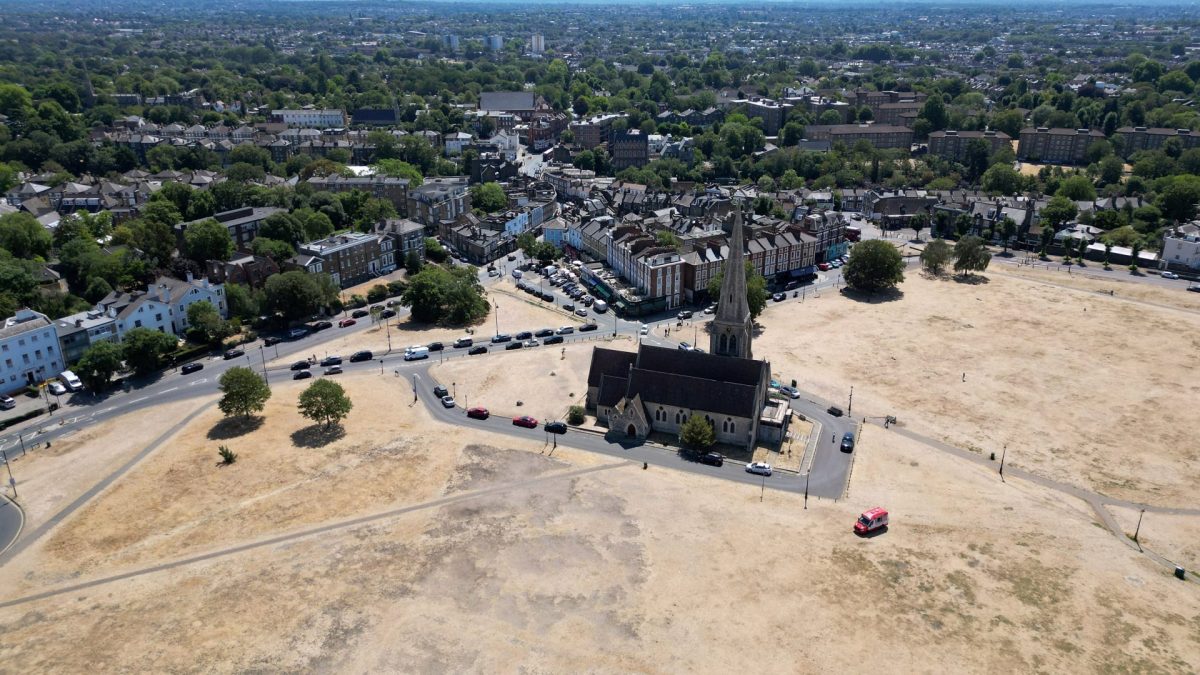
Continued heatwaves and droughts in the UK could lead to water rationing for the public, danger to critical national infrastructure and a risk of civil disorder, the Government’s emergency planning documents say. A reasonable worst-case scenario based on three consecutive years of extreme dry weather is set out in the UK’s National Risk Register, which was updated earlier this month. Under the scenario, large parts of southern and eastern England would experience severe drought conditions, while neighbouring areas of the Midlands and south west would also be affected. The document says “there would need to be public water supply restrictions”. Shorts Restrictions could range from hosepipe bans – which are already in place in some areas for the current drought in England and Wales – to rationing, when supplies to people’s homes and businesses would be turned off or limited at certain times of the day under emergency drought orders. The risk register says: “In this scenario, there would be significant losses to the UK economy, with serious impacts on industry, agriculture and businesses. “Severe environmental damage due to drought conditions will occur, along with an increased fire risk due to the prolonged dry conditions. “This would be combined with a reduced ability to fight fires due to water scarcity. Some of the critical national infrastructure (including energy, transport, hospitals, emergency services and telecommunications) will be impacted by water restrictions or loss of supply. “Data centres, for example, are highly electricity‑intensive and water‑dependent.” Britain could face third summer of drought Half of England currently has official drought status and it is the second year running that drought has been declared in the country – meaning a third consecutive year of extreme dry weather is not an unlikely scenario. Some areas have had more than a month with no rainfall, while Britain is now on its fourth heatwave of the summer, leading to wildfires in Suffolk and the Cairngorms. The Suffolk wildfire in Dunwich Heath is just three miles away from Sizewell B, the nuclear power station run by EDF Energy – although the company said on Thursday it is not on “high alert” and has emergency procedures in place to cope with a blaze even on site. An EDF spokesperson said: “The fire at Dunwich Heath is not currently affecting operations at Sizewell B power station but we are continuing to monitor the situation – we are not on high alert.” Critical national infrastructure like power stations, transport hubs and hospitals are of concern in a worst-case drought scenario because of the potential knock-on effects, such as loss of power or provision of essential services such as health, food, energy, communications, water, sewage and transport. Some “common consequences” of a severe drought scenario could include “human and animal health impacts, which may include physical casualties, mental health casualties and fatalities – saving lives and alleviating suffering is a top strategic priority”. There could also be “potential changes in public behaviour including the potential for localised civil disorder”. Death toll rising during heatwaves This year’s heatwaves have already led to above-average deaths. Figures published by the UK Health Security Agency on Thursday showed there were 2,877 heat-associated deaths during two earlier heatwaves in May and June, almost double the number reported annually for 2025. The Royal College of Nursing (RCN) warned the figures revealed the devastating consequences of climate change and that their staff were having to cope with working in indoor temperatures of above 30°C. Patricia Marquis, executive director of RCN England, said: “Climate change is a public health emergency that is getting worse in front of our eyes. It requires urgent action from governments, including to improve NHS and care facilities so that they are safe to work and be cared for.” A separate document drawn up by the Environment Agency last year, and updated this April, has set out different scenarios for water use over the coming decades. It warns that England could face a water shortfall of up to five billion litres a day by 2055 if no action is taken to mitigate the effects of drought, climate change and population growth. The agency’s National Framework for Water Resources says the projected daily shortfall is almost enough water to fill Wembley Stadium 4.5 times every day. The report says: “Apart from the threat to water supply to homes, growing pressure could restrict economic growth, damage resilience for energy supplies, limit food production and harm the environment. “By 2055, current predictions indicate there will be a further eight million people living in England, requiring housing and new towns. “Forecasts suggest that climate change will increase temperatures, driving demand for water on hotter days both for individual use but also for purposes like irrigation and cooling of computer data centres. “Climate change is also likely to change the distribution and timing of rainfall, with warmer, wetter winters and hotter, drier summers. “Together, the impact of all these pressures on water resources is unprecedented. Never have so many people and so many sectors critical to the functioning of society placed such a demand on our water resources, at a time when nature and the environment are reliant on that water to cope with a changing climate.” A government spokesperson said: “Critical National Infrastructure providers have well rehearsed plans in place to deal with different types of extreme weather including recent heatwaves. “More broadly, we’re working with water companies to ensure water supplies are fit for the future, investing in nine new reservoirs by 2050. These will provide around an additional 700 million litres of water a day across the country.”
Water would be ‘turned off’ in homes in worst-case drought scenario
Full Article
Original Source
Read the full article at Inews →KhanList aggregates and links to publicly available news content. We do not host full articles from third-party sources. Always verify important information with original sources.