
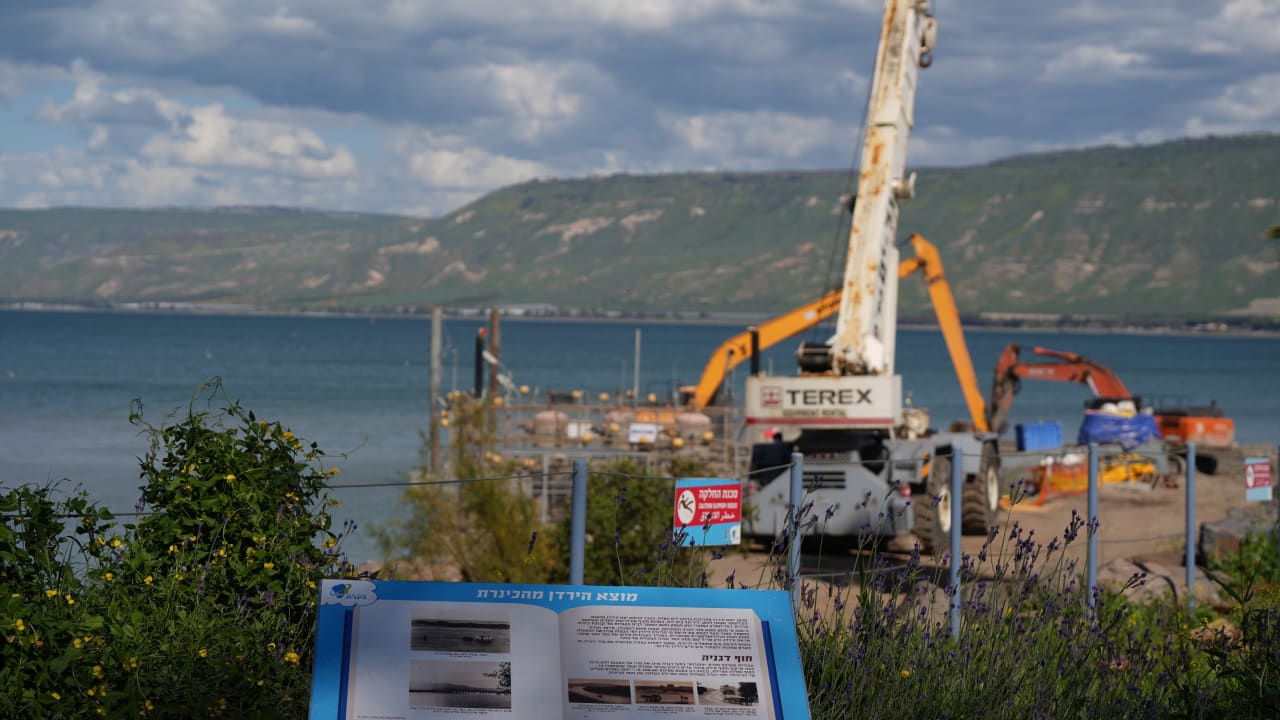
The warning came amid an unusual disruption to Israel’s national water network, after five of the country’s six desalination facilities shut down.Follow us on GoogleInfrastructure works along the shoreline of the Sea of Galilee as the Water Authority and the national water company Mekorot prepare to increase the flow of desalinated water pumped from desalination plants in Ashkelon and Rishon Lezion into the lake, northern Israel, February 27, 2026. (photo credit: Photo by Ayal Margolin/Flash90)AUGUST 31, 2026 18:53Updated: AUGUST 31, 2026 20:01The impact of a widespread malfunction at Israel’s desalination facilities reached central Israel on Monday, with residents of Givatayim warned that water supply disruptions could occur in the coming hours, including reduced water pressure and even outages in certain areas.A message sent to residents stated: “Following problems with the water supply in the national water network, disruptions to water supply may occur in the coming hours, including reduced pressure and water outages in certain areas. We ask the public to conserve water as much as possible and use water only for essential needs until normal operations resume.”The warning came amid an unusual disruption to Israel’s national water network, after five of the country’s six desalination facilities were forced to shut down. According to Water Authority Director-General Yehezkel Lifshitz, severe seawater turbidity that began over the weekend and moved from south to north has prevented the facilities from filtering water and operating normally.Five of six desalination facilities shut downThe Water Authority estimates that the turbidity is linked to stormy conditions in the eastern Mediterranean. An initial assessment also suggests that it may have been caused by a significant algae buildup drifting from the Nile region.A dedicated vessel was sent offshore to collect samples and examine the composition of the material causing the turbidity.Water discharging from a desalination plant into the Zalmon River and into the Sea of Galilee, March 4, 2026. (credit: MICHAEL GILADI/FLASH90)The effects of the malfunction were initially felt mainly in southern Israel and in the agricultural sector. Farmers in the Eshkol Regional Council were asked to immediately reduce their use of freshwater for agriculture and gardening, while the Ramat Negev Regional Council decided to temporarily halt agricultural water supplies and reduce irrigation in gardens and public areas.Meanwhile, Mekorot was instructed to increase the use of available production and drilling resources across the national water network in order to reduce the shortage created by the desalination shutdown.The Water Authority estimated that some of the facilities may return to operation in the coming hours as the sediment settles and seawater clarity improves.Gezer Regional Council imposes water restrictionsThe Gezer Regional Council instructed residents to immediately halt watering private gardens and agricultural areas on Monday after failures at Israel’s desalination facilities caused a nationwide disruption to the regular water supply.In a notice issued at 3:50 p.m. on Monday, the council stated: “Due to a nationwide disruption in the regular water supply, as a result of malfunctions at the national desalination facilities, residents of the council are asked to immediately close the taps and water systems designated for home gardens and agriculture.”Water associations were instructed to stop irrigating agricultural areas and public spaces to ensure enough water remained available for private use.“Reducing water use for gardening and agricultural needs is necessary in order to maintain continuity of household water supplies,” the notice said.At the time of the announcement, the council said that the only community within its jurisdiction experiencing a water outage was Karmi Yosef, but warned that additional communities could be affected by the disruption.“We ask all residents to act responsibly and conserve water as much as possible,” the council said.The council added that it would provide further updates as needed.Jerusalem, Rishon Lezion warned of possible water disruptionsResidents of Jerusalem and Rishon Lezion were also warned of possible water supply disruptions on Monday after malfunctions at Israel’s desalination facilities affected the national water network.The Hagihon water company, which serves Jerusalem, said that disruptions to desalination facility operations could lead to water outages and interruptions in the capital.“We are working with the relevant authorities to reduce disruptions and restore regular water supply as soon as possible,” the company said in a message to customers.Hagihon said customers affected by the malfunction would receive individual notifications and added that there was no need to stockpile water at this stage.“If supply disruptions occur in your area, we will update you regarding the locations of water distribution points and their operating hours,” the company said.The company also urged residents to follow updates on its website and through its customer service center.Meanwhile, residents of Rishon Lezion were warned of possible disruptions following a nationwide water supply issue involving Mekorot, Israel’s national water company, and in accordance with Water Authority instructions.The Maniv Rishon water corporation said that Mekorot and the Water Authority had issued a nationwide request for residents to conserve water and avoid nonessential uses, including filling pools, washing reservoirs and watering gardens.Maniv Rishon said it was prepared for such situations and had been working since the morning to maintain a continuous water supply as much as possible, in coordination with the Rishon Lezion Municipality, the Water Authority and Mekorot.Follow us on Google
Water restrictions imposed throughout Israel amid nationwide supply disruption
Full Article
Original Source
Read the full article at Jpost →KhanList aggregates and links to publicly available news content. We do not host full articles from third-party sources. Always verify important information with original sources.