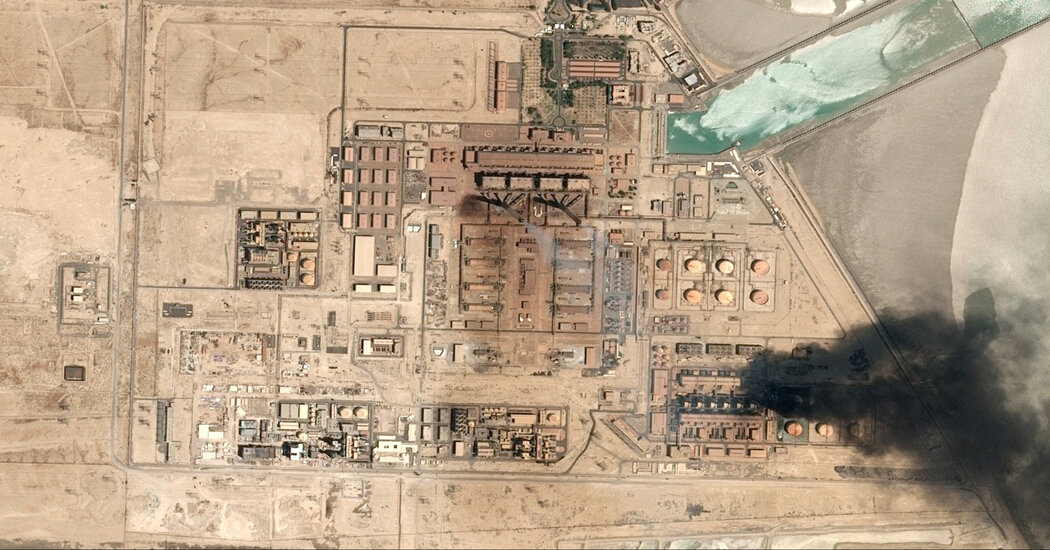
AdvertisementSKIP ADVERTISEMENTThe resurgence in hostilities between the United States and Iran has put desalination plants under renewed threat across the Persian Gulf region, where tens of millions of people rely on such facilities for drinking water.In recent days, Kuwait has accused Iran of striking energy and water plants, igniting fires that have forced officials to suspend operations at several facilities. Earlier in the war, officials in Bahrain and Iran said desalination plants in those countries had also come under fire.Infrastructure that civilians rely on for survival is not generally considered a legitimate military target, and striking it could be considered a war crime. But the attacks on water resources are especially concerning in the Gulf region: Most nations there lack widespread access to fresh water and rely heavily on hundreds of desalination plants, complex operations where repairs can be difficult and time-consuming.Desalination plants produce 90 percent of Kuwait’s drinking water, according to an analysis by the French Institute of International Relations. Oman (86 percent) and Saudi Arabia (70 percent) also rely heavily on the technology.Such plants have proliferated in the region as climate change has made droughts more frequent and severe, and as desalination technology has improved. The plants either evaporate and condense salt water or filter it through fine membranes.Iran does not lean as heavily on desalination plants as its neighbors, but has faced severe water shortages in recent years. Iran has accused U.S. strikes of disabling water infrastructure in locations including an island where officials say water access for 30 villages was affected. The Pentagon and Israel denied responsibility for those attacks.Iran and the United States have accused each other of targeting sensitive infrastructure during the latest exchanges of attacks, and Iran has said it would respond to any U.S. attacks on its own infrastructure by hitting similar targets in nearby countries that are allied with the United States.That has prompted calls from around the globe for vital infrastructure to be spared from attacks.“As in any conflict, the protection of civilians and civilian objects is critical,” said Stéphane Dujarric, a spokesman for the United Nations secretary-general, speaking about the conflict in a briefing on Monday. “Vital infrastructure on which civilians rely for survival, including hospitals and water supplies, must be spared.”Zane Irwin is an international reporter and a member of the 2026-27 Times Fellowship, a program for journalists early in their careers.AdvertisementSKIP ADVERTISEMENT
Water Plants Under Fire in the Gulf Are Crucial to Civilians
Full Article
Original Source
Read the full article at Nytimes →KhanList aggregates and links to publicly available news content. We do not host full articles from third-party sources. Always verify important information with original sources.