
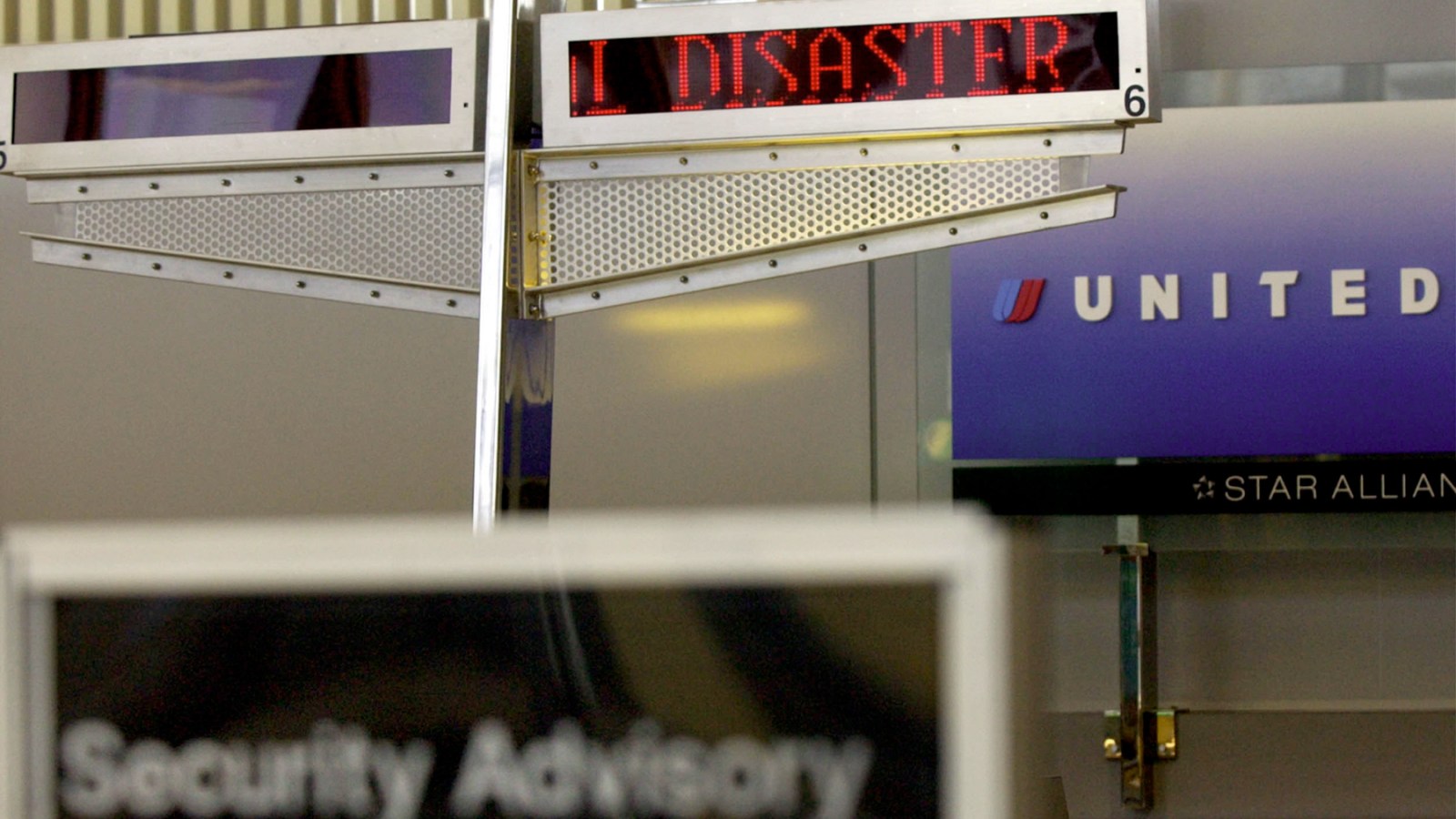
O n 9/11, I was living in Nahant, Massachusetts, a quaint and claustrophobic seaside village about six miles from Boston’s Logan International Airport. I had lived in big cities since I was 17, but now, recently married, I’d been persuaded to buy a home in Nahant, where the downtown highlights were limited to Captain’s Seaside pizzeria and Enzo’s Nahant Garage. It seemed like a good idea at the time. Sometimes I’d spend gray afternoons roaming the back roads of town, twice being mistaken for a burglar by the one local cop car. Every other day, I’d drive my decomposing Honda Accord to the YMCA in neighboring Lynn. I’d swim laps, take a sauna, and try to parse the sign in the showers: “Some bathing practices acceptable at home are not acceptable here.” Back home, I’d stare out the window and think about my choices. There were distractions. Every few minutes, I could look out over Broad Sound and see a speck of vibrating heat and motion leaving Logan, slowly resolving into a passenger jet. For a few moments, the plane seemed targeted directly at me before making a turn, displaying its silver underbelly and heading toward points west. That was the route American Airlines Flight 11, a Boeing 767, took after leaving Logan at 7:59 a.m. on Sept. 11, 2001. I was awake but groggy, lying in bed listening to NPR while my wife got ready for her job at The Boston Globe. A little more than 45 minutes later, there was a cryptic report of a plane hitting the World Trade Center. I went downstairs and turned on the television just as United Airlines Flight 175, also from Logan, crashed into the other tower shortly after 9. The next hour was horror and dread. Then the South Tower, incomprehensibly, collapsed at 9:59 a.m. The North Tower fell at 10:28 a.m. At some point, it was reported that the two planes that hit the towers had taken off from Logan. My wife hugged me and headed into the Globe. The next couple of hours were an incoherent blur. I talked to my mother, who wept with relief when I picked up; she knew I traveled out of Logan a couple of times a month. I called my friends in New York. There was no answer. I stepped barefoot into the backyard and looked up at the blue sky. I thought about cutting the grass for something to do. Then I sat down in the yard, not crying or screaming, just mute. Was it five minutes or half an hour? I don’t know. Editor’s picks On Sept. 11, a state trooper patrols an empty American Airlines terminal after Logan Airport was shut down due to the day’s multiple hijackings and crashes. John Blanding/The Boston Globe/Getty Images Then I decided to go to Logan. I can’t tell you why. I didn’t have an assignment and have never written about it before now. Looking back, I needed to make it real, like Thomas putting his fingers into Jesus’ wounds. Getting there was a journey that belied its closeness. I drove the seven miles to Wonderland, the last stop on Boston’s Blue Line. I rode the train for 10 minutes to Airport station and climbed stairs I’d lugged bags up for years. I waited for the shuttle to the terminals and got on. It was just me and the driver, two ghosts on an abandoned route. We didn’t speak. I got off at the United terminal. My dad was from nearby Brockton, and I’d been flying United into Logan with my family since I was five, the first time for my aunt’s wedding. I remember falling asleep as we passed through the Sumner Tunnel, my grandmother singing “Take Me Out to the Ball Game” into my ear. On Sept. 11, the terminal was empty. No baggage handlers. No passengers. No mothers wrangling two children and a baby in a stroller, as my mother once had. There was just a small woman pushing a broom outside a Dunkin’ Donuts. I wondered if I should tell her to go home. Related Content Instead, I retraced my usual check-in routine: the counter, the row of chairs where I’d killed time reading the Globe, then the security line. The structures were all intact; only the people were missing, as if the terminal were an amusement park closed for the winter. I was going through an obsessive Elliott Smith phase, and the words of “Junk Bond Trader” played in my head. The first true love that folded at the slightest touch Brought down like an old hotel People digging through the rubble for things they can resell I didn’t know it at the time, but the airport was officially closed. Workers and stranded travelers had been shuttled out. At the adjacent Hilton, grief counselors consoled the families of passengers from the two doomed flights. I left after about an hour and took the T into Boston. It was still light out. I wandered across Boston Common toward the Public Garden, places usually filled with swan boats, Frisbees, and college students cutting class to make out on the grass. They were empty, too, the vendors and tourists seemingly vaporized. I ducked into a Boston Film Festival screening of Novocaine, a terrible Steve Martin movie, but made it only halfway through before feeling claustrophobic and bolting. I wandered up Newbury Street, past the posh shops and hipster record stores, then made my way home. My wife was still gone, working the first of many 18-hour days that would eventually lead her to reporting from Pakistan. I tried to parse what I’d seen — and not seen — that day, but I couldn’t put it into words. Years later, I read an account of World War I describing how cities like Vienna and Budapest would receive only a wisp of information that something terrible had happened to their armies in the field. It might be days or weeks before the full horror filtered back home. That was Boston on 9/11. It was a city that knew the horror had begun in its town, but it would be weeks, months, even decades before we could count the cost. Trending Stories I left Nahant a few months later, trading the village for the chaos of New York City, a wounded town still throwing punches. It was all a blur. But I do remember one thing: I never watched the jets from Logan take off again.
Watching the Planes Take Off From Logan Airport
Full Article
Original Source
Read the full article at Rollingstone →KhanList aggregates and links to publicly available news content. We do not host full articles from third-party sources. Always verify important information with original sources.