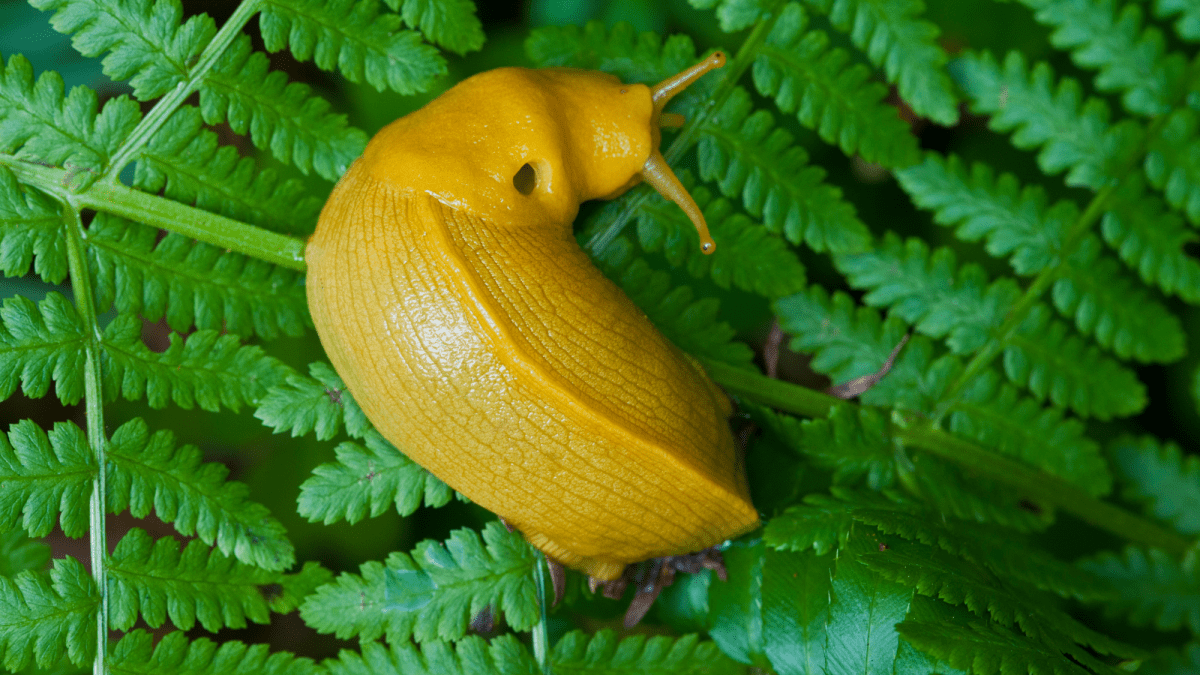
A banana slug (Ariolimax columbianus) on a fern in Redwood National Park in California. The tips of the upper tentacles have light-sensitive eyespots. This slug is an air-breathing land slug with a single lung which opens externally via a pneumostome. This native slug is found in moist forests, and consumes detritus recycling nutrients in the ecosystem. Coastal coniferous rainforest belt. Image: Ed Reschke via Getty Images Get the Popular Science daily newsletter💡 Breakthroughs, discoveries, and DIY tips sent six days a week. By signing up, you confirm you are 16+, will receive newsletters and promotional content and agree to our Terms of Use and acknowledge the data practices in our Privacy Policy. You may unsubscribe at any time. What’s yellow, oblong, and slimy all over? If you’re thinking of a ripe banana, you’re close—but the mystery object is also among Earth’s slowest animals. We’re talking about the banana slug, members in the genus Ariolimax. These mollusks travel only 6.5 inches per minute on average, using a muscular foot to move across slime. Besides its iconic slowness, banana slugs are also one of the largest terrestrial mollusks, and one of the largest slugs. Even though they take their sweet time, they are important members of their ecosystems—as decomposers, they process dead animal and plant remains, according to the team at the Golden Gate National Recreation Area in California. A recent video features a close-up of a banana slug munching on some greens—slowly, of course. These slugs “are a great reminder for us to slow down and take a break when we need it. In this case – a snack break!” the team writes. “They also indulge in the occasional mushroom or seedling treat, all with the use of their radula.” The radula is a tongue-like body part on the slug’s underside. It’s made up of roughly 25,000 tiny “teeth,” that mash up the slug’s snack before it gets swallowed. If you ever come across a banana slug, you’ll notice a hole on its right side—that’s what it breathes through. Despite its name, banana slugs can be brown, white, green, and black, and some are spotted. But all banana slugs—as well as all mollusks—have a muscular cavity that surrounds their respiratory chamber as well as other organs. Speaking of anatomy, a single banana slug also has both male and female components, but they usually don’t fertilize themselves. The fruit-wannabe can be found in wet regions on North America’s West Coast and is the University of California, Santa Cruz’s mascot as well as California’s official state slug. Next time you see this slimy slug, may it prompt you to slow down and smell the roses! 2026 Popular Science Home of the Future Awards 39 products that will improve your everyday life.
Watching a banana slug chomp greens with thousands of tiny teeth is oddly soothing
Full Article
Original Source
Read the full article at Popsci →KhanList aggregates and links to publicly available news content. We do not host full articles from third-party sources. Always verify important information with original sources.