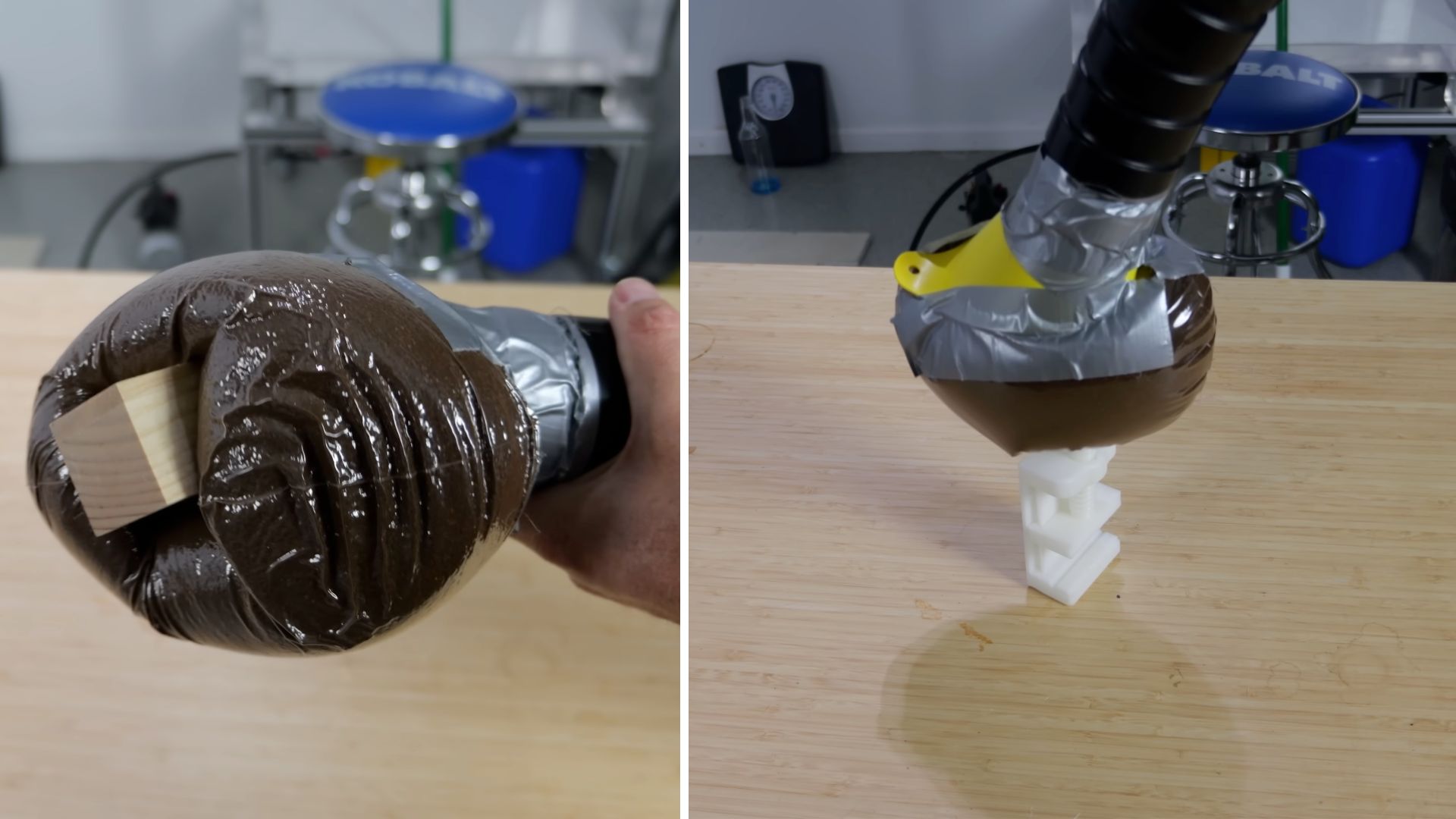
A simple robotic gripper made from a latex balloon filled with ordinary coffee grounds is demonstrating an inexpensive way to handle objects of different shapes without cameras or complex sensors. The device works by pressing the soft bag onto an object and removing the air, causing the coffee grounds to jam together and form a firm grip. The concept, first introduced by researchers at Cornell University, the University of Chicago, and iRobot in 2010, continues to attract attention for its versatility. Researchers say the approach can securely grasp fragile and irregular items, offering a low-cost solution for robotic manipulation. Coffee meets robotics The robotic gripper made from a latex balloon filled with ordinary coffee grounds demonstrates how low-cost materials can solve one of robotics‘ most challenging problems: reliably grasping objects of different shapes without complex hardware. The system consists of a flexible latex membrane filled with ground coffee and attached to a robotic arm. Instead of relying on cameras, force sensors, or advanced software, the robot simply presses the soft bag against an object and removes the air using a vacuum pump, reports Techeblog. As the air is extracted, the coffee grounds transition from a loose, flowing state into a rigid mass that molds itself around the object’s shape. Once jammed together, the particles create a firm grip that remains locked until air is allowed back into the bag. The gripper works because loose coffee grounds behave much like a fluid, flowing around an object and filling gaps. When vacuum is applied, however, the particles become tightly packed, forming contact chains that distribute force throughout the material. Researchers highlight that even though the membrane contracts by less than 0.5 percent in volume, that tiny change is enough to transform the soft bag into a solid structure. Friction, surface contact, and the geometry of the object then combine to hold it securely. Coffee grounds have proven especially effective because their irregular shapes and varying particle sizes interlock more efficiently than smoother materials. Alternatives such as glass beads jam less effectively, while sand can produce a similar effect but adds unnecessary weight. Early experiments showed the coffee-filled gripper could lift objects many times heavier than itself while releasing them instantly when the vacuum is switched off. The design can grasp an impressive variety of objects that often challenge conventional robotic hands. Items including scissors, light bulbs, raw eggs, rolls of tape, wooden blocks, springs, foam earplugs, jacks, tetrahedrons, and shock absorbers can all be picked up without custom programming, reports Techeblog. According to researchers, because the gripping force is spread across a large contact area rather than concentrated at rigid fingertips, fragile objects are less likely to be damaged. Although very smooth or extremely flat objects remain difficult to handle, the gripper performs well across a much wider range of shapes than many traditional robotic designs. Its simplicity is one of its greatest advantages. The robot only needs to press the bag against an object and activate a vacuum valve, making feedback sensors largely optional. This reduces both cost and system complexity while improving reliability. Industrial versions of the technology are already being used on conveyor lines where products vary widely in shape and size. Researchers are now exploring new soft materials and multi-bag designs that could create larger, more capable robotic manipulators for future industrial and service applications.Recommended ArticlesGet the latest in engineering, tech, space & science - delivered daily to your inbox.Jijo is an automotive and business journalist based in India. Armed with a BA in History (Honors) from St. Stephen's College, Delhi University, and a PG diploma in Journalism from the Indian Institute of Mass Communication, Delhi, he has worked for news agencies, national newspapers, and automotive magazines. In his spare time, he likes to go off-roading, engage in political discourse, travel, and teach languages.
Watch: This coffee-filled robot gripper can pick up fragile objects without complex sensors
Full Article
Original Source
Read the full article at Interestingengineering →KhanList aggregates and links to publicly available news content. We do not host full articles from third-party sources. Always verify important information with original sources.