
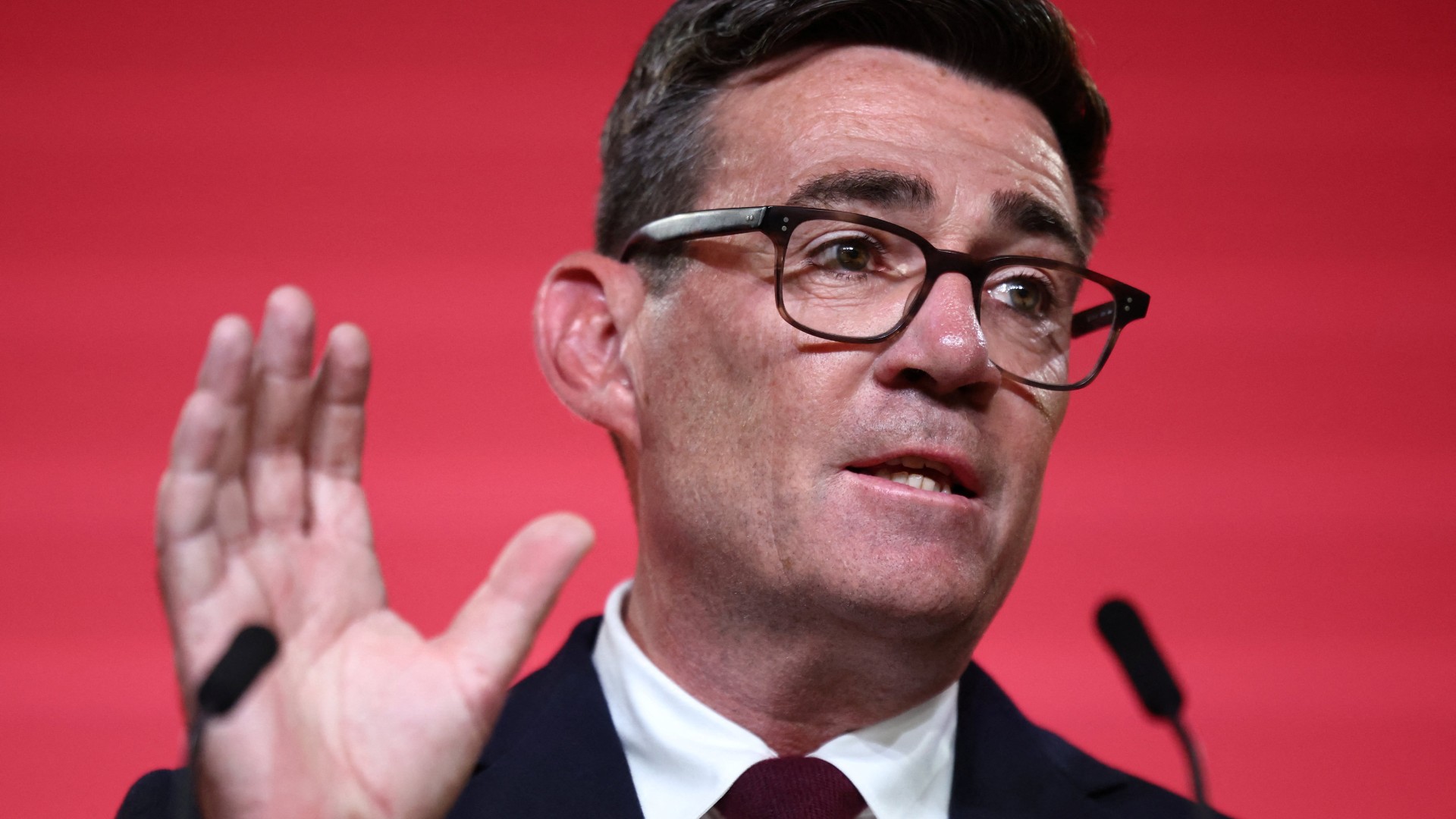
The International Court of Justice (ICJ) finally ruled last week that the Myanmar government carried out a genocide when its army slaughtered thousands of Rohingya Muslims in an orgy of planned killing and mass rape. This is the second time that the ICJ has found that genocide was committed against a Muslim population. Twenty years ago, it reached that verdict in the wake of the systematic execution of more than 8,000 Bosnian Muslims in Srebrenica. That could become three times if the ICJ ultimately resolves that Israel’s ongoing slaughter of Palestinians in Gaza - where more than 74,000 have been confirmed dead so far, almost all of them Muslim - amounts to a genocide. The world has become an intolerably dangerous place if you are Muslim. French writer Renaud Camus once warned that Muslim immigration would wipe out white Europeans. “The great replacement is very simple,” he said in 2012. “You have one people, and in the space of a generation you have a different people.” New MEE newsletter: Jerusalem Dispatch Sign up to get the latest insights and analysis on Israel-Palestine, alongside Turkey Unpacked and other MEE newsletters Meanwhile, China has held hundreds of thousands of Muslims in secretive detention camps in recent years, while the Muslim community in India has been denounced as a “virus” by the chief minister of Uttar Pradesh. This view that Islam is a danger to humanity is impossible to substantiate. When Muslims travel to other countries, they normally arrive as victims of oppression, war or civil conflict, not as aggressors. Yet across much of the globe, Muslims are portrayed as the enemy - and that includes in Britain. Islamophobic tropes Pick up a newspaper. Read a book on current affairs. Consult a think tank. Listen to a politician. Go down to the pub. You will hear the same story: Islam is on the march, hell-bent on destroying the West. Muslims are presented as invaders, enemies of civilisation, parasites, unpatriotic - uncomfortably similar to the tropes deployed before the Srebrenica and Myanmar genocides. According to the British Muslim Trust, there were 78 verified attacks involving mosques over the 12 months to July 2026. In recent decades, several Muslims have been murdered simply for being Muslim, while others get abused, targeted or beaten up. They fear going out at night. This past April, a man was jailed for 13 years after raping a Sikh woman because he believed she was Muslim. It is easy to understand why some openly racist politicians dash along to Spectator events - and equally easy to understand why others failed to show Yet the systematic demonisation of Muslims has become a central part of the narrative of the British political and media classes in the 21st century. As I set out in my book The Fate of Abraham, this rhetoric has strong historical roots. But it is now so much a part of normal discussion that almost nobody notices. At Westminster in particular, there is an adamantine reluctance to challenge the demonisation of a relatively small section of the British population. Politicians are rightly wide awake to the problem of antisemitism, a poisonous virus that has been deeply embedded in western Christian DNA for a millennium of British history. But the majority of British MPs and newspapers flatly refuse to acknowledge that Islamophobia has become a problem in contemporary Britain. Wednesday night provided a powerful and very telling example. Politicians from the main political parties gathered in central London to celebrate the Spectator Parliamentarian of the Year awards. The most senior politicians in Britain were singled out for awards, including Prime Minister Andy Burnham and Tory leader Kemi Badenoch. Former foreign secretary David Lammy and Michael Gove, the former Tory cabinet minister who now edits the Spectator, presented the awards. On the face of things, this was an admirable cross-party event, when journalists and politicians resolved for an evening to overcome their differences and celebrate the fact that we British have the good fortune to live in a parliamentary democracy. (The revered Spectator political columnist Henry Fairlie once memorably recorded that he slept more soundly in his bed when Parliament was sitting). Troubling message But let’s pause a moment and reflect on how all this good cheer and cross-bench jollification looks and feels if you are a British Muslim. This past summer, the Centre for Media Monitoring produced a report on the Spectator’s coverage of Islam. It found that the magazine’s extensive (one might even say obsessive) output on Islam portrays Muslims as invaders who don’t belong in this country, don’t share British values, and threaten our public spaces. The report also documents how Spectator writers substantiate this thesis through misrepresentations, fabrications, vulgar abuse, and conspiracy theories. Some of the examples are horrifying. Many observers would regard such coverage as Islamophobic. Not the Spectator, which refuses to frame Islamophobia in its accepted sense as an irrational fear, hatred or prejudice directed at Muslims for being Muslim. How mainstream media fuels the UK's Islamophobia crisis Read More » Instead, it turns the concept on its head, arguing that the term is a cynical attempt to exempt Muslims from criticism, and to import a blasphemy law through the back door. The magazine ran the headline: “There’s not enough Islamophobia in the Conservative Party.” After an outcry the Spectator changed the headline. But one only has to imagine the career-ending consequences - not just for the writer, but also the editor, and indeed the magazine itself - that would (rightly) follow if a Labour magazine asserted “there’s not enough antisemitism in Labour”. Lammy might be interested to learn that the magazine recently ran two articles calling for the rehabilitation of the racist 20th-century Tory politician Enoch Powell. Defenders of the Spectator are entitled to point out that Britain is a free country, and any magazine or newspaper is permitted to propagate whatever views it likes, no matter how bigoted or divisive, so long as they stay within the law. But that is not the case with political parties. When senior politicians accept awards, they do not send out a message that they agree with the organisers’ beliefs and objectives, and it would be absurd to claim that they do. Yet they are signalling that they regard the Spectator’s commentary on Muslims as within the boundaries of acceptable discourse. It is easy to understand why some openly racist politicians dash along to Spectator events - and equally easy to understand why others, like Zack Polanski’s Green Party, failed to show. When Burnham accepted his well-deserved award as politician of the year (last year’s recipient was Reform UK leader Nigel Farage), he was not endorsing the Spectator’s compulsive hostility to Muslims. But he certainly was sending the message that the Spectator operates within the acceptable boundaries of public discourse when it demonises Muslims. That is a troubling message to send out at any time - all the more so as Islamophobia Awareness Month reaches its climax. The views expressed in this article belong to the author and do not necessarily reflect the editorial policy of Middle East Eye.
Was Andy Burnham right to accept his award from the Muslim-baiting Spectator?
Full Article
Original Source
Read the full article at Middleeasteye →KhanList aggregates and links to publicly available news content. We do not host full articles from third-party sources. Always verify important information with original sources.