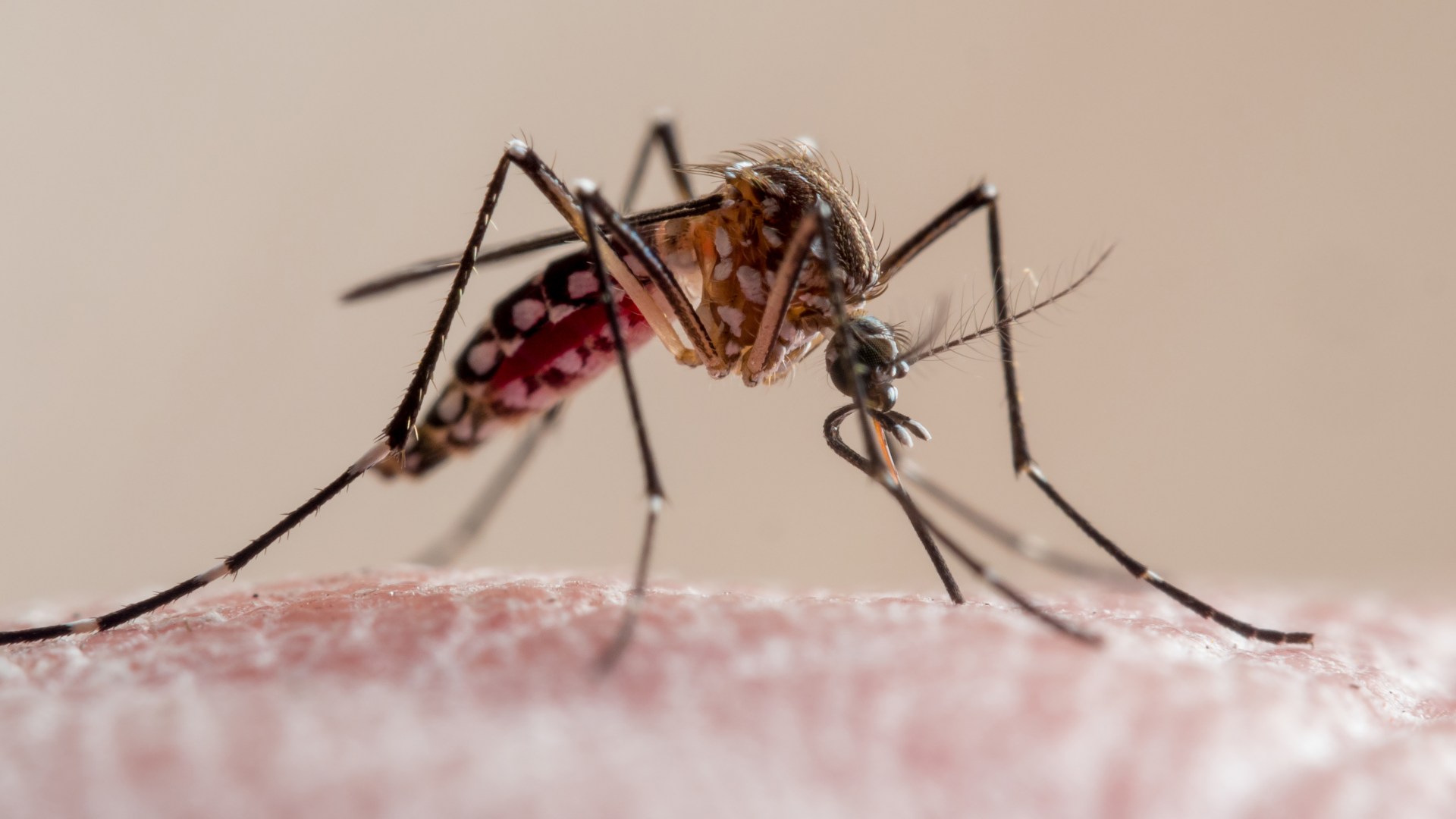
BRITS were today warned of a triple threat of mosquito viruses that have surged across European holiday hotspots. The summer marks peak season for the critters, with warmer weather creating the ideal breeding conditions for mosquitoes. Last year, Europe saw a sharp rise in mosquito-borne infections Credit: Getty But with this, raises the risk of West Nile virus, dengue fever and chikungunya virus. Last year, Europe saw a sharp rise in such mosquito-borne infections, with West Nile cases 40 per cent above average for the past decade. Sign up for the Health newsletter Thank you! Mosquito-borne infections, which are not typically found in the UK, can cause fever, headaches, muscle and joint pain, nausea and vomiting. With treatment, most cases are not fatal. Yet in the severe stage, the disease quickly leads to death. The illnesses are very common in parts of Africa, Asia and central America, but are now increasingly found in Europe. As such, cases are brought into the UK by travellers returning from exotic destinations where the disease is prevalent. In response, EU health chiefs have repeatedly warned those heading to the continent to take “personal measures” when visiting infected countries. It comes as the UK Health Security Agency (UKHSA) last week revealed that more than 750 travel-acquired cases of mosquito-borne illnesses had been logged in England, Wales and Northern Ireland since the start of 2026. Most read in Health Dengue virus, malaria, chikungunya and Zika virus have been imported from more than 40 countries worldwide, according to the figures. So where are Europe’s hotspots and what are the key signs of infection? Here, Sun Health explains everything you need to know. West Nile virus Spread by: Culex mosquitoes Hotspots: Italy, Greece, Serbia, France, Romania, Spain, Hungary, Croatia, Albania, North Macedonia, Bulgaria, Kosovo, Türkiye West Nile virus is transmitted to humans through Culex mosquitoes that feed on infected birds, which are natural reservoirs for the disease. First identified in Uganda’s West Nile district in 1937, there have already been more than 30 cases identified in five European nations this year alone, with Italy reporting 21 locally acquired human cases. Last year, 13 countries reported a staggering 989 locally acquired human cases, the European Centre for Disease Prevention and Control (ECDC) said. Italy again, accounted for the overwhelming majority at 714. It was followed by Greece (91), Serbia (60), France (42) and Romania (36). Spain, meanwhile, reported 23 cases, while Hungary logged 11, Croatia 14 and Albania, three. Most infections occurred in men aged 65 and over, and more than nine in 10 patients required hospital treatment. In total, 63 deaths were reported, of which 48 were in Italy. Symptoms can include a fever, headache and a spotty rash covering the trunk, head, neck, fingers and toes. These can last a few days to several weeks, with patients treated using fluids, bed rest and over-the-counter painkillers. Of those with symptoms, less than one per cent will develop a severe form of the disease — called West Nile neuroinvasive disease (WNND)—which can be deadly. In this, the virus infects the brain and causes encephalitis, or inflammation of the organ, leading to seizures, disorientation, paralysis and coma. What can I do to prevent mosquito bites? The Fit for Travel website says if you are travelling to an area affected by diseases such as malaria, dengue fever and yellow fever, spread by mosquitoes, you should take action to protect yourself. Some mosquitoes are more active in the day time while others at night – so it is important to protect yourself at all times. It says: “If you develop a high temperature (fever) either during or after travelling to an affected area, you should seek medical advice as soon as possible and give details of your recent travel history.” To protect yourself: Use a good quality insect repellent The higher the strength, the longer the repellent should prevent mosquitoes landing on you. An effective repellent contains at least one of; DEET (50% concentration for areas where there is malaria), Icaradin/Picardin (at least 20% concentration, Eucalyptus citriodora oil, hydrated, cyclized (at least 30% concentration), IR3535 (but not for malaria areas). Apply: On all areas of skin not covered by clothes After sun screen Regularly, particularly if you notice mosquitoes around you After swimming, washing or excessive sweating On the face, by spraying the repellent on the hands first Loose clothing Mosquitoes can bite through tight clothing, so loose-fitted clothing is ideal. Consider a high neckline, long sleeves, long trousers and socks. Remember to apply insect repellent on areas not clothed. Mosquito nets Mosquito nets can protect you at night when sleeping and are even better if treated with insecticide. Check for any holes in the net before using it. If a hole is apparent, then this should be mended. You should tuck the net under your mattress or ground sheet during the night, and either collapse it down, or keep it tucked up during the day to stop insects flying under and into the net. Chikungunya virus Spread by: Aedes invasive mosquitoes Hotspots: France and Italy Chikungunya is a virus spread by two different aedes invasive mosquitoes: Aedes and albopictus. The disease name means “to become contorted” in the African Kimakonde language, as it causes severe muscle and joint pain. Other symptoms include sudden fever, headache, fatigue, rash, nausea and red eyes. Most victims will recover within a few weeks, but in some cases, the joint pain may persist for weeks, months or even longer. It’s usually found in tropical areas like central and South America, Asia and Africa, but the mosquito has made its way to warmer parts of Europe. Last year, France and Italy recorded more than 1,000 cases of the virus between them, with 788 in France and 384 in Italy. As of June, more than 160 chikungunya cases have been reported this year in 13 different European countries. All were believed to be returning travellers from the Seychelles. Dengue fever Spread by: Aedes invasive mosquitoes Hotspots: France, Italy and Portugal Dengue has caused outbreaks of illness throughout history, with the first known to have occurred in 1635 in the West Indies. It first hit Europe in 2010. Dengue was the least common of the three diseases detected in Europe last year, with just over 30 cases recorded in three countries. France reported 29, while Italy logged four and Portugal, two. Earlier this year, four countries reported at least 107 imported dengue cases linked to travellers returning from the Maldives. The ECDC, however, did not reveal which four countries were affected. Some people who are infected with dengue won’t develop symptoms. But for those who do, they usually start four to ten days after being bitten by an infected mosquito. They include a fever, severe headache, pain behind the eyes, muscle and join pain, feeling and being sick and a blotchy rash that is made up of raised spots. Most people recover without treatment within days. However, some develop a severe form of the disease. This can trigger tummy pain, repeated vomiting, fast breathing, bleeding gums or nose and extreme tiredness. While there is no treatment, sufferers are kept in hospital until they recover. Resting, drinking plenty of fluids and taking paracetamol are recommended. Comment now
Warning to Brits as paralysing tropical viruses sweep European holiday hotspots – map reveals most at risk
Full Article
Original Source
Read the full article at Thesun →KhanList aggregates and links to publicly available news content. We do not host full articles from third-party sources. Always verify important information with original sources.