
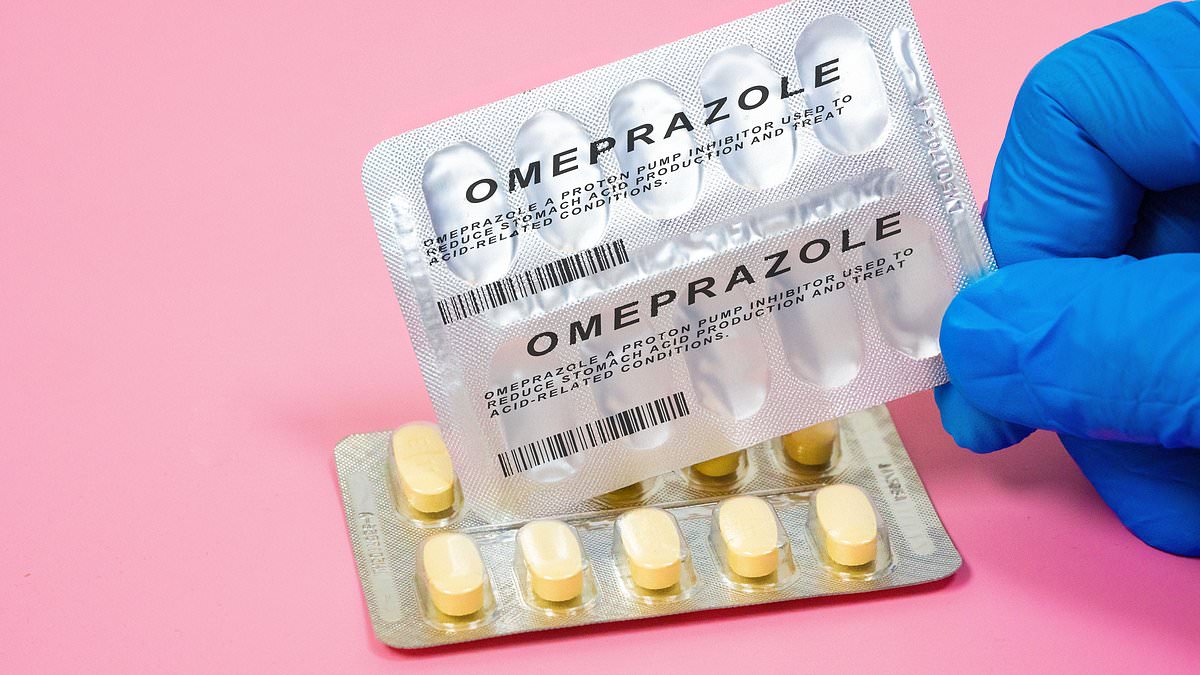
Using heartburn pills like omeprazole for more than a month may increase the risk of dangerous heart complications, a study suggests. Researchers found that those using drugs known as proton pump inhibitors (PPIs) for more than 30 days had a 58 per cent higher odds of problems like heart attack compared with people not taking them at all.They were also at 38 per cent higher odds of dying from a heart-related issue, the study found.One in six Britons are prescribed a PPI each year to treat problems like acid reflux, heartburn and stomach ulcers. The medications work by reducing the amount of acid in the stomach.GPs typically prescribe them for four to eight weeks, but the NHS recommends people take them 'for as short a time as possible' to avoid side effects. Yet, studies show that 40 per cent of patients take them for at least a year and a tenth use them for five years or more. Experts have recently urged patients to explore alternative methods of keeping acid reflux at bay, such as changes in diet and using over-the-counter remedies like Gaviscon. Using heartburn pills like omeprazole for more than a month may increase the risk dangerous heart complications, a study suggests The new study, led by researchers at the National University of Malaysia, analysed 13 existing studies linking five PPIs to heart health. This included omeprazole, lansoprazole, esomeprazole, pantoprazole and rabeprazole.In England, more than 35 million prescriptions for omeprazole alone are issued every year, making it the second most dispensed drug in the country. The scientists compared people who used the drugs against those who didn't, and looked at who was more likely to suffer a complication. Overall, the study found patients taking them for more than 30 days were at a 58 per cent higher odds of a cardiovascular event like heart attack and cardiac arrest.However, there was no significant increase in the risk of stroke.The researchers suggested several possible explanations for the apparent link.One theory is that PPIs may reduce the levels of nitric oxide in the body, a molecule that helps blood vessels relax.Another is that the drugs may change the bacteria in the gut, which could cause inflammation linked to heart problems.The researchers also noted concerns that some PPIs may interact with medications that prevent blood clots.'All these findings further support the evidence of cardiovascular events in long-term use of PPIs,' the authors wrote. The Daily Mail's GP columnist Dr Philippa Kaye says there are a number of simple ways to keep acid reflux at bay without medicationBecause the study was observational, the researchers cannot prove these theories, or that the drugs caused the problems.They also stressed the findings should not be taken as a reason to stop PPIs without good cause, because the drugs are effective for many.However, they said the results warrant monitoring those at high risk of heart problems if taking PPIs long term.'PPIs remain an important component of therapy for acid-related disorders and gastroprotection when clinically indicated,' authors wrote in the European Journal of Hospital Pharmacy.'Clinicians should carefully evaluate the risk-benefit profile of long-term PPI therapy, particularly in patients with existing cardiovascular risk factors.'Writing in the Mail last month, Dr Kaye said she tells some of her patients to ditch PPIs as soon as possible. 'Used in short bursts, these drugs can be miraculous – ending the suffering of heartburn patients,' she wrote.She added: 'However, all told, for many patients the reasons for coming off PPIs far outweigh those for staying on them.'Dr Kaye said there are a range of simple lifestyle changes that can help people with heartburn. The first, and possibly the most effective, she said, is losing weight. Writing in the Mail this week, gut scientist Sam Treadway said he spent nine years taking PPIs before eventually stopping them thanks to simple lifestyle changes'Extra weight increases pressure in the abdomen and worsens reflux, and even a modest loss of five to ten per cent of your body weight can significantly improve symptoms,' she said.She also recommended avoiding large meals, especially close to bedtime, as well as alcohol, caffeine, chocolate, fatty or spicy food, and fizzy drinks – all of which can trigger reflux. 'Stopping smoking and cutting back on alcohol more generally will help too, as will something as simple as raising the head of the bed,' she continued.'If symptoms tend to be worse at night, tilting the bed so your head and chest are higher can stop acid travelling back up while you sleep.'Dr Kaye stressed that patients should not come off the tablets suddenly because this can make symptoms worse. Instead, they should come off them gradually with the help of their GP.Also writing in the Mail this week, gut scientist Dr Sam Treadway said he spent nine years taking PPIs before eventually stopping them thanks to simple lifestyle changes.He had developed severe heartburn as a student thanks to a poor diet, heavy drinking and an irregular sleep pattern, before being prescribed a PPI.After improving his diet, avoiding late-night meals and using over-the-counter treatments like Gaviscon, his heartburn resolved.'The results stunned me,' he wrote. 'Within about ten days my heartburn had gone – without the brutal rebound I'd suffered every time before.'I haven't needed a PPI since.'Dr Treadway also stressed that for some patients the drugs are 'essential' and should not be stopped.
Warning over omeprazole pill for heartburn that raises risk of heart attack by 58% - experts reveal the safer alternatives to keep acid reflux at bay
Full Article
Original Source
Read the full article at Dailymail →KhanList aggregates and links to publicly available news content. We do not host full articles from third-party sources. Always verify important information with original sources.