
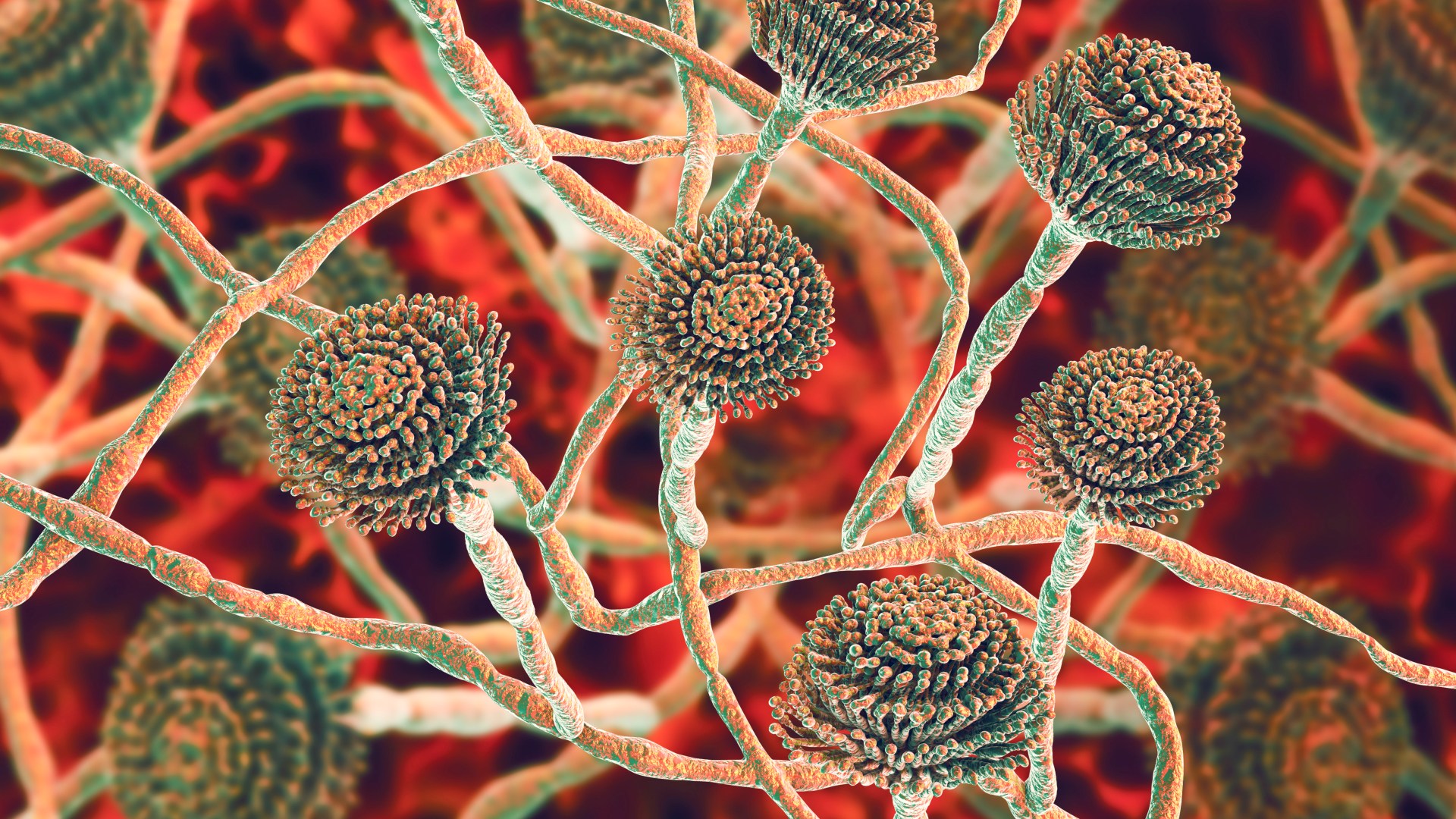
EXPERTS have sounded the alarm over a killer super-fungal infection sweeping through hospitals and leaving up to one in three diagnosed with the disease dead. The deadly mould infection may be far more common than previously believed and could risk the lives of millions, research has shown. Experts have warned that a killer super-fungal infections is sweeping through hospitals Credit: izusek Invasive mould diseases can be deadly to people with weakened immune systems Credit: Getty For most healthy people, invasive mould diseases (IMDs) pose little danger, but for patients with weakened immune systems, the infections can be deadly. New research published by the Centres for Disease Control and Prevention (CDC) has now looked into deaths caused by common types of mould – Aspergillus, Mucorales, Fusarium, Scedosporium – among others. Sign up for the Health newsletter Thank you! It found that there were 499 cases of mould infections recorded in hospitals just in the Atlanta area between 2020 and 2024. And of this, roughly one-third of patients died from the infection while in hospital. What’s more, the study identified just how severe this infection can be, with 43 per cent of patients requiring intensive care treatment. It found that in the future, hospitals could expect about three to five cases each year for every 100 inpatient beds. From their findings, researchers urged healthcare professionals to “be vigilant” for mould infections, calling them a “life-threatening complication” for people who are critically ill or have a compromised immune system. The report said: “Continued surveillance could help identify emerging populations at risk for IMD, facilitate earlier recognition and treatment, and support detection of health care–associated outbreaks.” Most read in Health It highlighted that because invasive mould infections are not a nationally notifiable condition in the US, establishing a baseline to track and identify outbreaks is challenging. Dr Jeremy Gold, a senior author of study told The Independent that the threat of deadly mould infections could grow in the coming years due to changing weather conditions and an ageing population. The WHO have ranked 19 fungal priority pathogens based on threat to humanity. It includes Aspergillus fumigatus and C. auris And Dr Jeffrey Jenks, an infectious disease specialist at Duke University who was not involved in the research, said: “I agree that the frequency of fungal infections will likely increase with climate change.” Mould infections are caused by breathing in mould spores in the air or through entering open wounds. They affect blood vessels, deep tissues or organs and while the infections are rare, they cause severe, life-threatening illness. Aspergillus mould is a particularly common type and according to the NHS, it can be found in soil, compost, rotting leaves, plants, dust, bedding, damp buildings and air conditioning systems. Symptoms of this mould infection include shortness of breath, a cough, wheezing, a high temperature, feeling tired and losing weight without trying. The CDC says that outbreaks of mould infections in healthcare facilities, such as hospitals, are rare, but if they emerge, they pose a serious risk to patients. Building construction, leaks, and laundry that has not been properly handled can cause these outbreaks and it is also possible to get an infection from a contaminated tool or medical supply used in surgery. A major issue with tackling deadly mould infections is that antifungal resistance – meaning that the fungus won’t respond to treatment – is a “growing threat”, according to the World Health Organisation (WHO). This is driven in part by the widespread use of antifungals, it said. Aspergillus fumigatus is a common mould that has continued to develop resistance to widely used drugs in many countries, scientists say. It comes as 50 of the world’s leading researchers warned earlier this year that fungal infections with drug-resistant powers are now increasingly being found in hospital wards. Professor Paul Verweij, an expert in medical microbiology at Radboud University in the Netherlands and study co-author, said: “We are already seeing a quiet rise in dangerous fungi, from Candida auris in intensive care units to moulds in the community that no longer respond to standard medicines. Researchers urged the Government and international organisations to prioritise antifungal resistance before more infections become untreatable. Professor Mike Bromley, an expert in fungal biology at the University of Manchester, said: “If we don’t act, we will see more infections that simply can’t be cured, which puts lives and food supplies at risk.” Comment now
Warning over deadly super-fungus spreading undetected in hospitals killing up to one in three
Full Article
Original Source
Read the full article at Thesun →KhanList aggregates and links to publicly available news content. We do not host full articles from third-party sources. Always verify important information with original sources.