
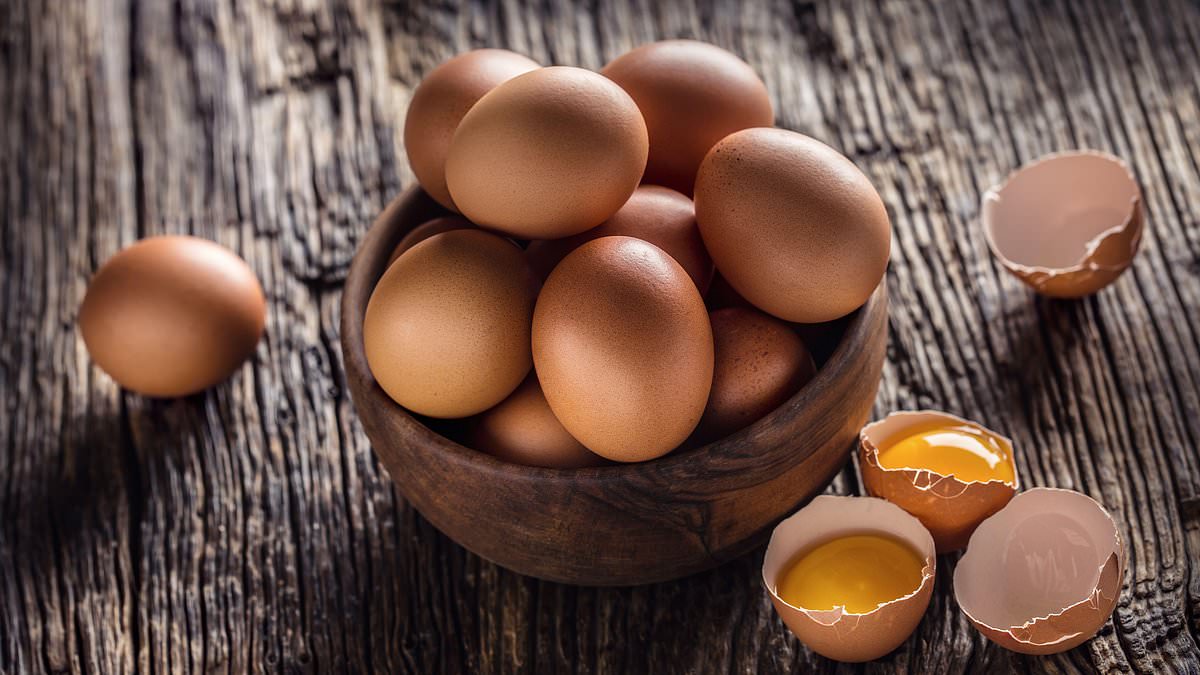
Almost 40 new salmonella infections have been identified in the last week amid an outbreak linked to imported eggs, health officials said today.The UK Health Security Agency (UKHSA) has today confirmed a total of 586 cases of the life-threatening bacterial infection – a jump from 549 last Thursday.Two people have died in the outbreak, which is believed to have been caused by imported eggs.Cases have been linked to eating out at 'small cafés, restaurants and takeaway businesses', according to the UKHSA.Officials say there is no evidence that eggs produced in the UK pose any threat.Food safety chiefs have urged Britons to avoid raw or lightly cooked egg products such as mousses, mayonnaise or hollandaise sauce. Vulnerable groups – including over-65s, pregnant women and under-fives – are also advised to avoid runny eggs when eating out.This is because it may be unclear whether cafés, restaurants and takeaways are using eggs bearing the British Lion mark or those produced under the Laid in Britain scheme, which are deemed safe. Almost 40 new salmonella infections have been identified in the last week amid three major outbreaks linked to imported eggs, health officials have saidDespite the rise in infections, officials say 'fewer cases have been reported over recent weeks'. The total number of cases in the outbreak is spread across three separate infection 'clusters'. Some 355 infections have been recorded in the one, up from 322 this time last week, and one person has died.Another death has been recorded in a cluster with 42 cases, while the remaining 189 infections – up from 186 last week – have been linked to a third spread.Dr Gauri Godbole, deputy director for gastrointestinal infections at the UKHSA, said: 'While new cases are still being reported, we have seen fewer cases over recent weeks.'However, it is too early to say if the outbreak is subsiding and we are continuing to monitor closely.'Experts told the Daily Mail earlier this month that the true rate of infections is likely significantly higher in the UK than officially reported.Paul Wigley, a professor in animal microbial ecosystems at University of Bristol, said: 'I wouldn't be surprised if it's up around the 2,000 mark.'In fact, I wouldn't be shocked if it's much higher than that. But around 1,500 to 2,000 cases is what I would be expecting.'It's understood health chiefs are aware that there are likely to be more infections than officially reported. Professor Wigley said this is because hundreds of patients may have milder forms of the disease without severe symptoms such as prolonged diarrhoea.They are unlikely to seek medical help, so may not be analysed and later confirmed as an official case.While salmonella – caused by bacteria entering the body – can be deadly, some people with stronger immune systems can shake it off within around a week.'Most people are just going to say, I'm not that ill, I'm not well, but I'll ride it out,' Professor Wigley explained.He did warn, however, that even these people may experience 'uncomfortable and nasty' symptoms.While milder signs include stomach cramps, prolonged bouts of diarrhoea can lead to severe dehydration.Other more dangerous reactions include blood poisoning, organ failure and death.Salmonella is typically caught by eating contaminated food such as poultry, meat, eggs, raw fruit and vegetables and unpasteurised dairy products.Those most at risk of fatal complications include infants, pregnant women, the elderly and those with weakened immune systems.Dr Godbole stressed that the overall risk to the public 'remains low'. Professor Ian Young, from the FSA, said: 'As with any foodborne illness, good hygiene remains your best protection: store and cook food according to the packet instructions, wash your hands thoroughly before handling food and always after handling raw meat, poultry and eggs.'
Warning as salmonella cases jump again - another 37 Britons sickened by bug linked to eggs that's killed 2
Full Article
Original Source
Read the full article at Dailymail →KhanList aggregates and links to publicly available news content. We do not host full articles from third-party sources. Always verify important information with original sources.