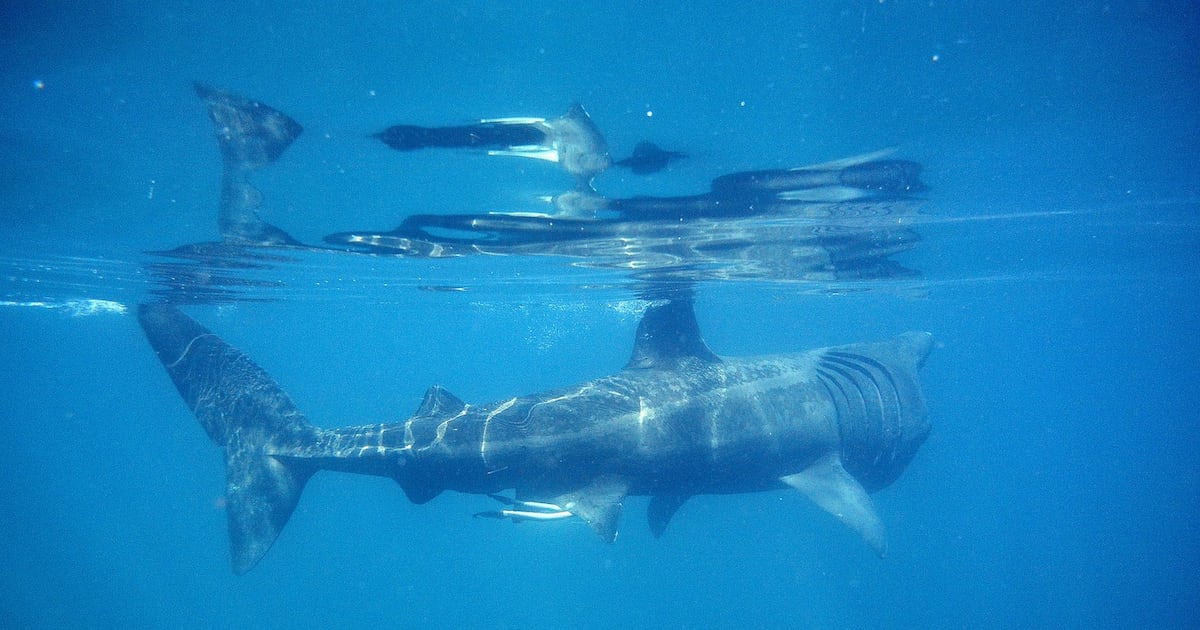
The seas around Ireland and much of Europe are warming beyond what many marine species will be able to tolerate, scientists have said. The impact of the heat will, they say, be felt in severe disruption to ecosystems but also through the loss of fisheries, damage to coastal tourism from algal blooms and unbearable seaside humidity, and a risk to public health from elevated bacterial levels. The warning comes from World Weather Attribution (WWA), a network of scientists providing fast response analysis of extreme weather events. They include Claire Bergin, a researcher at the Icarus Climate Research Centre at Maynooth University who explained the significance of the findings. “While warmer waters for swimming may sound appealing to beachgoers in cooler countries like Ireland, the impacts on marine life beneath the surface is more serious,” she said. READ MORE“This has the potential to completely reshape ecosystems that coastal communities rely on for food and income, and drive damaging extreme weather on land too.” Heatwaves have caused havoc on land across Europe this summer with dangerously high temperatures, intense drought and deadly fires. But a marine heatwave is also under way with sea surface temperatures around western and southern Europe recorded at up to six degrees above normal. Four marine areas were studied over two weeks in July, including the Celtic region that covers Ireland’s Atlantic and southern waters and the Irish Sea. The scientists say the seas are likely to be warmer now as temperatures normally continue rising through August. Ireland’s waters fared better than the other three regions – the Bay of Biscay and Atlantic coasts of Spain and Portugal, the Western Mediterranean and the Eastern Mediterranean. Temperatures around Ireland were on average 1.3 degrees above normal for July, but marine ecologist Prof John Bruno said it took only a one degree rise to harm some species or even cause mass deaths.[ Bad political leadership is blocking Ireland’s path to energy efficiencyOpens in new window ]Bergin said a marine heatwave in Ireland would have been expected once in 100 years in the pre-industrial era before climate change, but it was now expected every three years. “It will happen every year as climate change intensifies,” she said. Bruno explained the impact of even modest rises in water temperatures, noting that a one degree increase causes mass death of coral. He said as most marine species were cold-blooded, their temperature matched that of the water and their metabolisms changed as they got hotter. Faster metabolisms meant they needed to eat more and they often starved or their enzymes stopped functioning. Phytoplankton growth was also stunted, affecting the zooplankton that feed on them, the fish that feed on the zooplankton and the marine birds and mammals that feed on the fish. “It goes right to the top of the food chain,” he said. Countries with relatively cooler water, such as Ireland, could find species from faster warming seas moving in but it was unclear what impact such a “biodiversity reorganisation” would have. [ Eight in 10 support flood-risk certificates for homes, survey findsOpens in new window ]“We are rapidly approaching the absolute biological limits of adaptation for many species, threatening biodiversity, fisheries and coastal food systems,” he said. The most severe warming this summer took place in the Western Mediterranean, where the average temperature in July was 27 degrees, but a record 33 degrees was recorded at one buoy. Bergin said Ireland had less severe warming because the waters became deep quite quickly away from the coast and they mixed freely with the immense Atlantic, while the Mediterranean was more enclosed. The WWA network works to evaluate the role climate change plays in extreme weather-related events and Bergin said all of the temperature rise in the Celtic region could be attributed to human-caused climate change.
Warming seas around Ireland will kill species and damage tourism
Full Article
Original Source
Read the full article at Irishtimes →KhanList aggregates and links to publicly available news content. We do not host full articles from third-party sources. Always verify important information with original sources.