
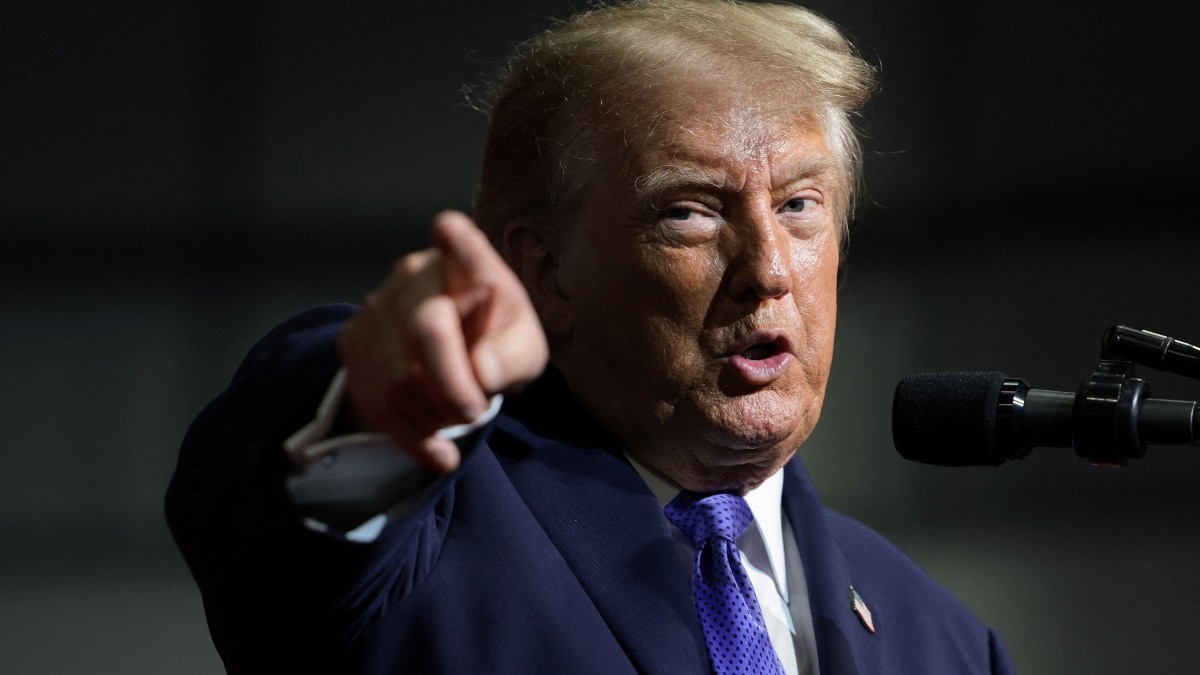
Amid mounting uncertainty over Washington's next move against Tehran and days before the US midterm elections, US President Donald Trump has expressed confidence that the war with Iran will be brought to an end soon, even as Washington weighs the possibility of another round of military strikes."It's going to get wrapped up soon," Trump said in an interview with Kansas City radio station KCMO on Friday. However, he offered no details on how the conflict would end or whether Tehran was prepared to accept Washington's conditions."We need a guarantee there'll never be a nuclear weapon," he added, reiterating that preventing Iran from acquiring a nuclear weapon remains central to the US position. Iran has repeatedly denied seeking to develop nuclear weapons and insists that it has the right to enrich uranium for peaceful purposes.Trump's remarks come just days before the November 3 US midterm elections, with his administration sending mixed signals about its next move against Tehran. While the US President has indicated that the US will not launch strikes against Iran before the elections, reports suggest he is considering a short but intense military campaign afterwards. Meanwhile, Vice-President JD Vance has opened a fresh diplomatic channel with Tehran, sending a letter to Iran's security chief, Mohsen Rezaei, to test the prospects of reviving negotiations and head off another round of US strikes.The diplomatic push gained momentum further on Friday as Qatari mediators arrived in Tehran for discussions aimed at finding a way out of the conflict. The latest developments suggest that Washington is keeping both diplomatic and military options open as it seeks assurances over Iran's nuclear programme.WHAT IS IN VANCE'S LETTER TO IRAN? The contents of Vance's letter have not been made public, but reports by US media outlets suggest that it was intended to establish whether Washington and Tehran could agree on a framework for negotiations. According to The Wall Street Journal, the communication did not contain specific peace terms. Instead, it sought to establish whether both sides could narrow their differences sufficiently to prevent Trump from authorising another military operation.A source familiar with the discussions told the newspaper that the objective was to determine whether "Tehran and Washington could find enough common ground to persuade Trump not to give a final order for a short, intense attack on Iran in the coming weeks".The New York Times reported that Vance had proposed an early meeting between American and Iranian officials, with the vice-president expected to lead the US delegation, as he did during earlier negotiations in June.The letter was delivered to Rezaei through Qatari intermediaries on Sunday. Vance called for direct negotiations and made clear that Iran's nuclear programme would have to be discussed from the outset, according to US and Iranian officials cited by the newspaper.If Tehran agrees to the proposal, the meeting could take place as early as next week, with Qatar and Turkey being considered as possible venues.The choice of Rezaei as the recipient is also noteworthy. As head of Iran's Supreme National Security Council, he is an important figure in Tehran's security establishment.IRAN'S RESPONSEIran has not publicly disclosed its position on the proposed negotiations. However, The New York Times reported that the letter had been "received well by Iran's leaders". Iranian Foreign Minister Abbas Araghchi has also indicated that Tehran remains open to diplomatic engagement. In a social media post on Wednesday, he said Iran "continues to give diplomacy a chance".Rezaei was expected to formally respond to Vance's communication on Thursday. However, Tehran has so far acknowledged receiving the letter without publicly announcing a decision on the proposed meeting.Vance's involvement is particularly significant given reports of differences within the Trump administration over how to approach the conflict.Although the vice-president has publicly supported the US military campaign, he has reportedly been less inclined towards a prolonged war. Before Washington joined Israel in attacking Iran in February, Vance was said to have favoured giving diplomacy more time.He has also privately expressed concerns about the possibility of the conflict dragging on, according to US media reports.Tehran, meanwhile, has repeatedly warned that any fresh US-Israeli attacks would invite a stronger response. Iran has indicated that its retaliation could extend beyond conventional military targets to include oil installations, undersea cables, data centres and artificial intelligence infrastructure across the Gulf.Such threats have placed regional governments in a difficult position. Countries hosting American military assets could find themselves exposed to Iranian retaliation even if they are not directly involved in a renewed offensive.This has prompted regional powers to intensify their diplomatic engagement with Tehran. Saudi and Qatari diplomats, along with officials from Pakistan and Turkey, participated in discussions with Iranian officials in Tehran on Monday.QATAR RETURNS TO TEHRAN FOR FRESH PEACE TALKSIn the latest bid to end the war, Qatar has stepped up its mediation efforts to prevent the conflict from escalating further.Qatari mediators arrived in the Iranian capital on Friday to hold discussions with Iranian officials on resolving the conflict with the United States, Iran's state news agency IRNA reported. The meetings are expected to focus on possible ways to end the war, alongside efforts to strengthen relations between Tehran and Doha and exchange views on the latest regional developments.The discussions are also being held in coordination with US officials.- Ends
War to get wrapped up soon: Trump repeats Iran must never have nuclear weapon
Full Article
Original Source
Read the full article at Indiatoday →KhanList aggregates and links to publicly available news content. We do not host full articles from third-party sources. Always verify important information with original sources.