
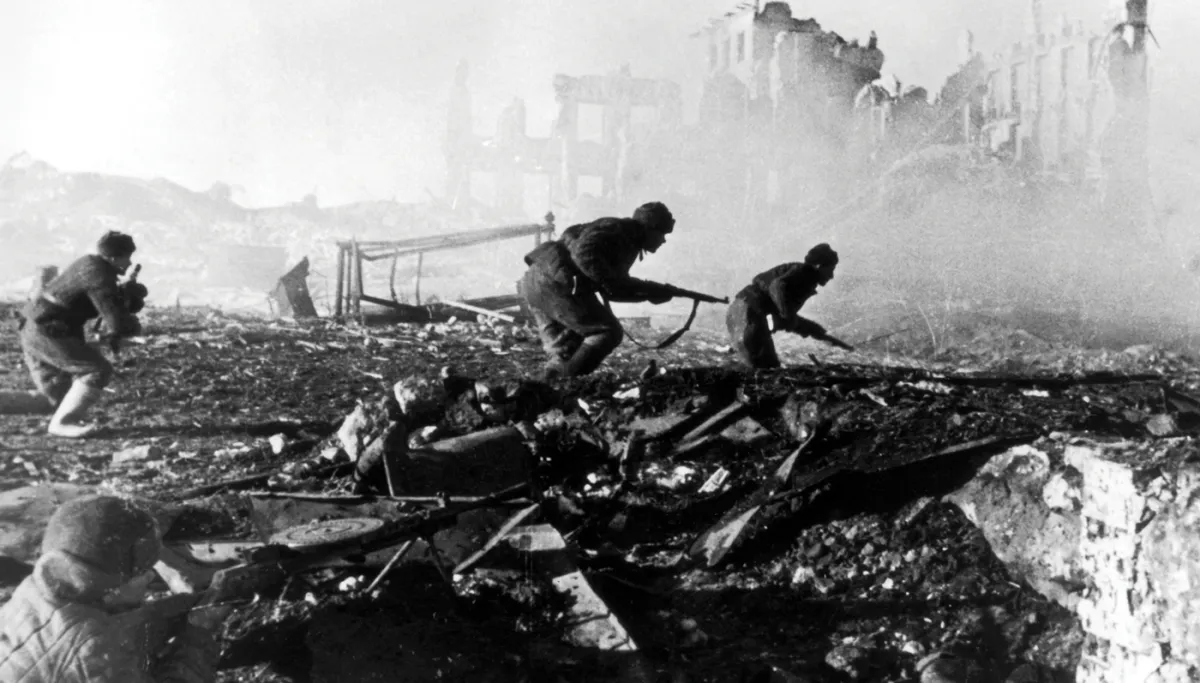
Not long ago, the news was dominated by the claim that, during a political rally, President Donald Trump had “invited” Iran to attack two cities in California. Of course, Trump said no such thing. Instead, in his unartful way, he was arguing that higher gas prices were worth the price in order to ensure that Iran was not able to acquire a nuclear weapon. He was addressing the issue of resilience, the ability of a country to deal with problems during a time of crisis. The United States demonstrated resilience during the Great Depression and World War II. It has weathered Vietnam and bouts of inflation. But American wealth, innovation, and productivity have, for the most part, allowed the U.S. to avoid the sort of costly consequences that, say, Russia and Ukraine have borne during their ongoing war.Iran has made it very clear that it intends to develop a nuclear weapon. It has also admitted that it currently possesses missiles capable of reaching targets in Europe. The Joint Comprehensive Plan of Action, the alleged nuclear agreement with Iran, has been exposed as a sham. The fact is that every administration for the past 40 years has stated its intention to prevent Iran from achieving a nuclear weapon. Only Trump has acted to prevent a nuclear Iran.Let us be clear: The U.S. has been in a state of war with Iran since 1979. Unlike his predecessors, Trump has acknowledged this reality and taken the necessary steps to address it. Trump’s conduct of the war is certainly open to criticism. He has missed opportunities to make the case for war and to make his objectives clear. He has made things worse with a stop-and-go conduct of hostilities. His economic campaign has the potential to succeed but takes time. Meanwhile, the Democrats are running on “affordability” during the midterm elections, blaming Trump for high gasoline prices. Soviet resilience in World War II As previously noted, both Russia and Ukraine have exhibited a high level of resilience. But consider the Soviet Union during World War II.Resilience, Soviet-style: Red Army troops storm an apartment block among the ruins of war-torn Stalingrad, 1941. In 1941, Hitler launched Operation Barbarossa. During the first six months of the war, German forces appeared to inflict irrecoverable losses (killed, missing in action, prisoners of war) on the Red Army in excess of 3 million men. It is estimated that more than a quarter of all Soviet troops killed in World War II died in 1941. Another 1.5 million were wounded or became sick. This means that, of the 5.5 million men who made up the Red Army at the start of the war, some 80% had become casualties by the end of 1941, a loss rate far in excess of any army in history.But the vast manpower of the Soviet Union made the Red Army a hydra-headed monster: Despite the massive losses of the summer, the Soviet Union pulled off one of the most remarkable feats in history by physically removing much of its industrial capacity from the western part of the country to the east, out of the clutches of the Nazis. Of course, fear of Stalin had a great deal to do with this state of affairs, but as one scholar has noted, there was another motivation: Russian patriotism, which, of course, was denigrated by Soviet communist ideology.In the past, American patriotism has been robust enough to resist communist ideology. Scholars have long confirmed Soviet efforts to undermine American republican government, but the influence of the Marxist-Leninist-Stalinist model was never able to acquire a foothold in America. However, something has changed. A new model has succeeded in undermining patriotism and reverence for the Constitution. That model originated with the Italian communist Antonio Gramsci.Undermining patriotism: The long shadow of Antonio Gramsci In the early 20th century, Gramsci stressed the importance of “cultural hegemony” as the means of establishing the conditions for a Marxist revolution. His innovation was to break from a purely economic explanation of society. Classical Marxism argued that the economic “base” determines the cultural and political “superstructure.” Economic classes dominated considerations of social tensions. Conversely, Gramsci insisted that culture, ideology, and ideas are not just reflections of economic interests. Instead, they are active forces that hold a society together and keep a ruling class in power.At left, Antonio Gramsci at roughly 30 years of age, in the early 1920s; at right, Herbert Marcuse in Newton, Massachusetts, in 1955. (at right: Marcuse family photo, represented by Harold Marcuse) His central insight was that the dominant class does not rule primarily by force, but by securing the consent of the masses by cultural and ideological means. The party must overcome the values, beliefs, and assumptions of the ruling class, which have come to be accepted as the natural state of affairs. When this happens, coercion becomes unnecessary much of the time. People police themselves.For instance, in a capitalist society, schools, media, and popular culture reinforce the emphasis on individualism, competition, and free markets, which come to be accepted as the only sensible way to organize economic life. This is cultural hegemony, oppression that feels like agreement.Gramsci redefined “the state” itself, describing it as the marriage of political society (coercive institutions including the police, the army, the courts) and civil society (the institutions that shape ideas and win consent, e.g., schools, religious organizations, the press, and cultural bodies).This “integrated” conception of the state means that real power is not concentrated in coercive government alone but also dispersed throughout the institutions of everyday life, where consent is manufactured. As he observed, hegemony lies not only in parliament but also in the classroom and newspapers.If hegemony is built through ideas, then the people who produce and spread ideas become politically crucial. This is why Gramsci devoted so much attention to intellectuals, whom he defined by social function rather than by intelligence.We can see much of today’s struggle through a Gramscian lens. Traditional communism focuses on economic classes: the bourgeoisie and proletariat. Today the categories stress oppressors and the oppressed, including race, caste, and gender.Undermining patriotism: The Frankfurt School The Frankfurt School offers a variation on Gramsci. Michael Walsh’s splendid book, The Devil’s Pleasure Palace: The Cult of Critical Theory and the Subversion of the West, explains how members of the “Frankfurt School,” the Institute for Social Research, sought refuge from Nazi Germany in America. But once ensconced in the American academy, the “Frankfurt Boys” proved to be the sort of parasite that eventually kills its host.The most influential Frankfurt Boys were political theorist Herbert Marcuse, sociologists Max Horkheimer and Theodor Adorno, psychoanalyst Erich Fromm, and “sex therapist” Wilhelm Reich. Like Gramsci, these “cultural Marxists” recognized that Marx’s target, the working class, would never buy into their argument. Communism had always been imposed by force. So instead, the Frankfurt Boys exploited American intellectuals, who had always exhibited a sense of inferiority relative to Europe.Herbert Marcuse advocated something called “repressive tolerance.” In classic Orwellian double-speak, Marcuse, who is often seen as the godfather of the 1960s counterculture, argued that tolerating all ideas — the essence of reasonable discourse that traditionally has defined the mission of the university — was in fact repressive, since it did not “privilege” the “correct” ideas. True tolerance, Marcuse argued, “would mean intolerance against movements from the Right and toleration of movements from the Left.” This, of course, is the essence of the “political correctness” that afflicts academia today.As George Orwell observed, “there are some ideas so absurd that only an intellectual could believe them.” So it was with their overly intellectualized and emotionally juvenile approach to the world, the pernicious and reactionary philosophy of critical theory, that a swarm of demons was unleashed onto the American psyche.Walsh argues persuasively that Marcuse and his ilk sought nothing less than the overthrow of both the moral and political orders of the West. Their ideology demanded, for philosophical reasons, a relentless assault on Western principles, including Christianity, the family, conventional sexual morality, and nationalist patriotism, which the Frankfurt Boys saw as roadblocks on the path to revolution.What Gramsci and Marcuse have effected is what the German New Leftist Rudi Dutschke called “the long march through the institutions.” And, thanks to the success of this enterprise, what do our students learn? That the U.S. is racist to the core; that Americans who espouse patriotic nationalism are anti-immigrant purveyors of ethnic and religious hatred; that the demand for “open borders” without assimilation, which has always characterized and facilitated immigration in the past, is racist.The young are taught to reject the reasoning of the Founding Fathers, who saw the necessity of what Alexander Hamilton called a “common national sentiment,” which underpins the safety of the republic. As Hamilton argued, “The safety of a republic depends essentially on the energy of a common national sentiment; on a uniformity of principles and habits; on the exemption of the citizens from foreign bias, and prejudice; and on that love of country which will almost invariably be found to be closely connected with birth, education, and family.” In contrast, our students increasingly view themselves not as citizens of America but as “citizens of the world” who reject national sovereignty and embrace “diversity” as a normative, positive good.What have the Frankfurt Boys wrought? Among other things, a coarseness of speech and dialogue, visible in the virulent antisemitism that characterizes campus unrest, increasing campus violence, lowered standards of both personal behavior and cultural norms, and the shrunken horizons of the future. As Marcuse taught, free speech matters only when the Left is out of power.Praetorianism But wait. There’s more. Recently, a researcher, DataRepublican (Jennica Pounds), has posted evidence of what can only be called a conspiracy, consisting of Democratic governors, retired military and intelligence officers, and former U.S. Agency of International Development “color revolution” specialists, who have been plotting to overthrow the constitutionally elected government of the U.S. and replace the Constitution with something completely different and alien to republican government.Unfortunately, the idea that it was necessary for right-minded people to “save the country” had its advocates from the beginning of Trump’s presidency. For example, right after his first inauguration, Georgetown Law Professor Rosa Brooks expressed an extreme version of this view. Writing in Foreign Policy, she remarked that Trump’s “first week as president has made it all too clear [that] he is as crazy as everyone feared. [One] possibility is one that until recently I would have said was unthinkable in the U.S. of America: a military coup, or at least a refusal by military leaders to obey certain orders.” A senior Pentagon appointee from 2009 to 2011, she continued that, for the first time, she could “imagine plausible scenarios in which senior military officials might simply tell the president: ‘No, sir. We’re not doing that.’”No matter what one thinks about Trump, we must ask ourselves: is it a good idea for military officers, members of the intelligence community, and even run-of-the-mill bureaucrats to form a phalanx around the duly elected president “for the good of the country”? Do we really want to normalize the view that unelected bureaucrats are the protectors of republican government? There is a name for this: praetorianism, which is a mortal threat to republican government.WHAT’S HAPPENING ON THE USS ABRAHAM LINCOLN IS MORE COMPLICATED THAN PARTISAN POLITICSThere is a great reservoir of resilience within America. Patriotism has not been extinguished. America’s youth demonstrate great resolve. But that patriotism is under attack. It is all too often undermined by the “institutions” that were the target of Dutschke’s “long march” as envisioned by Gramsci and Marcuse.But it is helpful to recognize that a state of war has existed between the U.S. and Iran since 1979, and that ignoring the depredations of Iran, and indeed, bribing the regime in the hope of encouraging it to change its behavior, is a foolish policy. Temporary higher gasoline prices seem worth the price to avoid an outcome that would truly test our resilience.Dr. Mackubin Owens is a retired Marine and former Naval War College professor.
War, patriotism, and resilience: The price to be paid in Iran
Full Article
Original Source
Read the full article at Washingtonexaminer →KhanList aggregates and links to publicly available news content. We do not host full articles from third-party sources. Always verify important information with original sources.