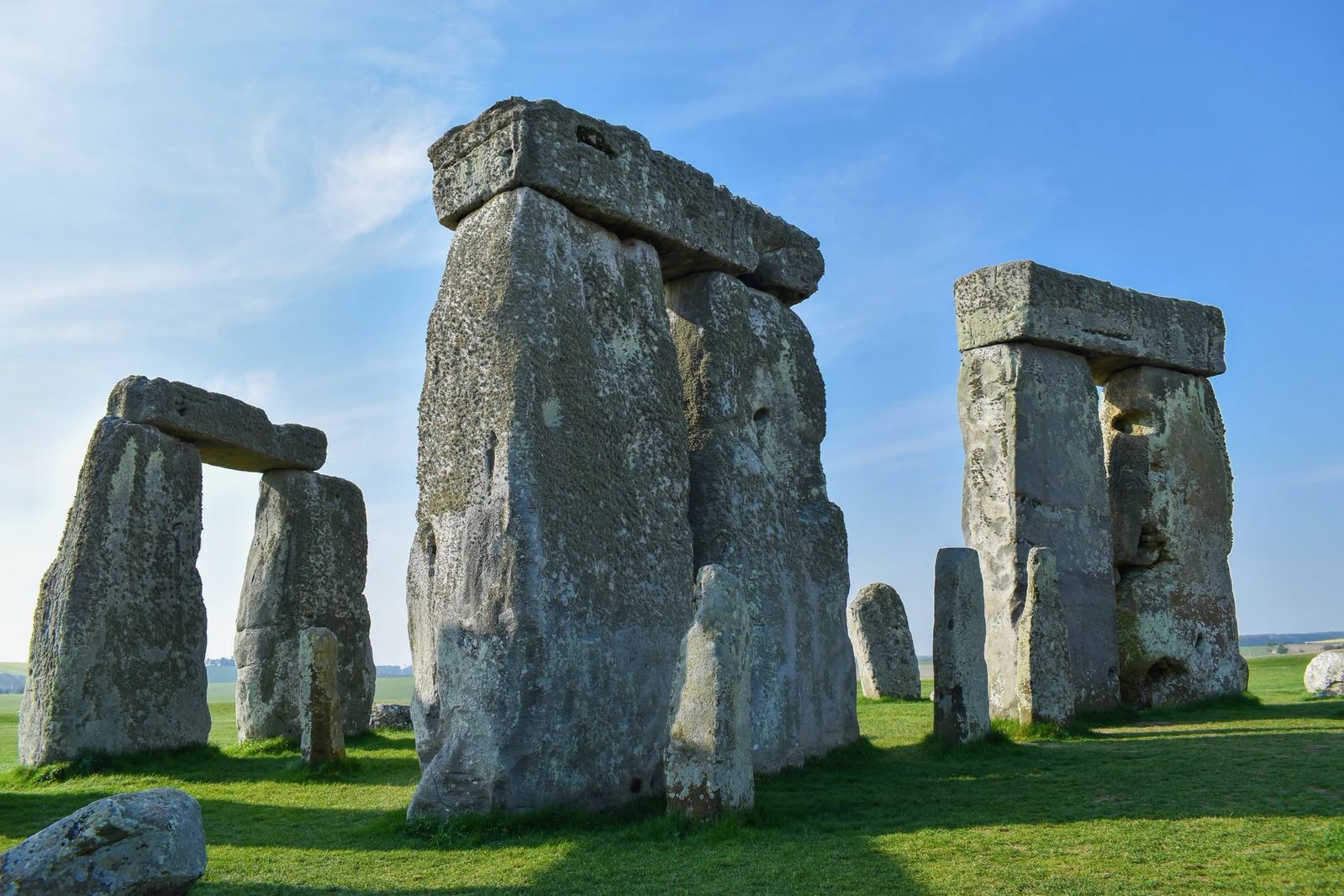
Almost every day next month, management of the prehistoric landmark in England will draw a winning ticket and offer a unique experience to a visitor before the daily bustle begins Visitors with regular admission tickets are not usually allowed inside the monument. English Heritage When you visit Stonehenge—England’s 4,500-year-old circle of stacked and standing boulders—you’re kept well outside the monument, behind a cordoning rope. As Georgia Butters, Stonehenge’s head of operations, tells BBC News’ Holly Rattley, “we can’t run it too close because there’s really fragile archaeology.” Usually. Next month, though, a few lucky visitors will be allowed to step inside the prehistoric circle for a closer look, completely alone if they wish. According to a statement from English Heritage, the charity that maintains Stonehenge and other historic U.K. sites, exclusive access to the stone circle has previously been limited to staff, presidents, rock stars, astronauts and premium tour-takers. But this August, every ticket to Stonehenge booked at least 72 hours in advance, for all days except August 4 and August 25, will be entered into a drawing. And at around 9:10 a.m. each day—20 minutes before the monument opens to tourists—the visitor with the winning ticket will get access to private time inside the circle. They can bring along other members of their party, too. “It is a spiritual place for many people, but even if you’re not spiritual in that way, there’s just something wonderful about the landscape,” Butters tells the Guardian’s Steven Morris. “It has a presence, a stillness.” The monument is composed of a central group of arches and an outer circle. English Heritage Neolithic Britons began building Stonehenge about five millennia ago, in what’s now Wiltshire in southern England. For millennia before then, pagans had been using the site ritualistically: digging ditches and pits, placing timber posts and depositing cremated remains. Around 2500 B.C.E., people began installing enormous boulders on the site—some quarried and transported from about 15 miles away. Thousands of people worked together to move and work Stonehenge’s smaller “bluestones” and larger “sarsen” stones. They righted and stacked the sarsen stones in a horseshoe shape, then surrounded them with a fortified circle of similarly stacked boulders. Researchers think that Stonehenge’s architects had spiritual motivations: The monument aligned perfectly with the movements of the sun and moon. Nowadays, the solstice attracts many visitors. Thousands of people show up to Stonehenge to see the summer solstice. English Heritage “People in the pagan community see the stones as being quite magical, with their own energy and awareness,” Sarah Robinson, a priestess at the local Wiltshire Community Goddess Temple, tells BBC News. She says seeing Stonehenge from behind a barrier feels “very disconnected,” but “your imagination just takes over” when you see it from inside. “You are reminded of your place in history,” Robinson tells BBC News. “You can feel the immensity of the size of the stones and their weight, but also the sense of human history. It’s a very humbling experience.” From inside the circle, visitors might crane their necks to examine the inner horseshoe—which is more than 20 feet tall—and seek out “ancient carvings invisible from the public path,” per the statement. They can also see “really rare lichen,” a mix of fungi and algae that give the stones a hairy appearance, Butters tells BBC News. The winning visitors will be able to take photos and videos from inside, yes, but Butters tells the Guardian she hopes “they’ll be able to just spend some time and have a moment of peace.” Fun fact: A popular place Stonehenge has been a ticketed attraction for tourists for 125 years, per BBC News. That rare peace is something the staff at Stonehenge know well. Security officer Ray Bulpitt tells the Guardian that during night shifts, he hears hares and sheep. Morris, who reported from inside the monument, writes that traffic from the nearby highway is a low hum beneath the songs of skylarks. As Stonehenge supervisor Nick Morabito tells the Guardian, “At the end of a busy summer’s day it’s lovely to sit in the circle for a few minutes and remember what it’s all about.” You Might Also Like Get the latest stories in your inbox every weekday. More about: Ancient Civilizations British History Cultural Heritage England Monument Stonehenge Tourism
Want to Spend Some Alone Time With Stonehenge? This August, Lucky Visitors Get the Chance to Enter the Stone Circle Before the Site Opens to Tourists
Full Article
Original Source
Read the full article at Smithsonianmag →KhanList aggregates and links to publicly available news content. We do not host full articles from third-party sources. Always verify important information with original sources.