
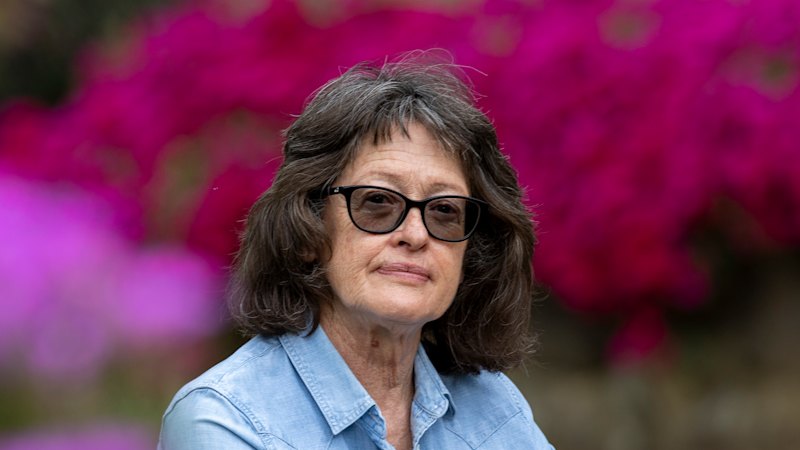
November 26, 2026 — 7:15pmFor 65 years, Jenny Long has lived with the fallout of a medical decision made before she was born.She is infertile, has had numerous cysts removed from her ovaries, and needs frequent cancer screenings.Jenny Long was exposed to diethylstilboestrol (DES) in utero.Jason South“Mum had a lot of guilt because I wasn’t able to fall pregnant,” says Long, who was exposed to a synthetic estrogen while in the womb, prescribed to mothers between the 1940s and early 1970s under the false belief that it prevented miscarriages.The Ballarat woman is among an estimated tens of thousands of Australians who were exposed to diethylstilboestrol, commonly known as DES, and now linked to cancer, gynaecological problems, fertility issues and pregnancy complications.Campaigners, including Long and a leading academic, are calling on the federal government to investigate how many “DES daughters and sons” there are and fund an awareness campaign urging affected women to get additional cancer screenings.Jenny Long wants there to be more awareness about exposure to DES. Jason SouthIt follows the UK government apologising to DES victims last year and commissioning a scientist-led review into the long-term impact of the pregnancy drug. It’s estimated that more than 300,000 UK women were prescribed the drug during pregnancy.Governments in the US and France have funded long-term cohort studies into the effects of the drug.There is no established link between DES exposure and cancer in DES sons or grandchildren.Those pressing for change have compared the scandal to Thalidomide, a drug used to treat morning sickness during the late 1950s and early 1960s that caused severe birth defects in children.“People definitely need to be more aware that they were given this drug or exposed to it,” says Long, whose mother took DES in the early ’60s on her doctor’s advice after suffering multiple miscarriages.Australian doctors were advised to stop prescribing the controversial drug to pregnant women in 1972 after it was linked to a rare vaginal and cervical cancer called clear cell adenocarcinoma.Around one in 1000 DES daughters will develop this rare and aggressive cancer.Carol Devine discovered when she was 16 that she had also been exposed to DES.Devine’s mother, who consumed 27 tablets of DES a day while pregnant in the hope of preventing miscarriage, had come across a Reader’s Digest article about links between the drug and clear cell adenocarcinoma. She sat her daughter down for a difficult conversation.“At that time, nothing was known about the incidence,” says Devine, who now runs the advocacy and support group DES Action NSW from her home in the Sydney suburb of Thornleigh.Carol Devine (baby) with her late mother, Joan Stear, in 1956.“I thought I was going to die. My mother suffered enormously with guilt. She felt terrible having taken it.”Devine has spent most of her life navigating the potential impact of being exposed to the drug in utero.She has had four miscarriages, two premature births and frequent surgeries to remove nodules from her uterus.In 1995, frustrated by the lack of public information about DES, Devine placed an advertisement in a local paper calling for other people exposed to the drug to contact her.“The phone never stopped ringing,” she says. “That gave me a clue as to the size of the problem.”She has since fielded more than 1500 inquiries from across Australia.“I’ve had midwives from that era phone me to tell me it was handed out like lollies,” Devine says.The response from Australian health authorities has been disappointing, she argues.“There would be a lot of people who are literally walking time bombs who don’t know about this, and who need to know about the specialist care that they need,” Devine warns.Professor Barbara Mintzes, a research scientist specialising in the study of pharmaceutical policy at the University of Sydney.Edwina Pickles“It’s been swept under the carpet.”This specialist care includes lifelong annual cervical screening tests and colposcopic examinations of both the cervix and the vagina.Professor Barbara Mintzes, a pharmaceutical policy expert at the University of Sydney’s School of Medicine and Health, first learnt about the dangers of DES while working at a women’s health organisation in Vancouver in 1983.A then 20-year-old woman called Harriet Simand, who had recently been treated for clear cell cancer caused by DES, reached out to the organisation to find out if other women had been exposed too.“It was really the first known transplacental cancer,” Mintzes says. “It develops post-puberty, and it had never previously been seen before in premenopausal women.”Mintzes said the first randomised controlled trials into DES in the early 1950s found it was no better than a placebo in preventing miscarriage. But back then, there was no requirement for pharmaceutical companies to prove the efficacy of their drugs, so they were allowed to keep marketing it.“It’s terrible to think that women were given this medication in good faith to protect their babies, but it has caused harm to them later on,” she says.Mintzes called on the federal government to commission research into the scale of DES exposure, roll out awareness campaigns and ensure the training of doctors covers DES so they know what to look for.“We really don’t have a good estimate of how many people were exposed in Australia,” she says.A spokesman for the federal Department of Health says it’s currently not feasible to commission research into the scale of DES exposure due to the relatively small number of Australians found to be clinically affected, the lack of validated data sources, and the passing of time.“The Department of Health, Disability and Ageing will continue to monitor any emerging evidence relating to DES exposure and associated health conditions, to inform relevant policy decisions,” he said.The spokesman said individuals should discuss their personal circumstances, medical history and risk factors with their treating health professional, who is best placed to provide advice on appropriate screening, surveillance and follow-up care.Peer support after miscarriage is available at pinkelephants.org.au and information can be found at the miscarriageaustralia.com.au website.Start the day with a summary of the day’s most important and interesting stories, analysis and insights. Sign up for our Morning Edition newsletter.Henrietta Cook is a senior reporter covering health for The Age. Henrietta joined The Age in 2012 and has previously covered state politics, education and consumer affairs. Email her via henrietta.cook@theage.com.au or henrietta.cook@protonmail.comConnect via X, Facebook or email.From our partners
‘Walking time bombs’: Jenny is among thousands of Australians at risk of rare cancer from banned pregnancy drug
Full Article
Original Source
Read the full article at Smh →KhanList aggregates and links to publicly available news content. We do not host full articles from third-party sources. Always verify important information with original sources.